
 E-Paper



Kota machine exposes underbelly of education
The stigma of failure and the loss of precious years of early youth take their invisible toll — both on individual lives and on the nation.

 Prefer HTon Google


The coaching industry forms the heart of many endemic problems in India’s education system. Mostly unregulated, the industry is located in major cities such as Delhi, Bhopal, Varanasi and Chandigarh. The biggest coaching hub is Kota. Along with its cousin enterprise, i.e. home tuition, organised coaching undermines the principles that govern the philosophy and psychology of teaching. Its national capital, Kota, has witnessed 23 suicides so far this year — the worst in nearly a decade. They remind us how hardened this underbelly of the system of education now is.
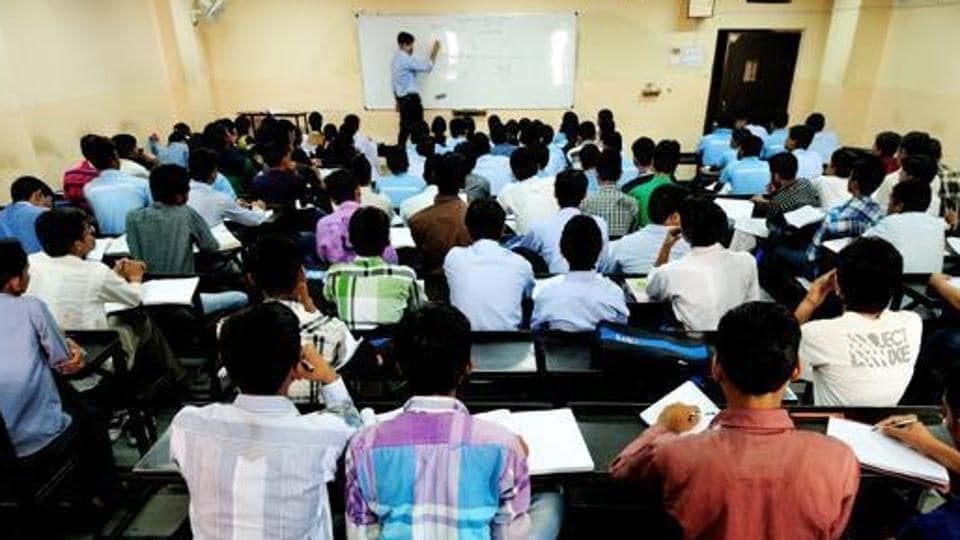
A few years ago, I met a girl who attended one of Kota’s 4,000 coaching centres. Her daily life was entirely devoted to ‘learning’, i.e. preparation for the JEE. She lived in a cramped room with another girl, with no space between the beds. Ultimately, she made it into one of the Indian Institutes of Technology (IITs) while her roommate could not. Kota’s coaching industry sustains its reputation on the basis of such cases. No one knows what proportion of students achieve success, and how long they sustain it. All we have are stories and photographs of rank holders used by coaching institutes to maintain their claim to fame.
Faith in the Kota machine runs across north and central India, in district towns and villages. Parents with modest means believe that a year or two in Kota might land their children in a medical or engineering college. There are several coaching hubs in India, but none can match Kota — for its scale and renown. Coaching institutions add substantially to Kota’s economy. For that reason, no government has taken the risk of disturbing the business captains in this town. It perceives itself as a part of the education system. Some might argue that it dispenses social justice, by giving a chance to the lower economic and caste strata to enter the distant temples of professional education. Objectively speaking, Kota forms a bridge between school and two prestigious occupations: Medicine and engineering. Those who throng this city to try their luck in India’s two most competitive tests have two things in common: Parental pressure and endurance.
The majority consists of Class 12 passouts from poorly endowed schools — both government and private — where science is taught against the backdrop of chronic staff inadequacy and skeletal labs. Kota’s coaching institutes also have no labs, but there is no dearth of dedicated coaches. Labs are irrelevant to the kind of teaching Kota is famous for. It focuses on cracking test items at a top speed. In NEET, the format is MCQs, asking the student to choose — under the terrible pressure of time — the correct answer. More than understanding or knowledge, you need the skill to eliminate the distracters and quickly spot the correct answer. Because an incorrect choice incurs negative marking, the student needs risk-assessment skills as well.
By relentlessly drilling this calculus, a subject coach prepares the student to feel confident, not bold, while cracking hundreds of items at record speed.
Coaching outfits not only put their clients through a merciless, dehumanising routine, but they regularly put them through mock tests that reveal their rank that day. If you are in the top 5 today, you may slide to the 20th rank a week later. The game goes on, no matter how tired and scared you are. Aware that your parents have parted with hard-earned cash to push you into this mill, you dare not inform them that you might be drowning. You are stuck. No wonder, some can’t endure it any longer and take the dire option of stepping out altogether, obliging parents to realise their misjudgement a bit too late. Twenty three young souls have gone this way this year.
Is this the best way to select future doctors and engineers? The obvious answer is no. Three decades ago, I visited IIT Delhi, with the late professor Yash Pal and some other members of a committee appointed by the government to study the problem of stress on children. We met the late PV Indiresan who was involved in preparing the IIT entrance test. He told us that a mass selection test is an unreliable way to spot the potential for creative engineering. The only reason that justifies mass testing is its mechanical nature: The results can’t be challenged because there is no subjectivity in the marking process.
Those who emerge successfully from the Kota machine don’t always enjoy being at an IIT or a medical college. Many are burnt out by the time they start the course they worked so hard to get into. They lose the wherewithal to sustain their stamina to study hard. And the everyday ethos is not necessarily conducive to youngsters from humble backgrounds. Many feel alienated or suffer a loss of self-confidence, leading to a solitary, tragic end.
The few who move on from Kota leave behind thousands who endure the hardships of coaching but fail to fulfil their parents’ mission. Not just in Kota, the overwhelming majority of the coached never taste success. The stigma of failure and the loss of precious years of early youth take their invisible toll — both on individual lives and on the nation.
Krishna Kumar is a former director of NCERT and the author of ‘Smaller Citizens’. The views expressed are personal


