
 E-Paper



MAGA fault lines and implications for India
The momentous changes within the US will continue to strain India’s strategic calculus even after a trade deal is signed

 Prefer HTon Google


“If we lose the midterms, if we lose 2028, some in this room are going to prison — myself included,” warned Steve Bannon to a roomful of Republicans. This statement by an influential hardliner in the Make America Great Again (MAGA) camp and a former Donald J Trump loyalist should offer us pause. When the institutional guardrails of a superpower are visibly eroding, when political violence is increasingly normalised, when immigration officers are attacking Americans with impunity, when tariffs hurt local farmers and foreign partners, when the person occupying the highest office in the land prioritises personal loyalty over the Constitution, when allies fear territorial annexation, and adversaries experience an extrajudicial effort to seize a sitting head of State, it is time to take an earnest measure of where India’s most important strategic partner is headed.
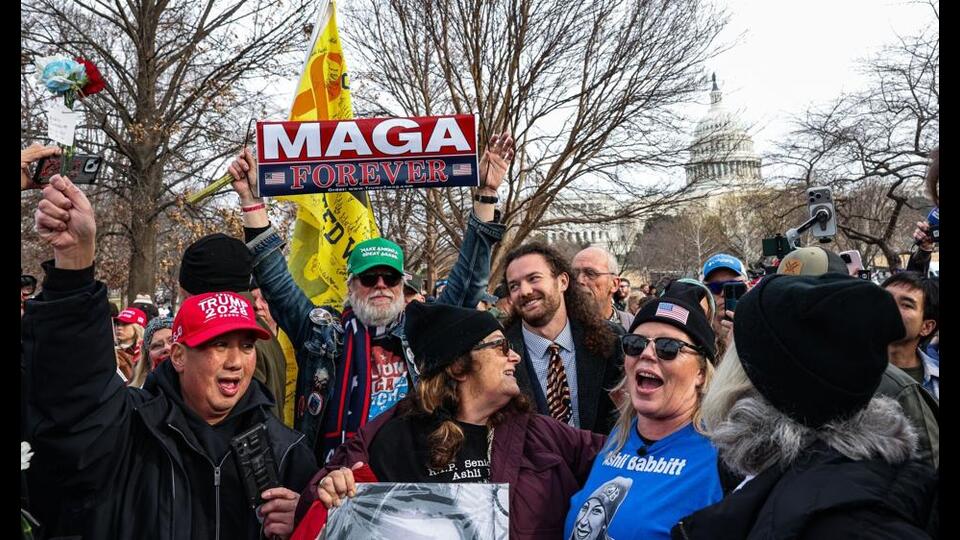
Bannon is right. Trump’s America is increasingly testing the legal and moral limits of power at home and abroad. It has opened many fronts at once. Something must give. When that happens, hubris is likely to pave way for fear in team Trump. That’s when the US will face its most dangerous moment. Trump is undoing the long-term American social contract, while maintaining short-term popularity and a devoted personality cult. This is true in all spheres — economics, politics, military, and society. Trump tariffs are protecting some industries but spiking consumer prices and threatening inflation. Still, the Democrats are failing to outmanoeuvre Trump on policy and popularity nationally, notwithstanding Zohran Mamdani’s historic mayoral victory in New York City.
This is not a crisis that will automatically resolve with the next electoral cycle. The US is at the foothills of what comes the day after polarisation and a fortnight before a severe rupture.
The US economy is K-shaped. Some macroeconomic indicators such as GDP growth rate, which rose to 4.3% in the last quarter of 2025, a rebound in exports, and increased spending on defence and tech indicate strength. Inflation is currently at a manageable 2.7%. But microeconomic indicators such as the cost of living for middle- and lower-income households is going up, and labour market sluggishness, thanks to immigration crackdown, is risking the viability of small businesses. In a country without a serious welfare net, such K-shaped growth is inauspicious. It is not sufficient to generate social and political violence at scale though. Acute polarisation is what increases the odds of that.
On January 6, 2021, when a large mob of Trump-supporters violently stormed the US Capitol to disrupt the Congressional certification of the 2020 presidential election, the world had a glimpse of how polarised the US is. Things have become worse. Not only has partisanship increased, but also splits within these movements. The socialist Left of the Democratic party is facing more opposition from within the party than outside. Neither the Clintons nor the Obamas openly supported Mamdani during his campaign against a fellow Democrat Andrew Cuomo. Led by Bernie Sanders and Alexandria Ocasio-Cortez, the Left-of-centre Democrats have yet to mount a nationally coherent challenge. They are leading the race for the mid-terms but will struggle to retake the Senate in 2026.
The MAGA camp is a potpourri of factions. There are the working-class economic nationalists who love tariffs but are at odds with the elitist corporate nationalists including the tech-bros who abhor trade wars. Then there are the Christian nationalists and the culture warriors who are fighting migrants, minorities, and liberals with equal zeal. The most powerful split is between the institutionalists and the anti-institutionalists. The former, typified by the governor of Florida, Ron DeSantis, want to exploit American institutions to allow the movement to outlast Trump. Bannon signifies the anti-institutionalists. They view the American State as irredeemably broken and want to run an insurgency against it.
Trump keeps these factions busy. By cult, not tact. He lets them fight and cut each other to size. So potent is his cult that Pete Hegseth, secretary of war, has openly championed a warrior ethos, purged professional generals, and promoted a vision of military loyalty centred on Trump rather than civilian institutions.
The corrosion of the American social contract is not a problem, it is the point. It is no surprise that ICE is harassing migrants, and their aggressive tactics led to a fatal encounter in Minneapolis. Mayor Jacob Frey’s outraged message that “ICE should get the f--- out of Minneapolis”, followed by the governor mobilising the Minnesota National Guard in response, signals a brewing conflict.
American society is resilient, and many hope that this will pass. But the possibility of that is remote unless the Democrats suddenly, surprisingly, and significantly dent Trump’s politics. China has pushed back in the trade war, and something may give internationally. But foreign policy failure will not bite electorally.
What can hurt is an unexpected electoral upset. For a movement aware of its excesses, and a presidency habituated in dog-whistling, the loss of power is not an option. If the anti-institutionalists are fearful about losing elections, they will fight harder against both the Democrats and the institutionalists.
India has become a geopolitical casualty of Trump’s politics and policy. It failed to foresee the warning signs and prematurely celebrated Trump’s win in 2024. Such a mistake must not be repeated. Sergio Gor’s appointment as ambassador to India and his proximity to Trump offers New Delhi a channel to the White House. Such access does not mean influence. There are limits to what Gor can deliver beyond diplomatic spectacle. He can translate India’s concerns into Trump-speak and support trade negotiations. He has invited India to join Pax Silica. All this is necessary to arrest a further decline in this bilateral relationship. It is not sufficient to rebuild trust.
Gor’s remit as special envoy to South and Central Asia offers India’s neighbours a vote on his subcontinental worldview. In combination with MAGA’s anti-Indian racism, this regional aspect of Gor’s portfolio will limit his ability to build bridges with India. In any future India-Pakistan crisis, he is perfectly poised to play the regional peacemaker and Trump’s personal roving envoy. India will find it harder to deny Gor’s role in that moment than its recent pushback against Trump’s claim of brokering a ceasefire during Operation Sindoor.
The US is experiencing nothing short of a revolution. It will continue to strain India’s strategic calculus even after a trade deal is signed.
New Delhi should prepare for a scenario where the next transfer of power in Washington DC could be contested, destabilising, and potentially violent — if it occurs at all. There is nothing more dangerous than arch ideologues and cult leaders fearing loss of power.
Avinash Paliwal teaches at SOAS University of London and is the author of India’s Near East: A New History (London: Hurst, 2024).The views expressed are personal


