
 E-Paper



More autonomy for the IITs will benefit India
For decades, institutions have been pressured to mirror Western universities. US university system has its strengths, but India should not copy its weaknesses

 Prefer HTon Google


There may be no better symbol of independent India’s ambition than IIT Kharagpur. It rose from the grounds of the Hijli Detention Camp, where British forces imprisoned freedom fighters and, in 1931, shot dead two unarmed detainees. Less than two decades later, India transformed that site of repression into its first Indian Institute of Technology, turning ground once used to suppress Indian minds into a place that would produce engineers and scientists who helped shape the modern world.
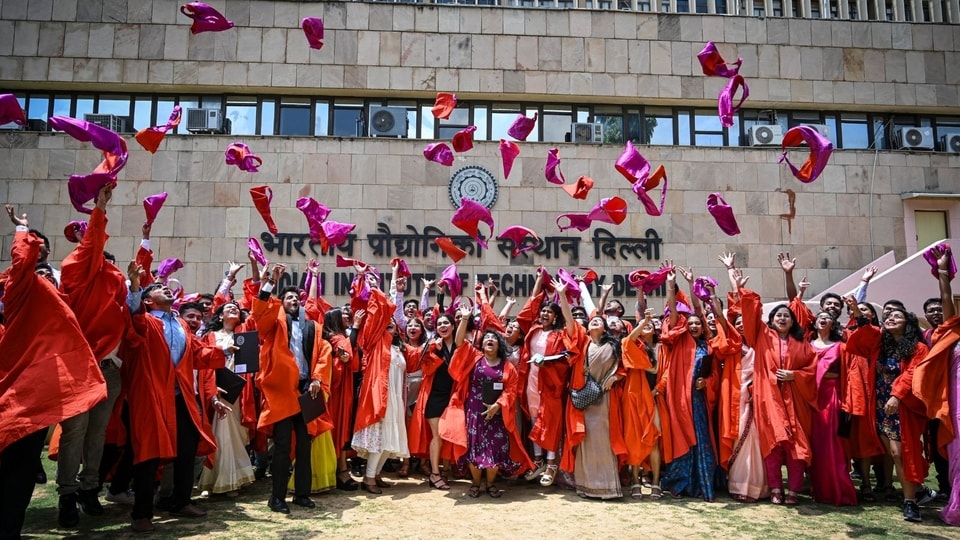
As IIT Kharagpur celebrates its platinum jubilee, that history carries a larger lesson: India does its best work when it has the confidence to trust its own talent rather than wait for the West to define excellence.
The IIT system became one of post-independence India’s greatest institutional achievements. Its graduates built domestic industries, helped power Silicon Valley and rose to lead some of the world’s most influential technology companies. Yet India still underestimates the scientific and engineering capability within the IITs and many other institutions of similar calibre.
Also Read | IIT-B allows students rethink their academic journey
For decades, Indian institutions have been pressured to mirror Western universities such as MIT, Stanford and Harvard. The prescription is always the same: Spend more on basic research, publish more papers, expand tenure tracks, improve citation counts and climb global rankings.
The American university system has many strengths, and I have spent the latter part of my career in it, but India should not copy its many weaknesses.
American universities spend tens of billions of dollars every year on research and generate huge amounts of intellectual property, yet only a small fraction becomes companies, products or technologies that reach society. The system is built around professors publishing papers that almost no one outside their narrow fields reads, because publications and citations are what help secure tenure, effectively babu-style lifetime employment. The result is a powerful incentive to optimise for academic recognition rather than for turning knowledge into invention.
Also Read | IIT Roorkee launches PG certificate program in Building AI-Powered Business Applications
That is what makes the changes I am seeing in India so significant: the IITs are beginning to move in the opposite direction.
I have worked closely with IIT Madras, IIT Delhi and IIT Kharagpur and consider directors of all three my friends. What I have seen is a profound shift from when I first began studying Indian engineering education almost two decades ago at Duke and Harvard.
Like their Western counterparts, Indian universities were once insular, suspicious of private industry and assumed that academics alone knew which problems mattered. Today, these institutions actively seek collaboration with industry, encourage translational research, and want technologies to move from laboratories into the real world.
After moving the R&D of my Silicon Valley company, Vionix Biosciences, to the IITs, I have seen firsthand what this new model can make possible. The technical depth, motivation and willingness to tackle extremely hard problems among the faculty and students I work with across engineering, physics, biotechnology, medicine and artificial intelligence are exceptional, particularly at a time when many of the brightest graduates in the West are drawn toward the latest technology fad.
Also Read | IIT Kanpur launches online course on Advanced DS and ML for Business Analytics
The IITs are delightfully competing with one another to create impact. They want faculty working on important problems, students building things, technologies being commercialized and research becoming products, companies and solutions. Government policy has helped drive this change, as has the determination of the leaders running these institutions.
The biggest constraint I see now is bureaucracy. Layers of mindless approvals, committees and administrative rules inherited from the British Raj still consume enormous institutional energy. Leaders such as Suman Chakraborty at IIT Kharagpur are pushing hard to make their institutions more entrepreneurial and impact-driven, but they still have to navigate administrative structures that bog everything down.
The government must cut these institutions loose: Give IIT directors greater autonomy, strip away unnecessary reporting and outdated rules, make industry collaboration easier, and give leaders the authority to fire the entrenched bureaucrats who resist change.
India must also stop asking the West what a great research university should look like. It should instead focus science and engineering on the problems India and humanity urgently need solved.
That means going deep into physics, chemistry, biology, materials science, engineering and artificial intelligence to tackle clean water, early cancer detection, affordable diagnostics, energy storage, food security, pollution and advanced manufacturing. These are not lesser forms of research because they begin with practical problems; many demand fundamental scientific breakthroughs.
The strongest model is one in which industry identifies real-world problems, universities provide scientific depth and young talent, and government supports long-term missions too broad for any one company to finance. Making that collaboration easier could become one of India’s strongest competitive advantages.
Imagine IITs competing not merely on placement packages, citation counts and global rankings, but on who develops the most affordable cancer diagnostic, cleans the most contaminated groundwater, produces a breakthrough battery, reduces agricultural losses or builds technologies that improve millions of lives.
IIT Kharagpur’s platinum jubilee should therefore be seen as more than an anniversary. It began as an assertion that independent India could define its own future, then became the model for the IIT system that followed. Its next chapter can make an even larger statement: that India no longer needs to imitate the world’s great research institutions, because it is capable of creating a better model of its own.


