
 E-Paper



Plotting India’s rise from rule-taker to rule-maker
As India’s stock continues to rise, it is poised to play an even more influential role in future negotiations and global affairs.

 Prefer HTon Google


Ambassador Mohan Kumar’s book, India’s Moment, is an insightful and comprehensive exploration of India’s role in international negotiations and its evolution as a global stakeholder. The book delves into crucial historical events, including India’s participation in the Paris Peace Conference in 1919 and its representation at the League of Nations and the United Nations. Through meticulous research and analysis, Kumar sheds light on India’s multifaceted approach to international negotiations, making a compelling case for the country’s transition from a rule-taker to a potential rule-shaper on the global stage.
One of the commendable aspects of the book is its well-structured and engaging narrative. Kumar takes readers on a journey through India’s diplomatic history, offering valuable insights into the country’s decision-making processes, principles, and strategic considerations. He highlights India’s commitment to multilateralism, as evidenced by its active participation in various international forums and negotiations.
The integrated assessment framework introduced in the book provides a clear and comprehensive lens to assess India’s negotiating stance in different areas, such as trade, the climate crisis, and foreign policy. It offers a nuanced understanding of the complex factors influencing India’s positions in these negotiations. Furthermore, Kumar’s discussion of contemporary issues, such as India’s role in the climate crisis negotiations and its stance on the war in Ukraine, makes the book very contemporary. The analysis of how India’s foreign policy has adapted to navigate these challenges is both insightful and thought-provoking. This book is an essential read for anyone interested in understanding India’s evolving role in global negotiations. It not only appreciates India’s past contributions but also offers a forward-looking perspective on the country’s potential to shape the rules of the international game. In that way, it is a valuable resource that greatly appreciates the complexities and nuances of Delhi’s engagement with the world.
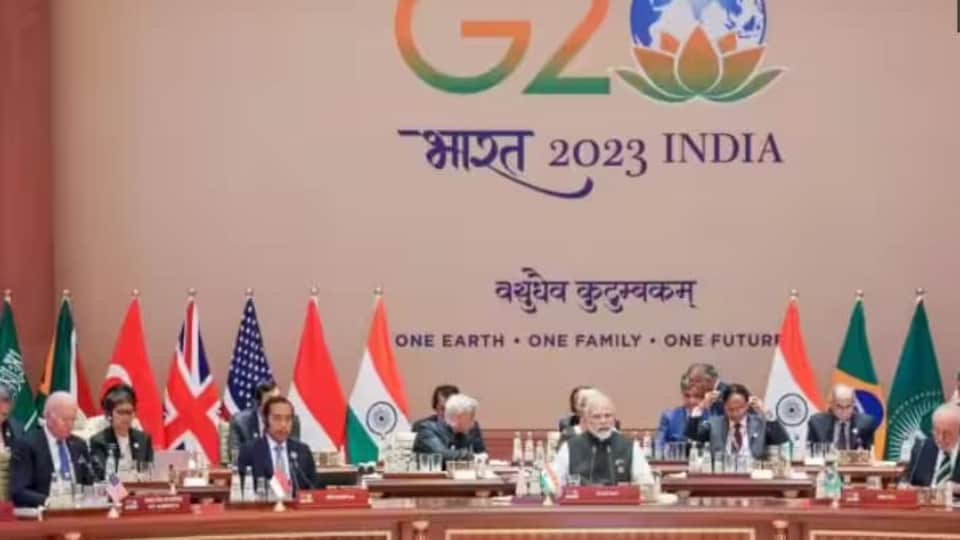
The epilogue to the book provides valuable insights into India’s remarkable hosting of the G20 summit in New Delhi, showcasing its prowess in global diplomacy. The G20 summit in New Delhi served as a platform for India to demonstrate its prowess in international diplomacy. Under Prime Minister (PM) Narendra Modi’s leadership, India pulled off a diplomatic feat by reaching a consensus on the leaders’ declaration despite vehement disagreements among the G20 members, particularly on the issue of Ukraine. This achievement was particularly notable considering the heightened global tensions surrounding the war in Ukraine.
India’s success in brokering a compromise between the G7/western countries and Russia/China highlights its role as an honest broker on the international stage. India used its diplomatic influence to convince the G7/western countries that the language used in previous declarations condemning Russian actions in Ukraine must be more balanced. The book appreciated how India displayed linguistic finesse by crafting a language that allowed all parties to claim their concerns had been addressed, thereby preserving the integrity of the G20 as a premier forum for global economic cooperation.
Furthermore, India’s ability to navigate the delicate balance between major powers such as the United States (US) and Russia was instrumental in achieving a satisfactory resolution. PM Modi’s meetings with US President Joe Biden and his telephonic conversation with Russian President Vladimir Putin played pivotal roles in this diplomatic triumph. India’s strategic approach to multi-alignment, a cornerstone of its foreign policy, played a significant role in mediating between opposing sides. This approach enabled India to position itself as a bridge between differing global perspectives.
The G20 New Delhi Declaration not only reflected India’s diplomatic acumen but also showcased its commitment to being the voice of the Global South. India’s presidency of the G20 aimed to address the concerns of developing countries on various issues, including sustainable development goals, the climate crisis, and debt. Facilitating the African Union’s admission as a member of the G20 underscored India’s dedication to representing the interests of the Global South on the world stage. Moreover, India’s hosting of the G20 summit was an opportunity to present the country’s rich diversity and culture to the world. By making the G20 summit people-centric and taking it to various regions of India, the country showcased its unique identity on the global stage.
India’s Moment demonstrates how India’s diplomatic victories, commitment to the Global South, and ability to mediate between global powers have positioned it as a force in shaping international rules and maintaining a significant presence in the global arena. As India’s stock continues to rise, it is poised to play an even more influential role in future negotiations and global affairs.
Amitabh Kant is India’s G20 Sherpa and ex-CEO, NITI Aayog. The views expressed are personal


