
 E-Paper



Scientifically Speaking | A new study challenges the notion that video games are harmful to mental health
What does the science say about the supposed harm from playing video games that we’ve all come to accept as ground truth?

 Prefer HTon Google


The discussion on the impact of video games on mental well-being has been a hot topic for years, typically driven by concerns that gaming might be harmful. As a child, I heard it from my own parents when I was glued to the TV screen playing Super Mario Brothers or later to the computer monitor as I was world-building on Age of Empires II. My world has come full circle, and now worry about my own son spending hours on his Nintendo Switch.
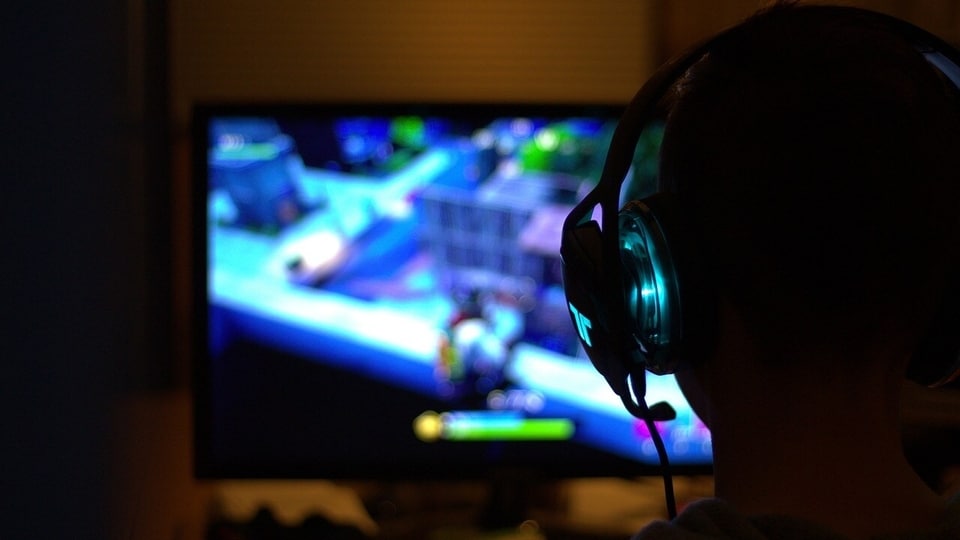
But what does the science say about the supposed harm from playing video games that we’ve all come to accept as ground truth? A study published last week in Nature Human Behaviour by Hiroyuki Egami and colleagues in Japan challenges the old assumptions that have fueled parental anxiety for years.
In the past, the supposed link between video games and mental health was built on correlational studies that show some kind of relationship between video gaming and mental health. These studies are useful but can’t establish a clear cause-and-effect link.
The Covid-19 pandemic did a lot of things to a lot of people, and in Japan, it created an unexpected opportunity for what researchers call a natural experiment. Researchers like Egami and his team could not have asked for a better opportunity to study the effects of video gaming in a real-world setting that closely mimicked the conditions of a randomised controlled trial.
During the pandemic, the demand for gaming consoles like the Nintendo Switch and PlayStation 5 skyrocketed, but supply chain issues made them hard to come by. To manage this surge in demand, Japanese retailers set up lotteries to randomly decide who could buy one of these coveted consoles.
So, what did the Japanese researchers do, and what did they find? In their study, the researchers analysed data from a massive sample of 97,602 participants aged 10 to 69, collected over a two-year period from 2020 to 2022. Individuals who won a console through a lottery system had the opportunity to purchase and use it, while those who didn’t win served as a control group. This random distribution allowed the researchers to isolate the effects of owning and playing video games on mental well-being from other confounding variables, such as pre-existing mental health conditions or socioeconomic status.
Five rounds of surveys were conducted to gather data on mental health, gaming habits, and demographic details. These surveys allowed the researchers to observe how gaming influenced well-being throughout the pandemic.
What they found was intriguing and counter to the popular narrative around video games. Participants who won a console and subsequently increased their gaming actually improved their mental health and life satisfaction. Specifically, psychological distress decreased, and life satisfaction increased by small but notable margins. The benefits were particularly pronounced among those who won the Nintendo Switch, with younger players and females showing the greatest improvements, possibly due to the console’s portable and social setup. PlayStation 5 owners, especially men and hardcore gamers, saw reductions in psychological distress, perhaps reflecting this console’s appeal to more solitary and immersive gaming.
So, what’s the upshot? Should you go out and buy a game console and play video games to improve your mental health? I don’t mean to be a complete spoilsport, but the study is also not without limitations worth considering.
The researchers found some limits to the benefits of gaming. Positive effects on life satisfaction declined for those who played more than three hours a day. So, there’s still a need to balance how much video gaming goes with other activities.
And there’s another consideration. The data was collected during the pandemic, a period marked by high levels of stress, isolation, and limited recreational options. We all needed to take our minds off what was going on in the world at the time. These difficult circumstances likely amplified the benefits of video gaming as a much-needed outlet for relaxation, distraction, and social interaction.
Another point worth mentioning is that not all games are the same. The study did not differentiate between different types of games or genres, which could have varying effects on mental health. It did not consider the potential negative effects of excessive gaming, particularly when playtime exceeds three hours per day.
This study challenges the widely held belief that video games are harmful to mental health, suggesting instead that they can have beneficial effects, particularly in times of heightened stress or limited social contact. It’s still early days, and this is not likely the last word on the topic. We need more nuanced research to explore how different types of games, gaming platforms, and player demographics influence these outcomes. We need to know whether the positive effects of gaming persist in more “normal” circumstances. Future studies should aim to differentiate between various genres and forms of gaming to better understand their specific impacts on mental health.
But what makes the study remarkable is its solid methodology. The use of a natural experiment that came as a byproduct of a weird situation during the pandemic allowed the researchers to make stronger causal inferences than those typically drawn from observational studies.
As I read through the findings, I can breathe a sigh of relief. Maybe all those hours my son spends on his Switch aren’t bad. But at the same time, a thought nags at me — do I really want to share this research with him?
The last thing I need is him wisecracking that he's just playing games to boost his mental health. I’d rather not provide him with another reason to argue for “just one more level” when he should be doing his homework.
Anirban Mahapatra is a scientist and author, most recently of the popular science book, When The Drugs Don’t Work: The Hidden Pandemic That Could End Medicine. The views expressed are personal.


