Taliban resistance a setback for Pakistan
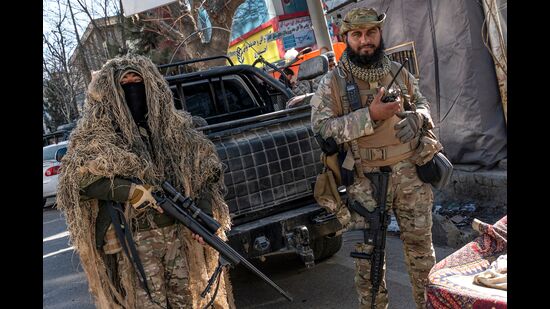
The Afghan Taliban is looking for avenues for an image makeover to gain legitimacy, not only internationally but also inside the country. Its Pakistan policy demonstrates it is eager to shake off the image of being stooges and build a new image of peacemakers.
Pakistan is facing a classic blowback. The patron-client relationship with the Afghan Taliban was envisioned by the Pakistani military establishment as a way to create a weak State in Afghanistan, and at the same time, allow Islamabad to regain strategic depth. The initial euphoria following the August 2021 Taliban takeover of Afghanistan notwithstanding, the group has not only failed to deliver on Islamabad’s expectations but has also turned on its former sponsors. Despite the latter’s attempts to weaken the Taliban through fissures and factions, divisions between the hardliners (Kandahar shura) and pragmatists (Doha shura) have not made much of a dent in the group or views on contentious issues between Afghanistan and Pakistan. Islamabad now appears to be scrambling to unveil other strategies to ensure its decades-long investment in the former insurgents does not go awry.

Taliban’s intransigence towards its sponsors is evident in the refusal to accept the Durand Line as the international border and repeatedly oppose attempts to fence the border. The escalating border clashes have resulted in the killing of several Pakistani personnel by Taliban fighters, a development quite unimaginable before August 2021. The other serious lapse is the sanctuary provided to the Tehreek-e-Taliban Pakistan (TTP), which has around 5,000 to 10,000 fighters in Afghan territory. Islamabad had hoped that the Afghan Taliban would reign in or influence the TTP to agree to a peace deal. In the initial days, the Haqqani Network did try to broker a deal. However, that deal as well and the one made in June have not lasted. The TTP’s violence is on the rise and in recent times has resulted in high-profile attacks, including at attack on the counter-terrorism centre in Bannu. Its potential, vide its sanctuaries in Afghanistan, remain more or less intact, giving it a remote control of sorts to increase or decrease the level of violence at the time of its own choosing. The Pakistan military relied on the Afghan Taliban to curb the TTP’s violence potential or to make it amenable to a peace deal. Neither has been fulfilled. Prime Minister Shehbaz Sharif’s statement describing Afghanistan as a safe haven for terror groups is only a desperate expression of frustration.
By refusing to accept the sanctity of the Durand Line and Pakistani attempts to fence the border, the Taliban is asserting its idea of sovereignty. In addition, in its symbiotic relationship with the TTP that runs both at the ideological, ethnic and operational level, it has found a tactical pressure point to limit Islamabad’s control over Kabul. Neither is acceptable to Islamabad, which unfortunately is running out of cards. It had hoped that the Haqqanis would be more amenable to maintaining their subservient ties with Islamabad. However, recent developments have underlined the former’s unwillingness to rock the boat of the Islamic Emirate. The hardliners and the pragmatists within the Taliban, for the time being, appear more focused on fighting common adversaries, i.e. the Islamic State’s Khorasan Province and the resistance groups; and working towards a common goal, i.e. seeking global legitimacy. The disinclination of Islamabad, which maintains its embassy in the country with a handful of other countries, to formally recognise the Taliban regime has not helped.
However, Islamabad is under no illusion that its “strategic depth” in its original form is unachievable under the circumstances. In its conceptual form, it mostly meant subordinating Afghanistan and using its territory for a military redoubt in the event of being overrun by India in a conflict. Given the development of the last three decades, Islamabad can, at best, hope to have a friendly or cooperative regime in Kabul, nothing more. On November 29, Pakistan rushed its deputy foreign minister Hina Rabbani Khar to Kabul. She held talks with some of the regime’s top ministers and met office-bearers of a women’s business forum. Afghan media, however, reported that defence minister Mullah Yaqoob rejected Pakistan’s request to meet with Khar. Earlier, Yaqoob had said American drones entered Afghanistan’s airspace from Pakistan.
The Afghan Taliban is looking for avenues for an image makeover to gain legitimacy, not only internationally but also inside the country. Its Pakistan policy demonstrates it is eager to shake off the image of being stooges and build a new image of peacemakers. The outreach to India — especially Yaqoob’s request for India’s assistance to train troops — is another indicator of how the Taliban is trying to depict independence from Pakistan. The ensuing developments pose a significant security and foreign policy challenge for Islamabad. The coming months will require serious thinking of how it plans to reset the ties to its advantage in the evolving new great game in Afghanistan.
Shanthie Mariet D’Souza is founder-president of Mantraya and Visiting Faculty, Naval War College, Goa The views expressed are personal

E-Paper