
 E-Paper



Just Like That: The Bhakti movement, beyond our textbooks
The dramatis personae of this reawakening spread from the 11th to the 18th century is an amazing galaxy of literary and spiritual giants.

 Prefer HTon Google


The much-debated National Education Policy (2020) seeks to root education in the Indian ethos and civilisational heritage. This is welcome. But the real challenge lies not only in intention but also in execution. A good example is whether and how we have attempted to include the globally unparalleled Bhakti movement in our educational curriculum.
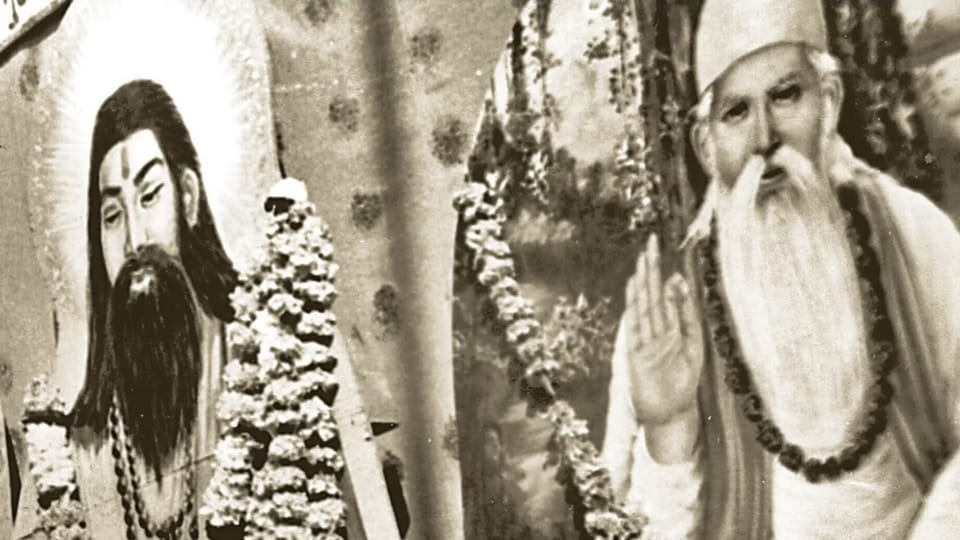
How many of us can imagine a lady, as far back as the 12th century, who, covered only by her tresses, walked nude to Kalyan in present day Karnataka, to have a philosophical dialogue with the great Lingayat seer, Basavanna? Her name was Mahadevi Akka. This conversation took place at a place called the Anubhava Mantapa or “the hall of spiritual experience”, where men and women from all social backgrounds could come to openly discuss spiritual questions or matters of public importance.
Basavanna, along with Allama Prabhu, founded the powerful social reform movement of that time, the Virashaiva Lingayats. Through intensely lyrical and devotional hymns, the Lingayats sought personal communion with Shiva, and railed against archaic customs, superstitions, image worship, animal sacrifice and the caste system. Mahadevi, a wandering mendicant, considered Shiva to be her beloved. Following her dialogue with Basavanna, this wild-looking, completely unconventional woman was honourably admitted to the Lingayat order.
In Maharashtra, the iconic Namadeva (1270-1350 CE), a great devotee of Vithoba (a form of Vishnu), powerfully argued through his devotional hymns against social hierarchies and ritualistic purity. In fact, his inner circle included a barber, a gardener, a potter, a woman (Janabai, the maid), and even Chokha, an “untouchable”.
These are glimpses from the remarkable Bhakti movement — a powerful reform movement, pan-Indian in scope and lasting for over six centuries in the languages of the masses, and the source of some of our most evocative literature and poetry. Few realise that it also played an important role in Hinduism surviving the proselytisation and plunder of the Turkic invasion. A rainbow-coloured butterfly of this nature, shunning the priestly class and formal rituals, while combining devotional fervour, direct communion, social irreverence, and the support of the masses, could hardly be killed by the conqueror’s sword. Indeed, later, even tenets of Islam, through Sufism, became part of this great crusade.
But is any of this taught in our schools and universities? Students may have studied individual figures — Kabir, Guru Nanak, Tulsidas, Surdas — but have they been taught that all of them were part of an integrated and landmark upsurge to reform, reinterpret, and revive the evolution of Indian thought? The dramatis personae of this reawakening, spread from the 11th to the 18th century, is an amazing galaxy of literary and spiritual giants — the Nayanar and Tamil saints, Jayadeva, Vidyapati, Chandidasa, Bihari, Chaitanya, Amir Khusrau, Rahim, Vallabhacharya, Mirabai, Andal, Tukaram, Lal Deg, Nannaya, Karaikkal Ammaiyar, Narsinh Mehta, and many more — all of them writing in their local languages, thereby seeping deep into the consciousness of Indians. It is only when we understand that the Bhakti movement as perhaps the world’s longest and most vibrant reform movements, inspired by religion and yet protesting its sterile rituals and oppressive hierarchies, can one understand the true meaning and context of what, for instance, Kabir (1440-1518 CE) wrote:
It is but folly to ask what the caste of a saint may be,
The barber has sought God, the washerwoman and the carpenter.
Even Raidas was a seeker after God.
The Rishi Svapacha was a tanner by caste.
Hindus and Muslims alike have achieved that End,
Where remains no mark of distinction.
Similarly, Guru Nanak’s (1469-1539 CE) clarion call was Ik Omkar — there is only one Supreme Being — thus making a powerful call of universal spiritual appeal. Sikhism, like Vedanta, emphasised the non-duality of divinity — ek noor se sab jag upja (From one luminous light, the entire universe arose). Through this one statement, it pole-vaulted above conventional religious orthodoxies. The Guru Granth Sahib contains the hymns of not only the Sikh Gurus, but also mentions Hindu deities and the teachings of 13 Hindu Bhakti-movement saints, as also Sheikh Farid and Kabir. The langars in gurudwaras have never made any distinctions based on caste.
Amnesia about the past is unforgivable for great civilisations such as India’s. In overcoming it, our educational system can be an important instrument, but only if it is impartially and knowledgeably reconfigured.
Pavan K Varma is an author, diplomat, and former Rajya Sabha MP. The views expressed are personal


