
 E-Paper



The BJP lacked coherence in their political campaign in Bengal; the lack of a mass leader hurt the party
The controversy surrounding the Sandeshkhali incidents, including allegations, counter-allegations, and sting videos, did not help the BJP much.

 Prefer HTon Google


The 2024 parliamentary election result is a rebuff to the Narendra Modi-led Bharatiya Janata Party (BJP). After a decade in power with an absolute majority of its own in both the 2014 and 2019 Lok Sabha elections, in the last few months, the BJP’s campaign narrative focused on getting at least 370 seats on its own and in the best-case scenario crossing 400 seats.
The June 1 exit polls were awry and the actual result seemed to be a message to the BJP on restraint and inclusivity.
The focus of the incumbent prime minister, according to the opposition's campaign, was to get a two-thirds majority for the BJP and then to amend the Constitution, a charge denied by the government.
At the same time, the BJP’s electoral target was to surpass the record of the Jawaharlal Nehru-led Congress Party in the 1962 elections when Nehru’s Congress came back to power for the third consecutive term and single-handedly won 361 out of 494 seats. At the same time, the larger target was to touch the record of the Rajiv Gandhi-led Congress Party’s achievement in the 1984 Lok Sabha election results.
When election results were declared on June 4, it became pretty clear that a large number of voters disagreed with BJP's vision.
The BJP’s numbers show that the party is below the majority mark of 272 seats to form a government on its own, and, again, according to the opposition, this was a political defeat for Modi. This is precisely because the entire electoral campaign in 2024 was focused on Modi, just like in the 2014 and 2019 elections.
The BJP’s loss was primarily in big states like Uttar Pradesh (UP), Maharashtra, Rajasthan, West Bengal, Bihar, Karnataka and Haryana, where they did very well in the 2019 Lok Sabha elections with a clean sweep in UP, Maharashtra, Rajasthan, Bihar, Karnataka and Haryana.
In 2024, in these seven states, the BJP-led National Democratic Alliance (NDA) lost 93 seats from what it got in 2019, with a massive loss to the BJP than its electoral partners. While the farmer protests and issues of Other Backward Classes (OBC) reservation for Jats and Marathas worked well for the Indian National Developmental and Inclusive Alliance (INDIA) in Maharashtra, Rajasthan, Haryana and western UP, the overarching narratives of inflation and unemployment appealed to the voters in many states across the country.
In eastern UP, inflation and unemployment, along with mismanagement of the Covid-19 pandemic, became significant issues.
This sentiment was relatively mute in the March 2022 assembly elections in UP, even during the final stages of the pandemic, because of the lack of a credible alternative in the state at that time.
Moreover, significant sections among the scheduled castes (SCs) and OBCs feared that reservations might be taken away from those groups if Modi was elected with a thumping majority for the third time.
Besides, sections among the upper caste groups were also unhappy with how the Ayodhya temple event had been publicised as a statist ceremony and for partisan ends. This became evident with the boycott of the Shankaracharyas’ of the Ram Mandir consecration.
Even the demolition drives in UP in the name of infrastructure and temple tourism did not go down well among many voters. The casual nature of the Agniveer scheme became a potent issue among voters in states like Haryana, Rajasthan, Punjab and UP.
Regional sentiments were particularly strong in West Bengal and Maharashtra, where the opposition’s campaign narrative focused on crony capitalism.
West Bengal
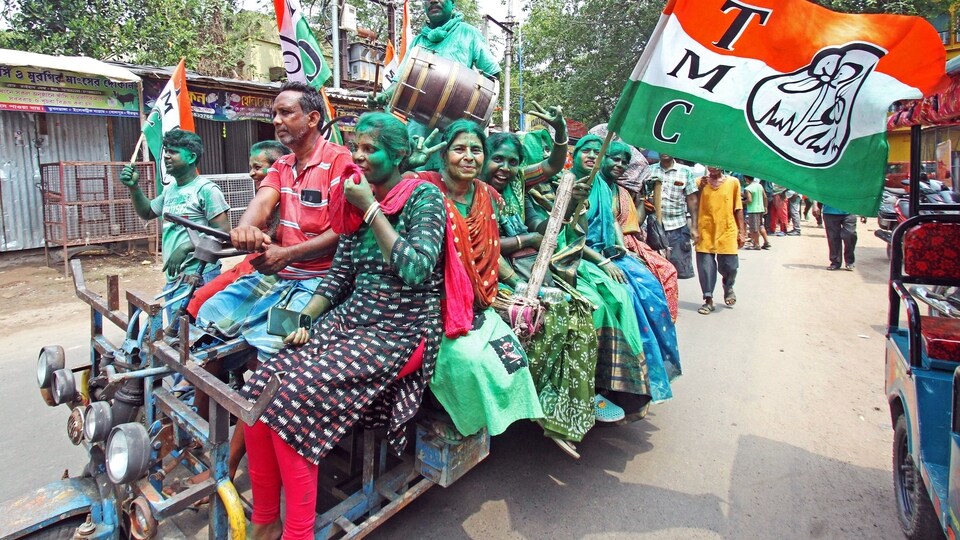
In West Bengal (WB), the Trinamool performed considerably well by winning six more seats and over two per cent more votes than they did in the 2019 Lok Sabha polls.
Although they polled a little lower than the 2021 assembly elections, it gels with the state’s long-term electoral trends when state parties get fewer votes in Vidhan Sabha elections and national parties get a little more in the Lok Sabha elections.
The 2024 people’s verdict in WB corroborates with the state’s long-term trends of giving back at least two-thirds majority in both Lok Sabha and Vidhan Sabha elections, with the only outlier being the 1984 Lok Sabha elections during the Left rule, which was conducted after the assassination of Indira Gandhi, and the 2019 Lok Sabha elections during the Trinamool rule conducted after the Pulwama-Balakot events.
The BJP lacked coherence in their political campaign in WB, with the absence of a state-level mass leader – who could match the popularity of the Bengal chief minister – hurting them electorally. The minorities, as they did in the past few elections in the state, continued to vote for the Trinamool against the BJP.
At the same time, the relatively high turnout of women ensured a big victory for Trinamool in a state with various forms of women-centric schemes ranging from direct cash transfers like “Lakshmir Bhandar”, “Kanyashree”, “Rupashree”, and widow pensions.
In this context, the controversy surrounding the Sandeshkhali incidents, including allegations, counter-allegations, and sting videos, did not help the BJP much. Instead, it backfired even within the Sandeshkhali assembly constituency and in a district where the Trinamool has organisational problems.
The corruption allegations against the Trinamool did not carry much weight among the voters either just like they did not have much traction in the last few elections.
My field notes in various districts of North and South Bengal conducted from the 2014 Lok Sabha election campaigns to the recently held 2024 Lok Sabha elections show that ordinary voters do not show solidarity with those who have lost money in Ponzi schemes and job scams for two reasons.
First, the common perception is that those who lost money in Ponzi schemes or those who gave bribes to corrupt politicians are equally guilty because of their greed and giving bribes is not only illegal but a sin. Secondly, since some corrupt politicians are already in jail for their alleged malpractices, then justice has been served. Also, the malpractices of some Trinamool politicians cannot be entirely blamed on a state government, which is identified with the government of “Ma-Maati-Manush” (Mother-Land-People).
In summary, 2024 again vindicated that WB voters favour long regimes and political stability.
Maidul Islam is a political scientist at the Centre for Studies in Social Sciences, Calcutta. The views expressed are personal


