
 E-Paper



Photos: A look at winged wonders on World Migratory Bird day
World Migratory Bird Day is celebrated on the second Saturday of May and October to highlight the need for international collaboration to ensure the conservation of migratory birds and their habitats globally. A look at some migratory birds that make their way to India, by HT photographers.
Updated on: Oct 10, 2020 11:39 AM IST


Share via


Copy link

1/9
 View Photos in a new improved layout
Updated on Oct 10, 2020 11:39 AM
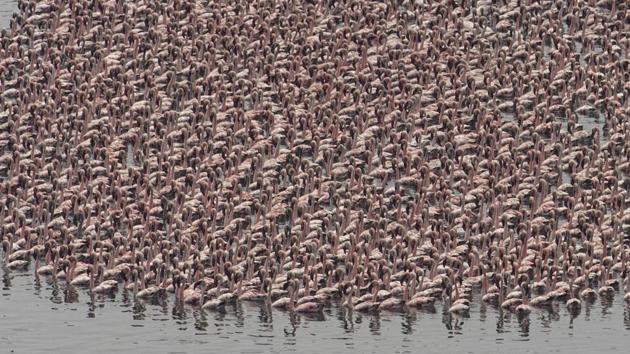
A flock of flamingos at the Airloli creek in Mumbai on October 10, two years ago. The Mumbai Metropolitan Region is the second-largest flamingo habitat along the west coast after Kutch, Gujarat, according to Bombay Natural History Society,which began monitoring flamingo numbers since May 2018, under a 10-year exercise. (Satish Bate / HT Photo)
2/9
 View Photos in a new improved layout
Updated on Oct 10, 2020 11:39 AM
A large flock of flamingos are seen at the Talawe wetland in Nerul Mumbai on April 18. Approximately one in five of the world’s 11,000 bird species migrate, some covering enormous distances. (Pratik Chorge / HT Photo)
3/9
 View Photos in a new improved layout
Updated on Oct 10, 2020 11:39 AM
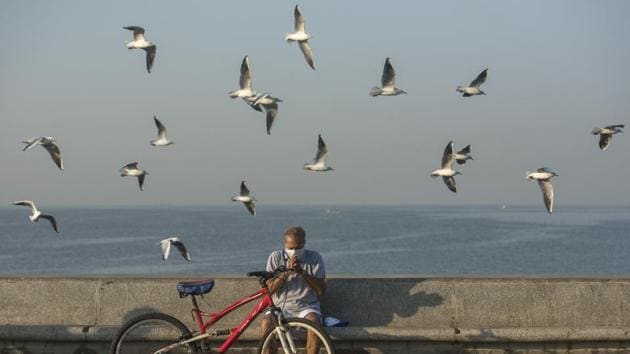
Seagulls fly past a man Marine Drive in Mumbai on November 17, 2018. Migratory birds require appropriate habitats such as wetlands, coastal areas, forests and grasslands to support their life cycle. (Pratik Chorge / HT Photo)
4/9
 View Photos in a new improved layout
Updated on Oct 10, 2020 11:39 AM
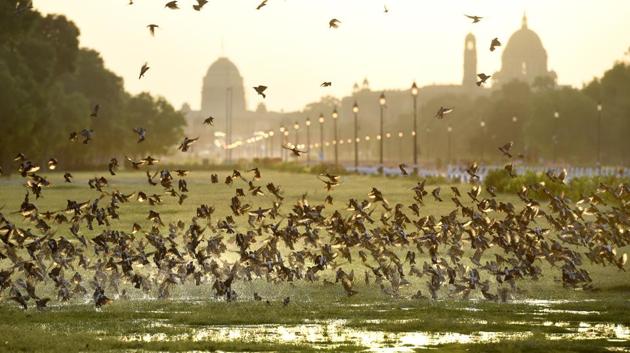
A flock of rosy starlings at Rajpath near India Gate, in New Delhi, on Friday, April 10. The Rosy Starling is a medium-sized perching bird that moves in a large flock, with rapid wing beats. (Arvind Yadav / HT PHOTO)
5/9
 View Photos in a new improved layout
Updated on Oct 10, 2020 11:39 AM
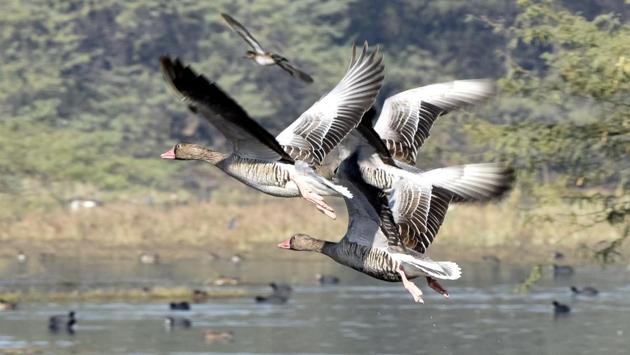
A flock of Greylag geese take flight at Sultanpur National Park in Gurugram on January 16, 2018. The Greylag geese are common visitors to North India’s wetlands in the winter, feeding usually on aquatic weeds and grass. (Sanjeev Verma / HT Photo)
6/9
 View Photos in a new improved layout
Updated on Oct 10, 2020 11:39 AM
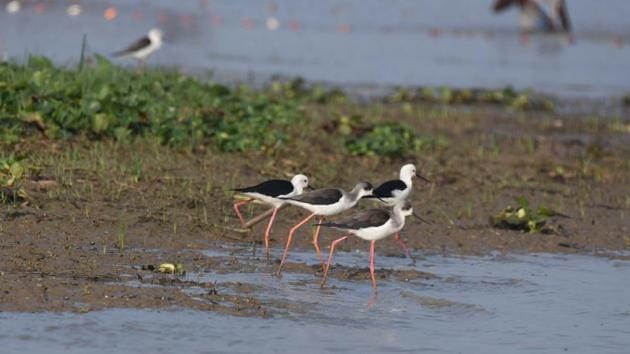
Black-winged stilts at Mangalajodi wetland, a part of Chilika Lake, some 70 kms from Bhubaneswar, Odisha, on January 5, 2020. The black-winged stilt species are distributed in the Indian subcontinent, Asia, Africa, Australia, Europe, North America and South America. (Arabinda Mahapatra / HT Photo)
7/9
 View Photos in a new improved layout
Updated on Oct 10, 2020 11:39 AM
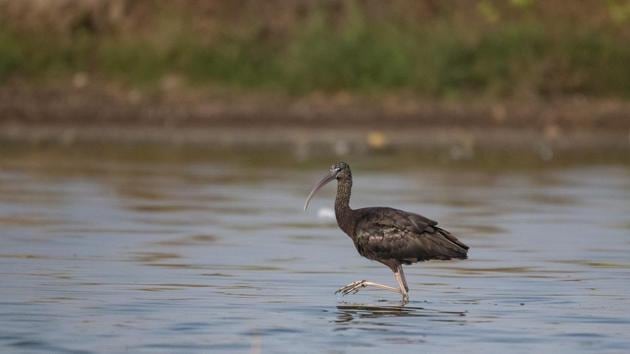
A Glossy ibis is seen at Kumbhargaon near Pune on December 15, 2019. The Glossy ibis are widely distributed across the world and inhabit wetlands, marshes and agriculture lands.They feed on small fish, frogs, snails, insects. (Pratham Gokhale / HT Photo)
8/9
 View Photos in a new improved layout
Updated on Oct 10, 2020 11:39 AM
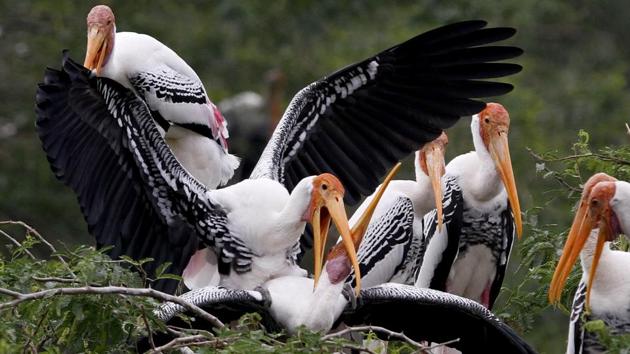
A flock of Painted storks spotted at Delhi Zoo in New Delhi on September 22, 2015. Though largely non migratory, painted storks have been known to migrate to west Burma. (Virendra Singh Gosain / HT photo)
9/9
 View Photos in a new improved layout
Updated on Oct 10, 2020 11:39 AM


