
 E-Paper



Photos: 71 years after independence, Gandhi Gram Ghasera battles neglect
After Partition, Mahatma Gandhi visited Ghasera village in December 1947 to convince Meo Muslim refugees to stay in India. Later, it came to be known as Gandhi Gram Ghasera. However, 71 years after independence, residents are not happy with the living conditions as they are surrounded by water bodies filled with sewage, non-motorable roads and poor sanitary conditions. The site of Gandhi's address to the community is today the village's only school. Hindustan Times’ Yogendra Kumar and Sadia Akhtar went for a reality check.
Updated on: Oct 1, 2018 1:54 PM IST


Share via


Copy link

1/8
 View Photos in a new improved layout
Updated on Oct 1, 2018 1:54 PM
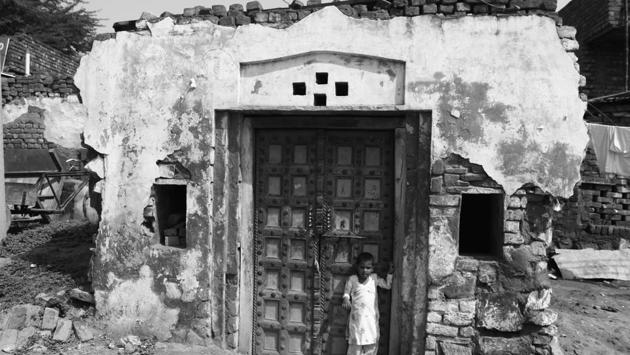
Ghasera, 45 km southwest of Gurgaon, is no ordinary village, though governmental neglect is as evident as in any other region of Mewat—one of Haryana’s most backward districts. Inhabitants here still live on the legacy of Mahatma Gandhi who visited at the time of Partition and convinced them not to migrate to Pakistan. 71 years on, residents are still waiting for the ‘Gandhi fame’ to bring them good fortunes. (Yogendra Kumar / HT Photo)
2/8
 View Photos in a new improved layout
Updated on Oct 1, 2018 1:54 PM
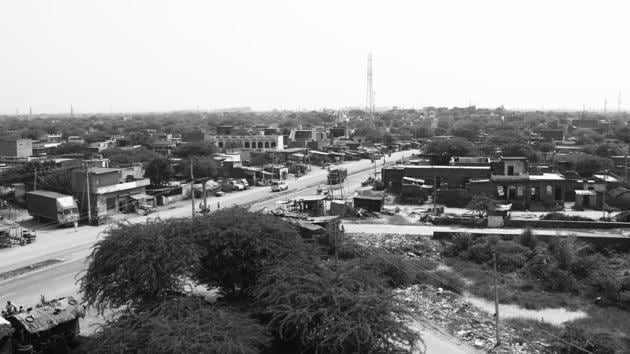
Spread over an area of eight square kilometres on both sides of Delhi-Alwar road, Ghasera is home to 25,000 people, mostly Meo Muslims. On December 19, 1947, Meo leader Chaudhary Yasin Khan, then a member of Punjab Legislative Assembly, was instrumental in inviting Gandhi to Ghasera, where Muslim Meo refugees from Alwar and Bharatpur in Rajasthan stayed at a camp on their way to Pakistan. (Yogendra Kumar / HT Photo)
3/8
 View Photos in a new improved layout
Updated on Oct 1, 2018 1:54 PM
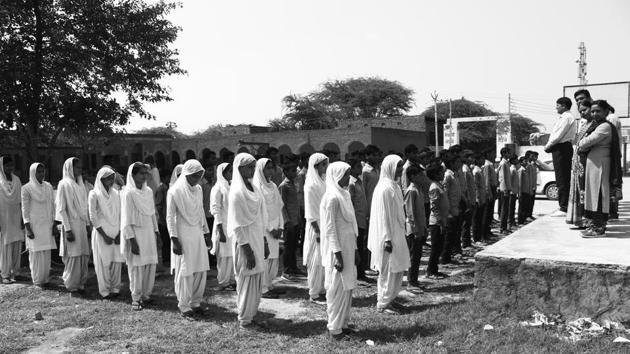
Students at Ghasera’s Government Senior Secondary School. The village’s only school, it stands right in the field from where the Mahatma spoke. Apart from its name, the school is all the Mahatma’s visit has brought for the village. (Yogendra Kumar / HT Photo)
4/8
 View Photos in a new improved layout
Updated on Oct 1, 2018 1:54 PM
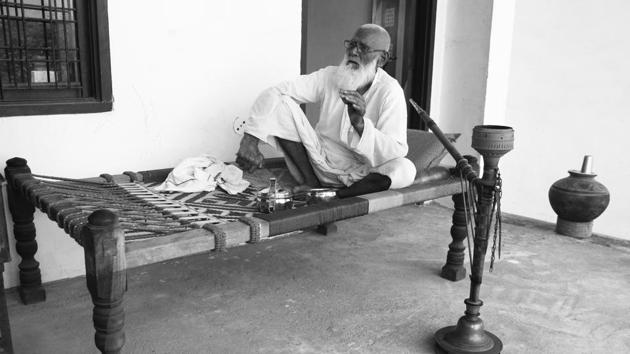
87-year-old Isa Khan was 16 when Gandhi visited the village. “Pakistan mat jao (don’t go to Pakistan),” he remembers Gandhi telling the villagers. Khan said the village is lagging in terms of education and sanitation. He is a resident of Tabela Mohalla in the village. (Yogendra Kumar / HT Photo)
5/8
 View Photos in a new improved layout
Updated on Oct 1, 2018 1:54 PM
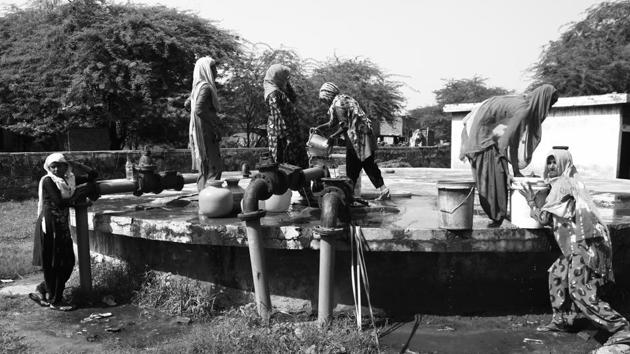
Women in Ghasera have to carry water for long distance for household chores and drinking, The water supply is erratic. Sometimes there is no supply for 4-5 days. Eyewitnesses recall how Gandhi started his speech by urging Meos to stay back as “you are backbone of India”. Some say half of them stayed back after the address. (Yogendra Kumar / HT Photo)
6/8
 View Photos in a new improved layout
Updated on Oct 1, 2018 1:54 PM
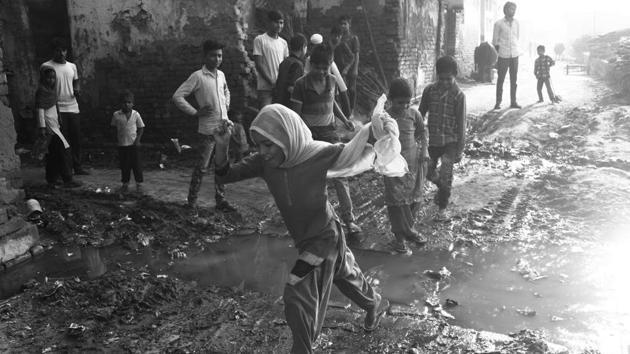
A girl crosses a puddle of sewage in Tabela Mohalla. The village doesn’t have proper sewage connections and discharge from houses overflows on to the roads once the drains get filled. (Yogendra Kumar / HT Photo)
7/8
 View Photos in a new improved layout
Updated on Oct 1, 2018 1:54 PM
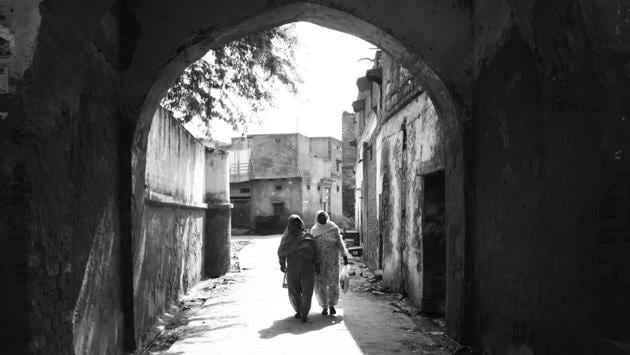
Ruined walls and a grand entrance gate –the only one left from the Ghasera fort’s four –prove the village’s historicity. Its rendezvous with rebellions dates back to the 18th century when Bahadur Singh (a Rajput) fought with the Jat ruler Surajmal of Bharatpur in 1753. Bahadur lost and the Jats turned to Delhi, defeating Mughal king Ahmad Shah Bahadur occupying the Red Fort in 1754, according to historians. (Yogendra Kumar / HT Photo)
8/8
 View Photos in a new improved layout
Updated on Oct 1, 2018 1:54 PM


