
 E-Paper



Photos: A century old fire still burns in Jharia
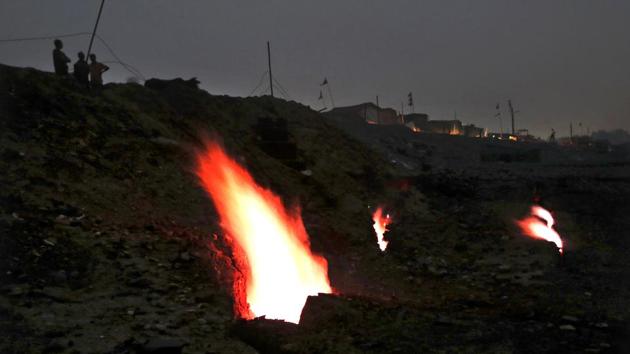
The fires inside coal pits in Jharia started in 1916. More than a century later it continues to spew flames and clouds of poisonous fumes into the air. Coal is an important contributor to India's growth, supporting its iron and steel industries and generating more than half the country's power. In Jharia, the heart of India's coal industry, the livelihoods of half a million people depend on it. This, however, comes at a cost.
Updated on: Nov 16, 2019 2:32 PM IST


Share via


Copy link

1/7
 View Photos in a new improved layout
Updated on Nov 16, 2019 2:32 PM
Flames billow out of the fissures on the ground above coal mines in the village of Liloripathra in Jharia, a remote corner of eastern Jharkhand state, India. The fires started in 1916. More than a century later, they are still spewing flames and clouds of poisonous fumes into the air, forcing residents to brave sizzling temperatures, deadly sinkholes and toxic gases. (Aijaz Rahi / AP)
2/7
 View Photos in a new improved layout
Updated on Nov 16, 2019 2:32 PM
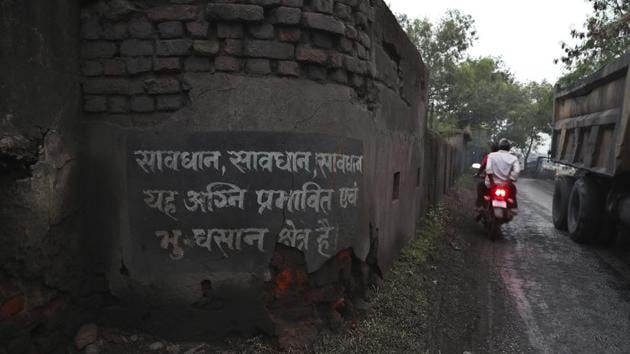
A motorist rides past a warning painted on a wall informing people about the burning coal mine zone and land subsidence near the village of Rajapur. Coal is an important contributor to India’s growth, supporting its iron and steel industries and generating more than half the country’s power. In Jharia, the heart of India’s coal industry, the livelihoods of half a million people depend on it. (Aijaz Rahi / AP)
3/7
 View Photos in a new improved layout
Updated on Nov 16, 2019 2:32 PM
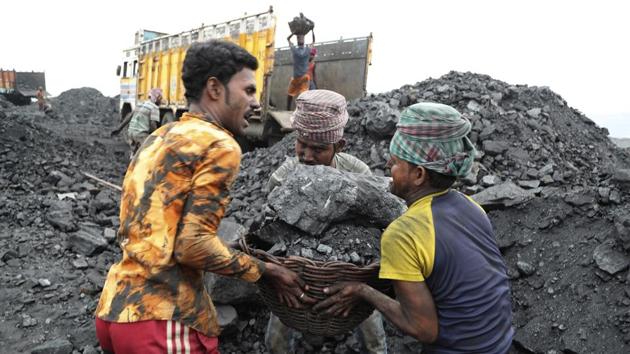
Workers lift a large basket filled with coal before loading it into a truck for transportation in Godhar village. (Aijaz Rahi / AP)
4/7
 View Photos in a new improved layout
Updated on Nov 16, 2019 2:32 PM
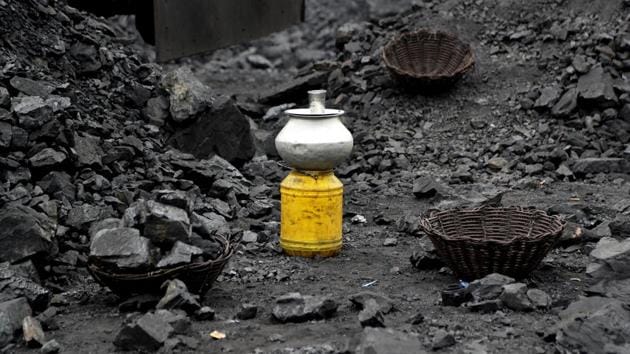
A metal vessel filled with drinking water is seen at a coal loading site Godhar village. The coal fires pose an even greater threat to the lives of those who work in the mines, which cover more than 260 square kilometers. (Aijaz Rahi / AP)
5/7
 View Photos in a new improved layout
Updated on Nov 16, 2019 2:32 PM
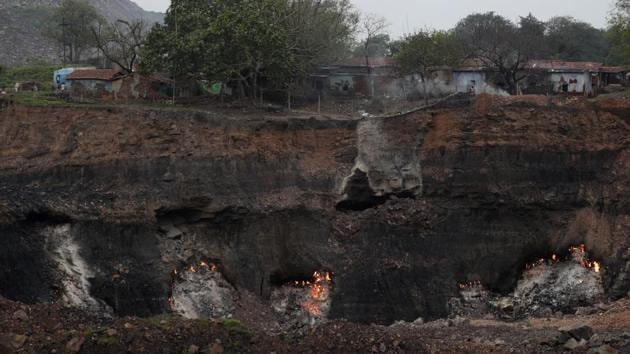
Village houses are seen above the glowing embers of an underground coal fire in the village of Bastakola. Decades of underground coal mining have hollowed Jharia’s land. The collapse of houses and other structures on the surface due to subsidence is increasingly common. Respiratory diseases like tuberculosis, bronchitis and asthma are common. Children have been born deformed, and some people have fallen into the raging fire pits and died. (Aijaz Rahi / AP)
6/7
 View Photos in a new improved layout
Updated on Nov 16, 2019 2:32 PM
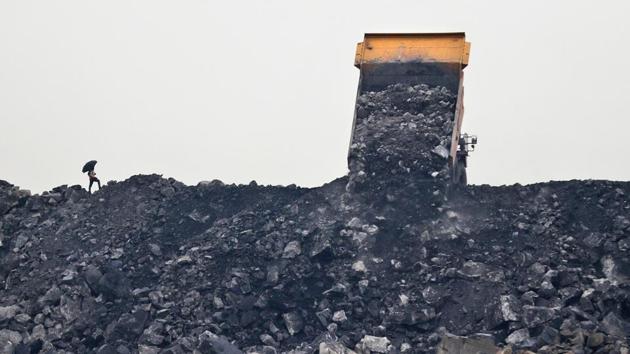
A worker keeps watch as a truck unloads coal in the village of Rajapur. In 2008, Bharat Coking Coal Ltd., a subsidiary of state-owned Coal India, began a program to relocate almost 53,400 families living in fire-affected areas by 2021. But by 2016, only 4,000 families were relocated. (Aijaz Rahi / AP)
7/7
 View Photos in a new improved layout
Updated on Nov 16, 2019 2:32 PM


