
 E-Paper



Photos: Inside India’s largest Covid-19 care facility in Delhi
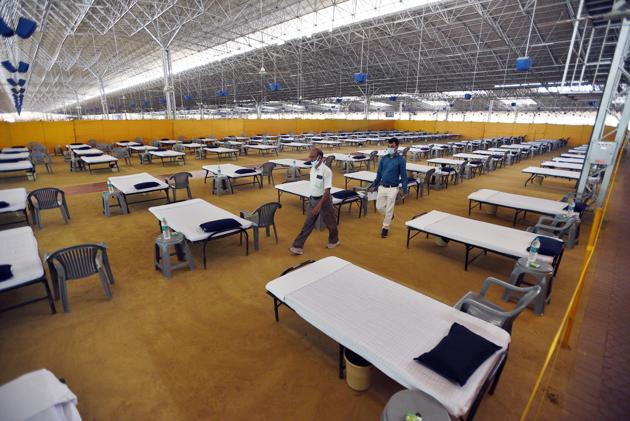
The campus of the Radha Soami Satsang Beas sect’s Chhattarpur facility, roughly the size of 22 football fields, is emerging as India’s largest Covid-19 care centre along the lines of facilities seen in Maharashtra and Wuhan earlier this year. Taken over by the Delhi government to ramp up bed strength and add medical infrastructure to combat rising Covid-19 cases, the facility is expected to be fully functional by the first week of July.
Updated on: Jun 25, 2020 3:37 PM IST


Share via


Copy link

1/9
 View Photos in a new improved layout
Updated on Jun 25, 2020 3:37 PM
Rows of beds in a section of the Radha Soami Satsang Beas sect’s Chhatarpur facility which is set to be India’s biggest Covid-19 care centre. A 2,000 bed section is expected to be ready today with the facility fully functional by the first week of July. (Ajay Aggarwal /HT Photo)
2/9
 View Photos in a new improved layout
Updated on Jun 25, 2020 3:37 PM
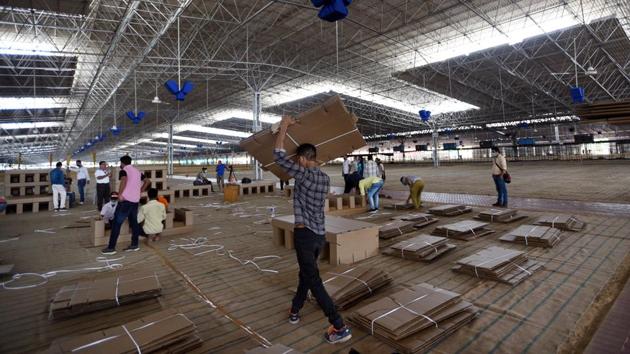
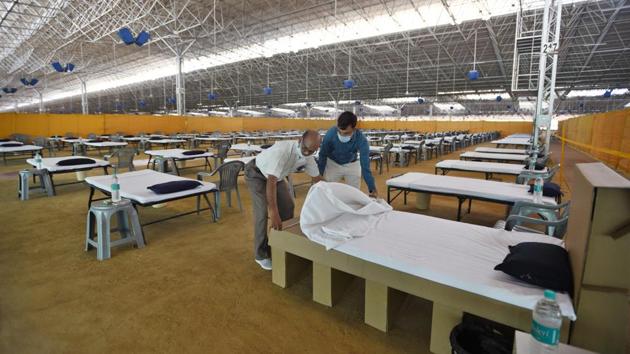
Workers assemble cardboard beds at the Radha Soami Satsang Beas Covid-19 facility in New Delhi on June 24. This Covid-19 care centre has been split into 116 separate sections of 88 beds each taking its total capacity to 10,208 beds. Of these 10% will be equipped with oxygen facilities. (Ajay Aggarwal /HT PHOTO)
3/9
 View Photos in a new improved layout
Updated on Jun 25, 2020 3:37 PM
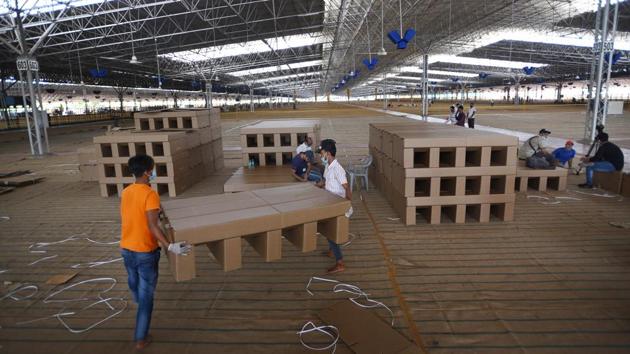
Beds being assembled and placed in the facility. Every patient being housed here will have basic amenities such as a stool, a chair, a small plastic cupboard, a dustbin and utensils, and will be given a toiletry kit. Their beds, considering the numbers will either be foldable iron cots, or those made of cardboard as seen here. (Ajay Aggarwal /HT PHOTO)
4/9
 View Photos in a new improved layout
Updated on Jun 25, 2020 3:37 PM
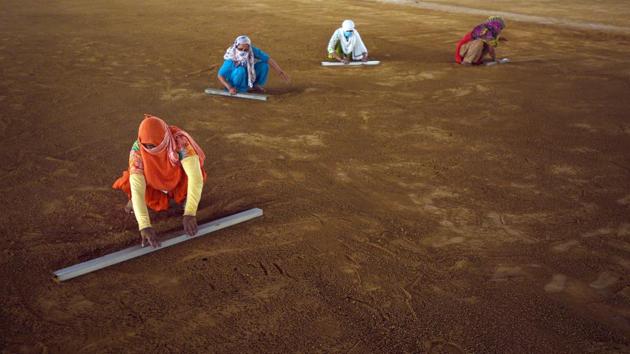
As of yesterday, the mud floors were bare and still being levelled in preparation for vinyl flooring that makes for easier cleaning. On June 23, home minister Amit Shah had tweeted that a large part of the facility would be operational by June 26 and will be manned by the Indo-Tibetan Border Police (ITBP). (Ajay Aggarwal /HT Photo)
5/9
 View Photos in a new improved layout
Updated on Jun 25, 2020 3:37 PM
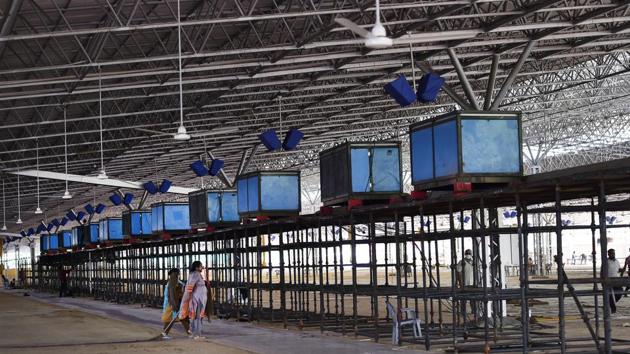
Large ceiling fans, with one for every three patients currently service the vast hall that makes the facility. Dozens of large air-conditioner units like those pictured here, have been installed with more on the way. The nursing area will be kept cooler in consideration for medical staff who spend long hours in layers of PPE gear. (Ajay Aggarwal /HT Photo)
6/9
 View Photos in a new improved layout
Updated on Jun 25, 2020 3:37 PM
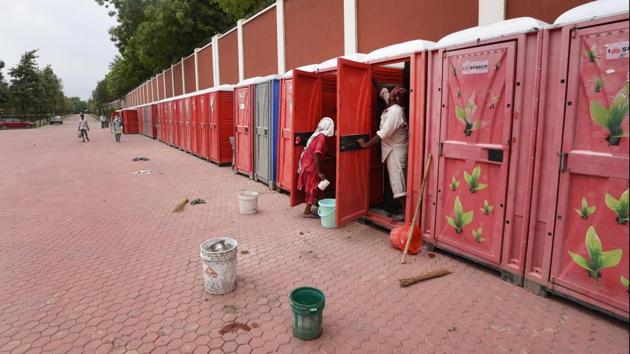
Sanitation work will be carried out by an agency hired by the South Delhi Municipal Corporation. Around 600 toilets with 70 portable ones -- including three for physically challenged people -- have been stationed. The firm hired by Delhi Urban Shelter Improvement Board (DUSIB) to set up portable toilets, told HT said that each of these can be used about 200 times before needing to be cleared. (Ajay Aggarwal /HT Photo)
7/9
 View Photos in a new improved layout
Updated on Jun 25, 2020 3:37 PM
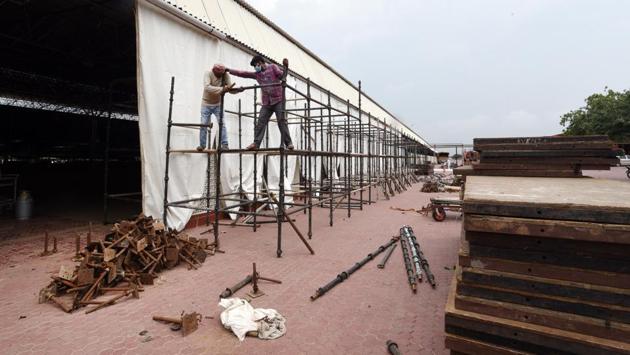
Workers construct scaffolding outside the temporary Covid-19 facility on June 24. For uninterrupted water supply in the centre, the government has installed hydrants for an underground reservoir facility that has a capacity of 1.7 lakh litres. Additionally, MTNL has been asked to provide telecommunications and internet connectivity. (Ajay Aggarwal / HT Photo)
8/9
 View Photos in a new improved layout
Updated on Jun 25, 2020 3:37 PM
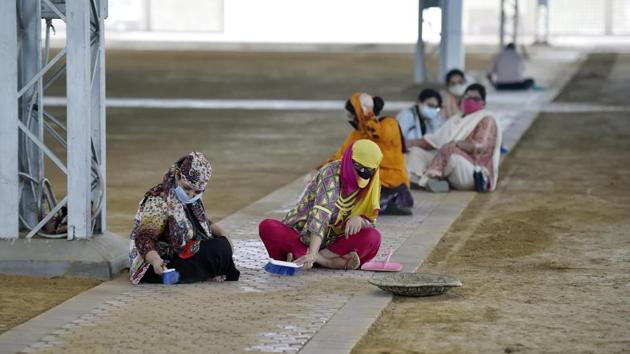
Volunteers at work in the Radha Soami Satsang Beas Centre on June 24. Once up and running, the admission and discharge of patients, will be done using an e-hospital app that is being developed by the National Informatics Centre. (Ajay Aggarwal /HT Photo)
9/9
 View Photos in a new improved layout
Updated on Jun 25, 2020 3:37 PM


