
 E-Paper



Photos | Phool Walon ki Sair: A 200-year old walk that unites Delhi
Initiated by an emperor and embraced by his people, the 19th-century festival of Phool Walon ki Sair is a living example of India’s syncretic traditions with offerings laid both at the shrine of Bakhtiyar Kaki and the Yogmaya Temple.
Updated on: Nov 4, 2017 1:09 PM IST


Share via


Copy link

1/8
 View Photos in a new improved layout
Updated on Nov 4, 2017 1:09 PM
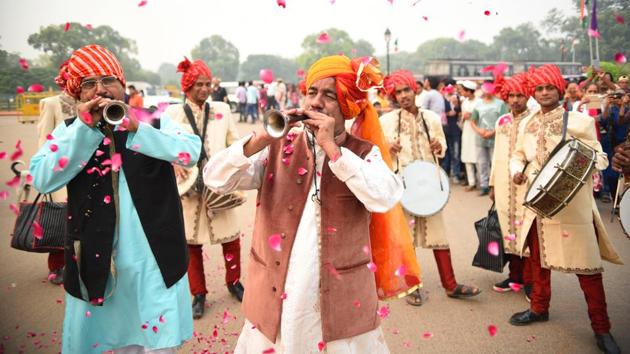
A procession is led by shehnai players in the Phool Walon ki Sair at India Gate on October 31, 2017. Initiated by Mughal emperor Akbar Shah II, the 19th-century fair drew inhabitants of Shahjahanabad to Mehrauli every year with the entire area from the Yogmaya temple to Bagh e Nazeer lit up, full of vendors selling jewellery, food and other trinkets. While the empire is long gone, this syncretic tradition lives on. (Sanchit Khanna / HT Photo)
2/8
 View Photos in a new improved layout
Updated on Nov 4, 2017 1:09 PM
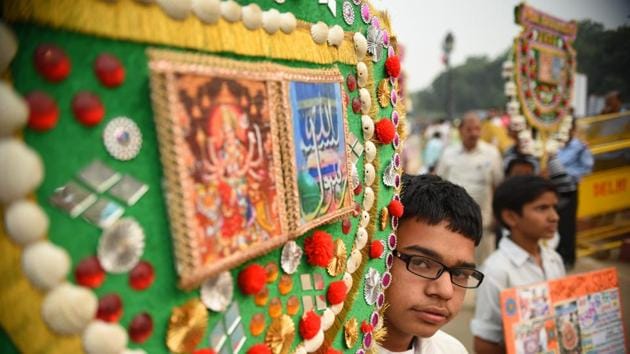
A boy carries a decorated pankha during the Phool Walon ki Sair in New Delhi. The Sair began as fulfilment of Queen Mumtaz Mahal Begum’s vow to walk to the shrine of Hazrat Qutubuddin Bakhtiyar Kaki in Mehrauli for the return of her son Mirza Jahangir from exile, who shot at the British Resident Sir Archibald Seton on his disapproval of the emperor’s choice of Jahangir as heir apparent over Bahadur Shah Zafar II. (Sanchit Khanna / HT Photo)
3/8
 View Photos in a new improved layout
Updated on Nov 4, 2017 1:09 PM
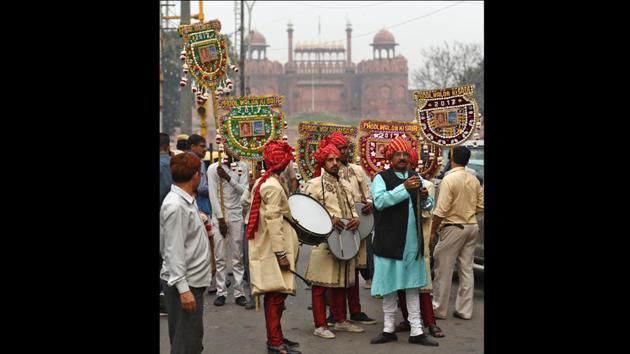
The Sair makes its way through the Red Fort at Chandni Chowk in Delhi. When the floral canopy and chadar for the shrine were being made, flower sellers also made a floral pankha as an offering. The emperor on his part sent a floral offering to the temple of Yogmaya Devi, Lord Krishna’s sister. Then on, every year the emperor ensured both dargah and temple were visited, thus cementing this tradition. (Sanchit Khanna / HT Photo)
4/8
 View Photos in a new improved layout
Updated on Nov 4, 2017 1:09 PM
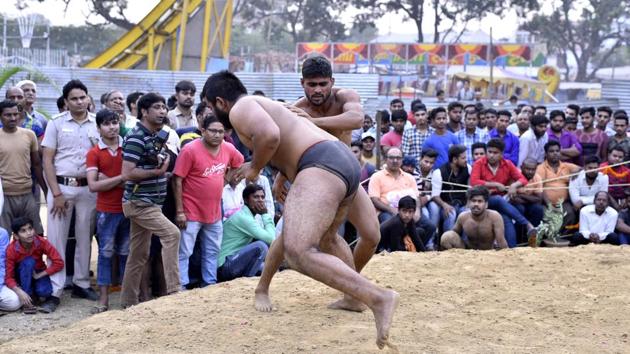
A mud wrestling bout takes place near Hauz-i-Shamsi during Phool Walon ki Sair festivities on November 01, 2017 in New Delhi. With the fall of the Mughal empire in 1857, the Sair was also stopped. It was restored later by the British but halted again during the Quit India Movement in 1942 to prevent mass gatherings. Jawaharlal Nehru in 1962 initiated the festival’s revival as a symbol of secular, modern India. (Arun Sharma / HT Photo)
5/8
 View Photos in a new improved layout
Updated on Nov 4, 2017 1:09 PM
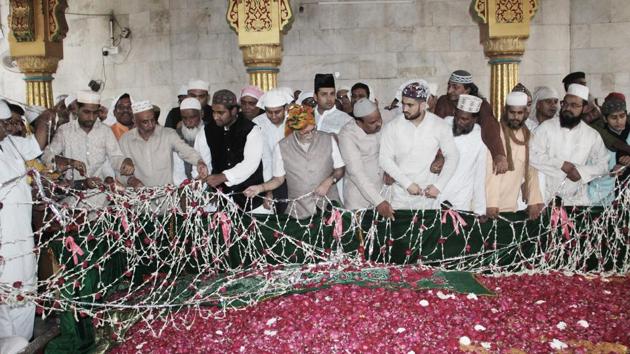
The floral chadar is laid at the tomb of Khwaja Bakhtiyar Kaki at Mehrauli led by the Lt. Governor Anil Baijal (C), representing the head of state on November 02, 2017. Here it is the Hindu brethren who are supposed to take the lead. Every year the President and Lt. Governor send a pankha which is carried from the Town Hall in Chandni Chowk to Mehrauli. (HT Photo)
6/8
 View Photos in a new improved layout
Updated on Nov 4, 2017 1:09 PM
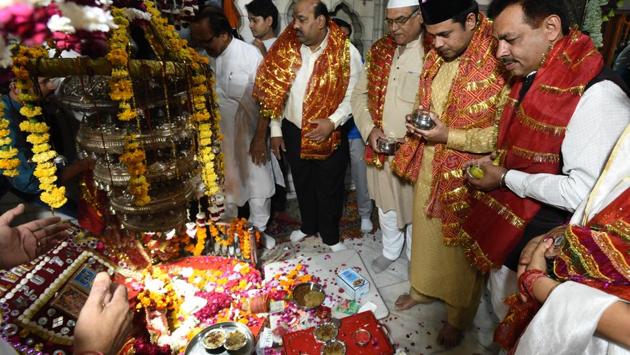
Flowers and offerings are laid at the nearby Yogmaya Temple in New Delhi, on November 03, 2017. The procession heads to Yogmaya Temple the next day and offers the floral chadar, this time with the Muslim participants leading. The syncretic visit to both locations leads back to the origins of the Sair when the emperor, if kept from visiting the temple for some reason, wouldn’t go to the dargah either. (Sanchit Khanna / HT Photo)
7/8
 View Photos in a new improved layout
Updated on Nov 4, 2017 1:09 PM
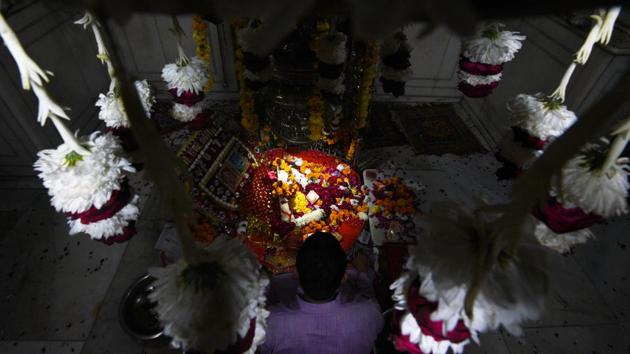
Offerings are laid during Phool Walon ki Sair at Yogmaya Temple in New Delhi. The procession, traditionally held in the month of Bhado’n (August/September) is now held after the monsoon. It forms a way of offering obeisance and asking for a fruitful year at two places of worship belonging to two communities among flower traders. (Sanchit Khanna / HT Photo)
8/8
 View Photos in a new improved layout
Updated on Nov 4, 2017 1:09 PM


