

 E-Paper


Delhi 100: defining moments
1 / 24

 View Photos in a new improved layout
Updated on Dec 14, 2011 01:16 am IST
Inaugural Indian F1 Grand Pix held in Buddh International Circuit in Greater Noida was a grand success. It was a defining moment in Indian motor sport and proved India has the ability to host a major sporting event. The venue had a capacity of more than 1,00,000, and there were hardly any seats empty.
2 / 24
 View Photos in a new improved layout
Updated on Dec 14, 2011 01:16 am IST
After seven years of planning and controversies, the CWG event took place in October last year with a grand opening ceremony that was witnessed by millions. The star attraction of the spectacular ceremony that mesmerized the world was the Rs 50 crore helium balloon. The opening ceremony helped repair some of the damage caused by controversies in the build–up to the Games.
3 / 24
 View Photos in a new improved layout
Updated on Dec 14, 2011 01:16 am IST
Delhi Metro, which started its journey in 2002, not just changed the way Delhiites commute, but also became a symbol of the city’s march into the future. Earlier this the city also got the sleeker Airport Express Metro, which connects the swanky Terminal 3 of IGI Airport to the heart of the city.
4 / 24
 View Photos in a new improved layout
Updated on Dec 14, 2011 01:16 am IST
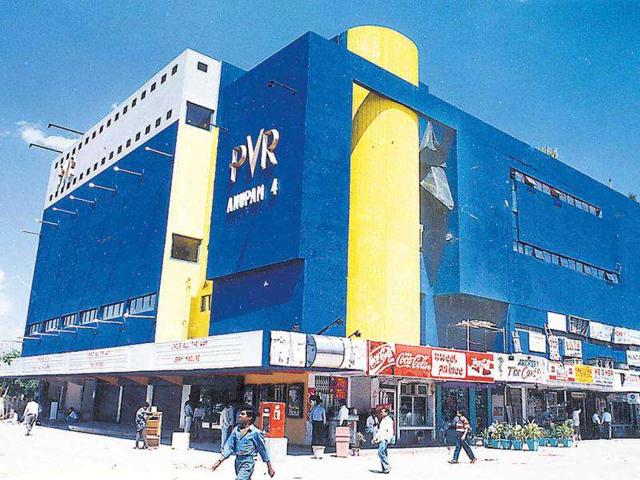
PVR Anupam in Saket was the first multiplex of the country. It was launched in June 1997 as joint venture between Priya Exhibitors Private Limited and Village Roadshow Limited. A whole new cinema-viewing experience, it was an instant hit with Delhites and can be credited with starting a multiplex revolution in the country.
5 / 24
 View Photos in a new improved layout
Updated on Dec 14, 2011 01:16 am IST
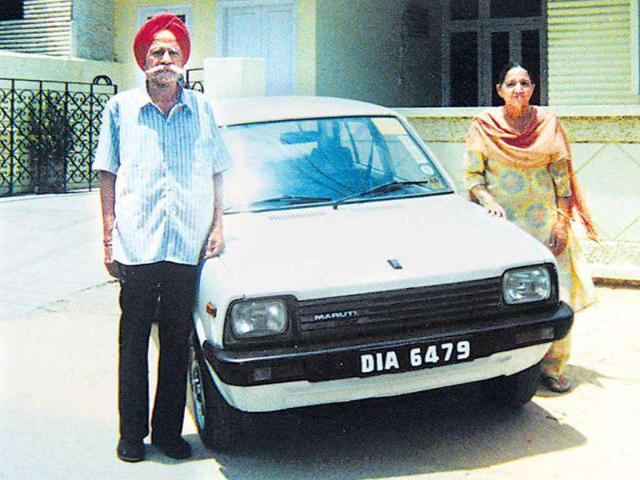
Harpal Singh and Gulshanbeer Kaur of Delhi became the first proud owners of the first Maruti 800 car in 1983. The couple bought the car for Rs 47,500 and its keys were handed to them by the then Prime Minister Indira Gandhi. The Maruti 800 fuelled a car revolution in the country and became a symbol of status for the Indian middle class in the 1980s.
6 / 24
 View Photos in a new improved layout
Updated on Dec 14, 2011 01:16 am IST
Before 1971, buses run by the Delhi Transport Undertaking (DTU) formed the backbone of the city's public transport system. But DTU, part of the MCD, did not ensure a smooth ride. So, in 1971 DTU was incorporated and rechristened Delhi Transport Corporation (DTC). The Central government took over its assets and liabilities. It was taken over by the Delhi government in August 1996.
7 / 24
 View Photos in a new improved layout
Updated on Dec 14, 2011 01:16 am IST
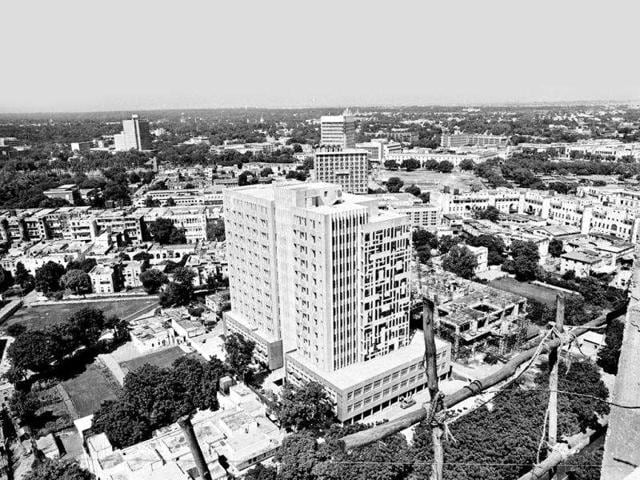
In the '70s, there was a scramble among businesses to acquire a space in Connaught Place. But CP alone could not meet the rising demand for commercial space. So many Lutyens’ bungalows on Barakhamba Road and Curzon Road gave way to the city’s first high-rises such as Kailash Building, Himalaya House, Kanchenjunga Building and others. By the late ’70s, downtown New Delhi had acquired a skyline.
8 / 24
 View Photos in a new improved layout
Updated on Dec 14, 2011 01:16 am IST
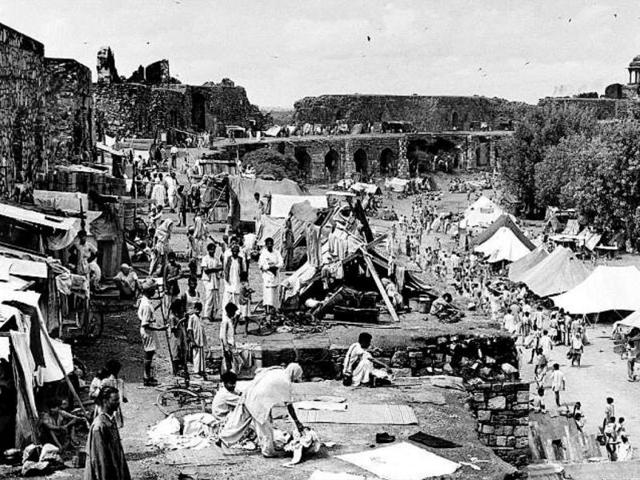
A refuge for many: Post Partition, nearly five lakh people poured into the city from western Punjab, Sindh and the Northwest Frontier. New Delhi then did not have the infrastructure to support migration of this magnitude. The refugees moved into camps, gurudwaras, temples, schools and military barracks. The less fortunate settled on pavements as well as parks, and Delhi was never the same again. GETTY IMAGES
9 / 24
 View Photos in a new improved layout
Updated on Dec 14, 2011 01:16 am IST
Capital build-up: Independent India’s new Capital saw a shift from colonial architectural. The city needed an architecture to showcase its faith in modernity and progress. Utilitarian modernism became the template for almost all government buildings that came up in the 1950s and dot the Central Secretariat area. PHOTO COURTESY: PHOTO DIVISION, GOVERNMENT OF INDIA
10 / 24
 View Photos in a new improved layout
Updated on Dec 14, 2011 01:16 am IST
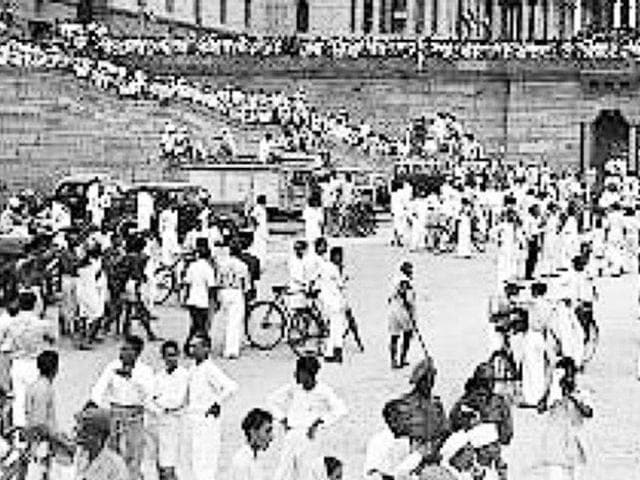
Celebrating August 15, 1947: Delhi celebrated Independence Day in a big way. Roads had been cleaned and festooned with tricolours, and arches erected over many of them. The highlight of the day was a flag salutation parade organised in the evening at the Prince’s Park. Around half a million people — who came on foot, bicycles and cars — gathered to witness the event. All roads leading to Prince’s Park were jampacked. PHOTO COURTESY: AP
11 / 24
 View Photos in a new improved layout
Updated on Dec 14, 2011 01:16 am IST
City’s first grand hotel: The Imperial was built in the style of downtown hotels in America. It was then the tallest building in New Delhi. It was inaugurated by Lord Willingdon in 1936 at a grand ball in the presence of 15,00 guests. The hotel got its name from Lady Willingdon, who took personal interest in choosing the interiors of the hotel. PHOTO COURTESY: FAMOUS HOTELS.ORG
12 / 24
 View Photos in a new improved layout
Updated on Dec 14, 2011 01:16 am IST
Centre point of the new Capital: By the 1940s, the reputation of Connaught Place had spread far and wide. It had high-end shops that could give those in European high streets a run for their money. These shops, owned by suave English- speaking owners, sold high quality imported goods and were popular with the royalty, top businessmen and civil servants. PHOTO COURTESY: NDTA
13 / 24
 View Photos in a new improved layout
Updated on Dec 14, 2011 01:16 am IST
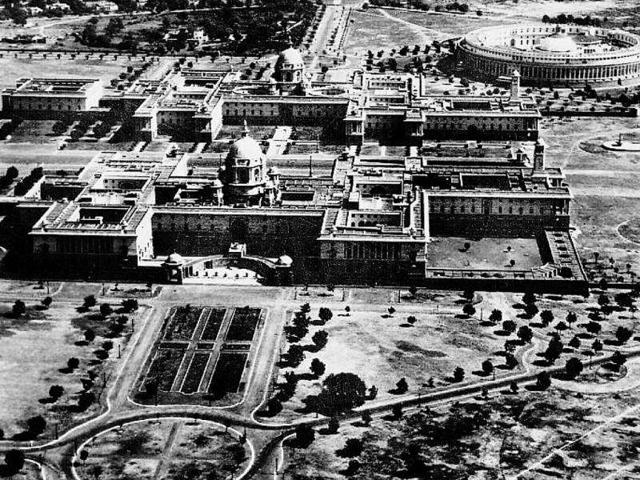
Bird’s eye view of the city: It was only by 1939 that New Delhi could fully emerge as a city. It now comprises Connaught place, Parliament House, the Viceroy House (now Rashtrapati Bhavan), the Central Secretariat, the Imperial Hotel, along with elite residential colonies. Meanwhile, Delhi’s population rose by nearly 40% in a decade post 1931. GETTY IMAGES
14 / 24
 View Photos in a new improved layout
Updated on Dec 14, 2011 01:16 am IST
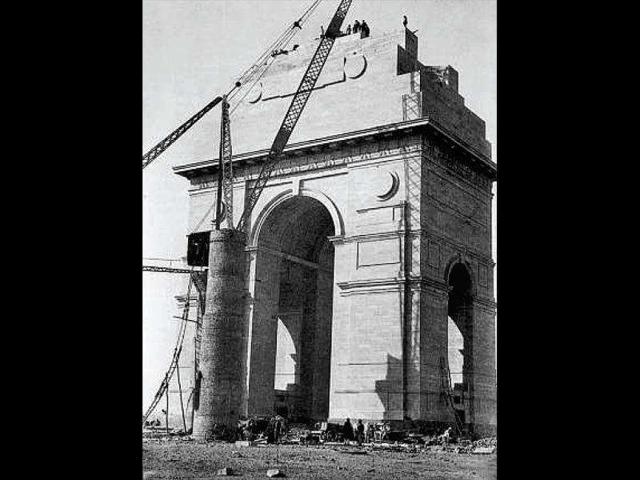
Capital identity: India Gate is the iconic structure that everyone identifies with New Delhi. The India War Memorial (as it was originally called) is dedicated to Indian soldiers who died in WW1. Designed by Edwin Lutyens, the foundation stone of the memorial was laid on February 10, 1921, by the then Duke of Connaught, and inaugurated in 1931 by then Viceroy Lord Irwin. Photos courtesy: New Delhi: Making of A Capital, Roli Books
15 / 24
 View Photos in a new improved layout
Updated on Dec 14, 2011 01:16 am IST
Heart of the city: A central business district was part of the original plan of British Imperial Capital. The British wanted a new Capital, which could serve as shopping, entertainment and fine dining hub. The construction of Connaught Place — designed by Robert Tor Russell — was started in 1929. The inspiration came from The Royal Crescent in the city of Bath in England. Photos courtesy: New Delhi: Making of A Capital, Roli Books
16 / 24
 View Photos in a new improved layout
Updated on Dec 14, 2011 01:16 am IST
Inauguration of a capital: Twenty years after it was founded, Lord Irwin, the then Viceroy of India, formally inaugurated New Delhi on February 10, 1931. To mark the event, the Viceroy inaugurated the four dominion columns with a 31-gun salute. The celebrations lasted two weeks with the Viceroy hosting garden parties and polo matches. About 5,000 guests attended the event. Photos courtesy: New Delhi: Making of A Capital, Roli Books
17 / 24
 View Photos in a new improved layout
Updated on Dec 14, 2011 01:16 am IST
Rashtrapati Bhawan: The Government House (now Rashtrapati Bhavan), designed by Edwin Lutyens, was built to house the Viceroy. The most impressive feature was its dome. It was Lutyens’ most cherished project. About 29,000 workers toiled for eight years at any given point of time. 4.5 million bricks and 7, 500 tonnes of cement was used. The cost: Rs1.4 crore. Photos courtesy: New Delhi: Making of A Capital, Roli Books
18 / 24
 View Photos in a new improved layout
Updated on Dec 14, 2011 01:16 am IST
Foundation stone is laid: The foundation stone for a new Capital was laid on December 15, 1911, at Kingsway camp, North Delhi, where New Delhi was expected to come up. But an expert committee comprising architects such as Edwin Lutyens decided otherwise. They found the site swampy and vulnerable to floods. The stones were later placed in the secretariat buildings. Photos courtesy: New Delhi: Making of A Capital, Roli Books
19 / 24
 View Photos in a new improved layout
Updated on Dec 14, 2011 01:16 am IST
The hunt for a suitable site: New Delhi architect Edwin Lutyens looked for a suitable site for the new Imperial Capital atop an elephant. The rocky and thickly vegetated area near Raisina Hills made it difficult to use a motor vehicle. Lutyens hated riding the elephant, and said this to his wife in letters that spoke of how tiring mounting the elephant was, along with sketches of how he did it. Photos courtesy: New Delhi: Making of A Capital, Roli Books
20 / 24
 View Photos in a new improved layout
Updated on Dec 14, 2011 01:16 am IST
The royal couple: King Emperor George V and Queen Mary observe a show of pageantry from the Red Fort ramparts. In the foreground are decked-up young Indian Princes, who were called ‘Pages’. Soon after the Durbar ended, the King, an avid hunter and stamp collector, rushed to the Nepal border on a tiger hunting expedition while the Queen visited Taj Mahal. Photos courtesy: New Delhi: Making of A Capital, Roli Books
21 / 24
 View Photos in a new improved layout
Updated on Dec 14, 2011 01:16 am IST
Durbar procession: The 5-mile-long royal procession before the Durbar touched Red Fort, Jama Masjid and Chandni Chowk before reaching Kingsway Camp. King George V was supposed to ride a bedecked elephant but he refused and rode a horse. Delhiites missed the slightly short George V in his marshal uniform. The King later complained of a ‘chilly reception’. Photos courtesy: New Delhi: Making of A Capital, Roli Books
22 / 24
 View Photos in a new improved layout
Updated on Dec 14, 2011 01:16 am IST
India’s newest fashion frontier: Post mid-1930s, New Delhi emerging as the fashion capital of British India. Long coats and scarves gave way to short English coats and collar ties. The city’s fashionable elite included civil servants, anglicised Indians from Civil Lines and rich traders of the Walled City. With the advent of 1940s, double-breasted drape suits with peak labels became fashionable. PHOTO COURTESY: MAHATTA ARCHIVES
23 / 24
 View Photos in a new improved layout
Updated on Dec 14, 2011 01:16 am IST
Yesteryear’s Gaffar Market: This market in central Delhi was built in 1952 at the cost of R5.3 lakh. In the 1950s, it wasn’t the congested place that it is today. Over the years, it has become one of the city’s well-known grey markets for electronic goods to which several products find their way much before they are launched in India. PHOTO COURTESY: PHOTO DIVISION, GOVERNMENT OF INDIA
24 / 24
 View Photos in a new improved layout
Updated on Dec 14, 2011 01:16 am IST