
 E-Paper



Olympics: Unforgettable moments
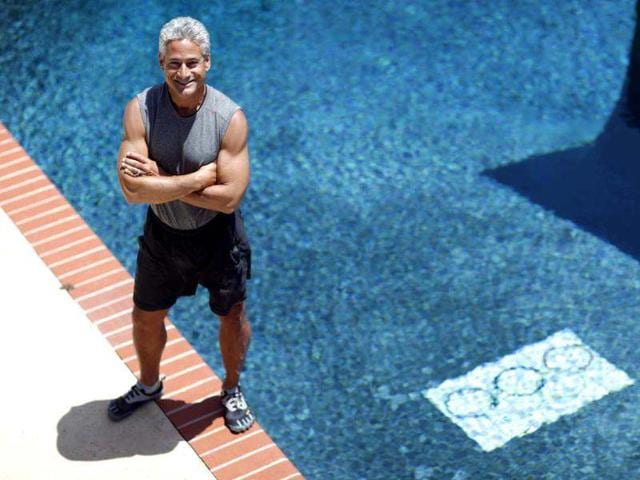
American Olympic diver Greg Louganis poses for a portrait at his home in Malibu, California. Louganis is one of the last US divers to triumph at the Olympics, and many call him the best diver ever. Reuters/Mario Anzuoni
Updated on: Jul 23, 2012 2:08 PM IST


Share via


Copy link

1/19
 View Photos in a new improved layout
Updated on Jul 23, 2012 2:08 PM
American Olympic diver Greg Louganis poses for a portrait at his home in Malibu, California. Louganis is one of the last US divers to triumph at the Olympics, and many call him the best diver ever. Reuters/Mario Anzuoni
2/19
 View Photos in a new improved layout
Updated on Jul 23, 2012 2:08 PM
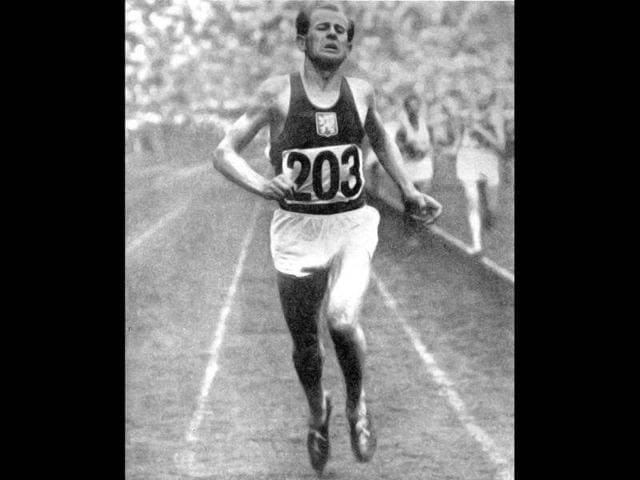
Emil Zatopek, the Czech long distance runner who was the only athlete to ever win three gold medals in a single Olympic Games at Helsinki in 1952, is shown in this file photo from the 1948 Olympic Games in London winning the gold in the 10km run. Reuters photo
3/19
 View Photos in a new improved layout
Updated on Jul 23, 2012 2:08 PM
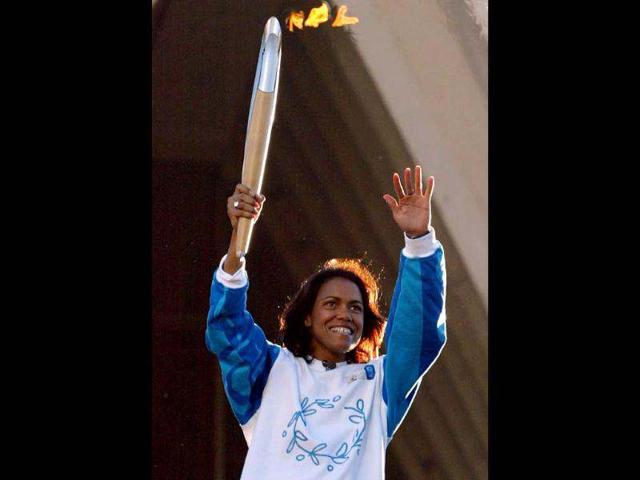
400 metres gold medallist Cathy Freeman holds the Olympic torch on the steps of the Sydney Opera House. Reuters photo
4/19
 View Photos in a new improved layout
Updated on Jul 23, 2012 2:08 PM
In 1957, an automobile crash nearly killed Melbourne 1956 discus gold medallist Al Oerter, but he recovered to defend his title at Rome 1960 with an Olympic record. In Tokyo 1964, Oerter, bothered by a neck injury and a torn rib cartilage, again smashed the Olympic record to complete hat-trick. He went to Mexico City in 1968, and produced another record to become the first athlete to win four consecutive gold.
5/19
 View Photos in a new improved layout
Updated on Jul 23, 2012 2:08 PM
Greek veteran weighlifter Piros Dimas (R) and Chinese gymnast Li Ning light a cauldron with the Olympic Flame in Athens. Gymnast Li Ning won top honours in floor exercise, pommel horse and rings; he won silver on the vault and was part of the team that won silver in men’s all-around event. Reuters/John Kolesidis
6/19
 View Photos in a new improved layout
Updated on Jul 23, 2012 2:08 PM
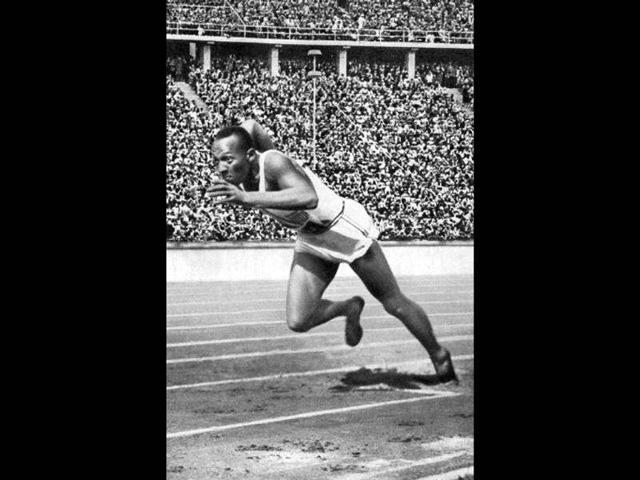
At Berlin 1936, US champion Jesse (James Cleveland) Owens, seen here powering his way at the start of the 200m event that he won, enjoyed seven days the like of which had never been seen before, winning four golds. AFP photo
7/19
 View Photos in a new improved layout
Updated on Jul 23, 2012 2:08 PM
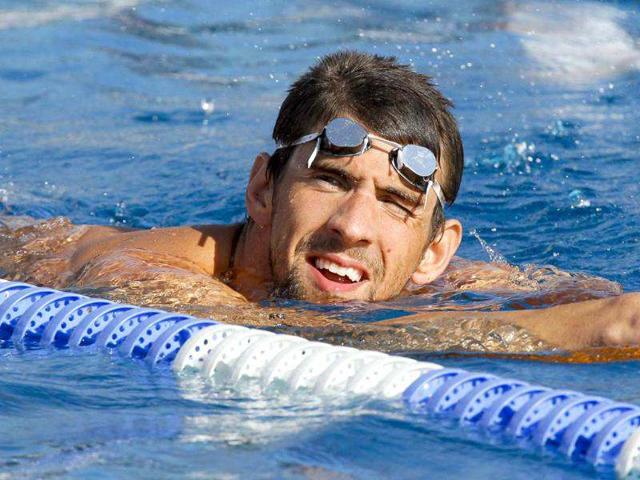
Member of US national Olympic swimming team Michael Phelps re-wrote the history books at Beijing’s National Aquatics Centre, when in the space of eight short days, the American raced 17 times and claimed eight gold medals, to add to the six he won four years previously in Athens. Reuters/Robert Pratta
8/19
 View Photos in a new improved layout
Updated on Jul 23, 2012 2:08 PM
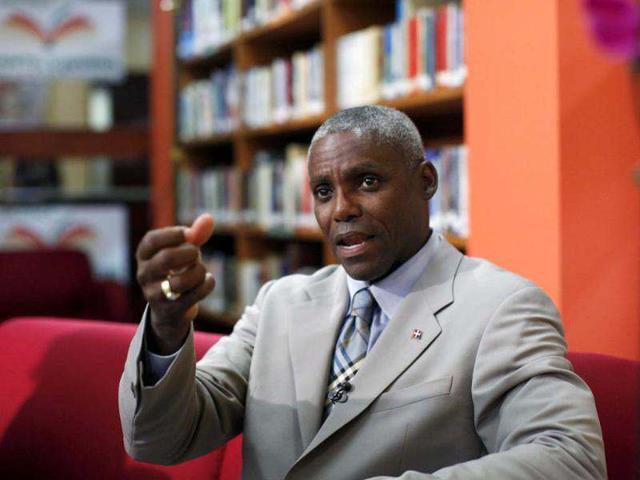
In 1996, facing Mike Powell in the final, American track and field star Carl Lewis leapt 8.50m with his third jump to secure his ninth Olympic gold. Lewis speaks to local media in Santo Domingo in this file photo. Reuters/Eduardo Munoz
9/19
 View Photos in a new improved layout
Updated on Jul 23, 2012 2:08 PM
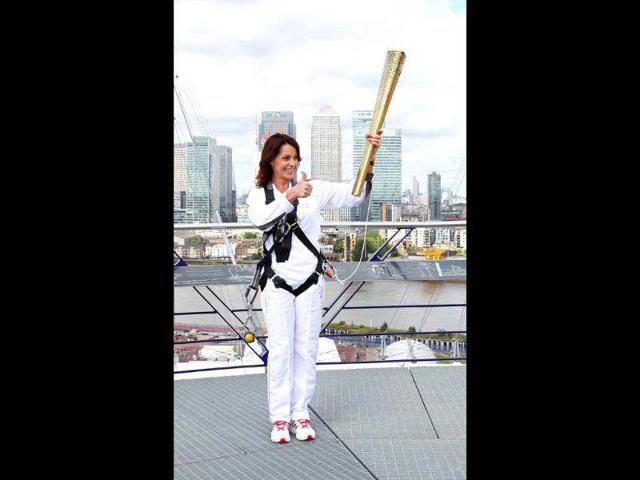
Torchbearer Nadia Comaneci poses with the Olympic Torch at North Greenwich Arena, London. In the 1976 Games, 14-year-old Comaneci's routine on the uneven bars was flawless, with a perfect 1.00. AP/Gareth Fuller
10/19
 View Photos in a new improved layout
Updated on Jul 23, 2012 2:08 PM
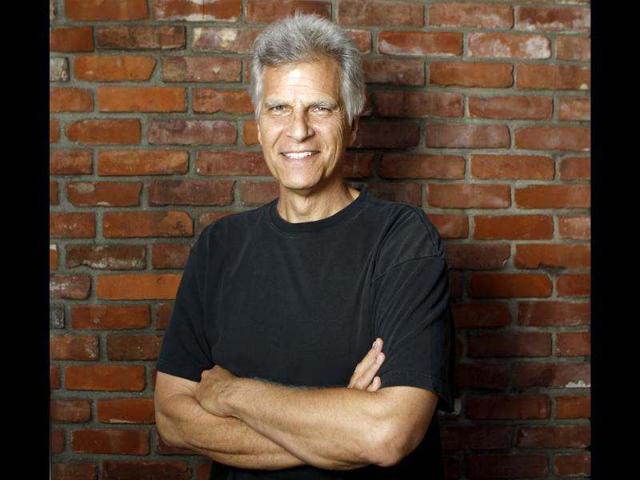
In 1968, retired US swimmer Mark Spitz won two gold medals and called his first Olympics "the worst meet of my life". Four years later he insisted he was "more mature" and won the 200m butterfly, 200m freestyle and 100m butterfly and anchored two freestyle relay teams to victory. His fifth gold equalled the then-record held by Italian fencer Nedo Nadi (1920) and Paavo Nurmi (1924). Spitz added two more. All seven of his gold came in world record times. Reuters/Mario Anzuoni
11/19
 View Photos in a new improved layout
Updated on Jul 23, 2012 2:08 PM
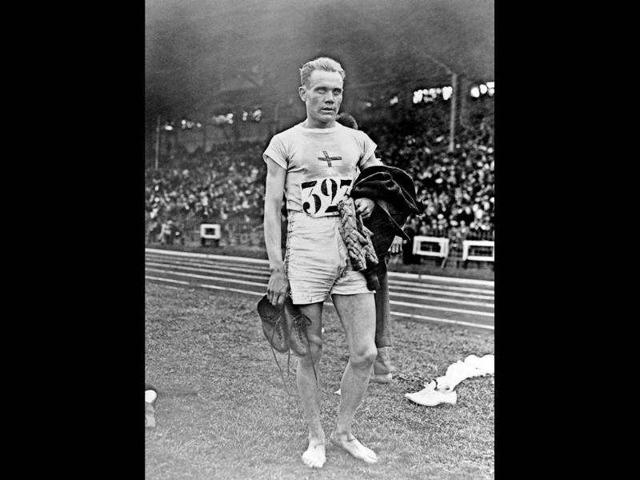
Some Olympians are born to run fast, others simply force themselves. Paavo Nurmi was one of the latter, a man of such iron will and fierce discipline that nobody hoping to survive on talent alone could dream of coming near him. In 1958, when he looked back over his athletic career, he said that the one thing it had taught him was that there are "neither unbeatable records nor human limits". Reuters photo
12/19
 View Photos in a new improved layout
Updated on Jul 23, 2012 2:08 PM
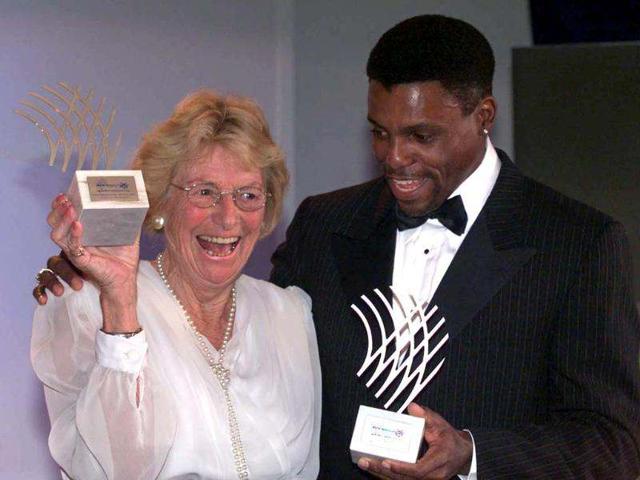
Dutch 1948 Olympic Champion Fanny Blankers-Koen (L) holds up her trophy as she poses with US champion Carl Lewis after they received their "Athlete of the Century" awards during the World Athletic Federation gala in Monte Carlo. In 1948, Fanny demolished prejudices about gender, age and motherhood and, as a pioneer and standard-bearer who inspired millions, established the legitimacy of women's sport in an Olympic movement. Reuters photo
13/19
 View Photos in a new improved layout
Updated on Jul 23, 2012 2:08 PM
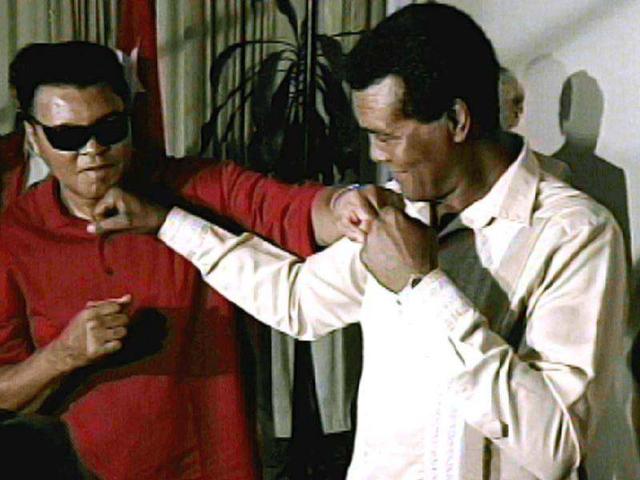
Former boxing champion Muhammad Ali (L) playfully boxes with Cuban former amateur heavyweight Teofilo Stevenson. After winning a boxing gold at Munich 1972, Stevenson turned down at least three offers of or above a million dollars. He successfully defended his gold at Montreal 1976 and Moscow 1980 and each time returned to his £35-a-month stipend. Reuters photo
14/19
 View Photos in a new improved layout
Updated on Jul 23, 2012 2:08 PM
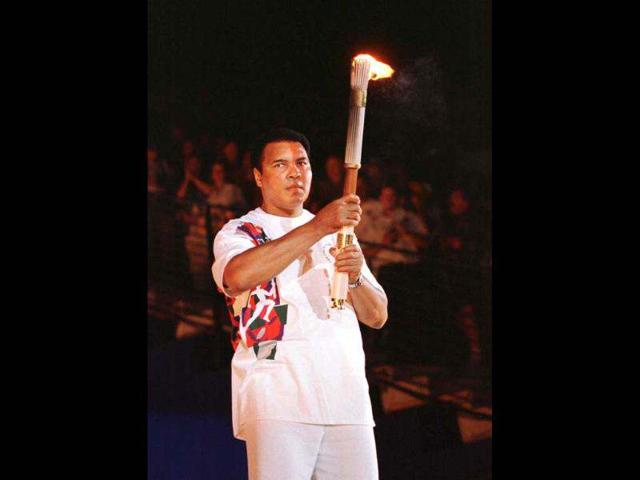
Former boxer Cassius Clay's impact on Rome 1960 is talked up because of the worldwide fame he later gained as Muhammad Ali. Here he holds up the torch during the opening ceremonies of the XXVI Centennial Olympic Games in Atlanta. Reuters/Andy Clark
15/19
 View Photos in a new improved layout
Updated on Jul 23, 2012 2:08 PM
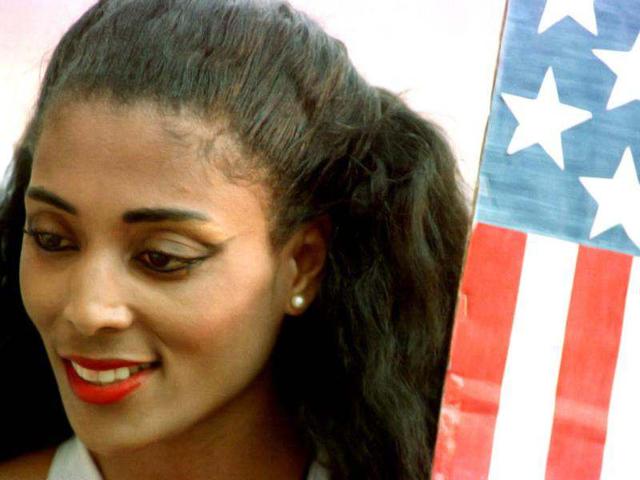
Florence Griffith Joyner poses next to an American flag at the 1988 Seoul Olympics. 'Flo Jo', who won three sprint gold medals at the Games, died of an apparent heart seizure. Gary Hershorn
16/19
 View Photos in a new improved layout
Updated on Jul 23, 2012 2:08 PM
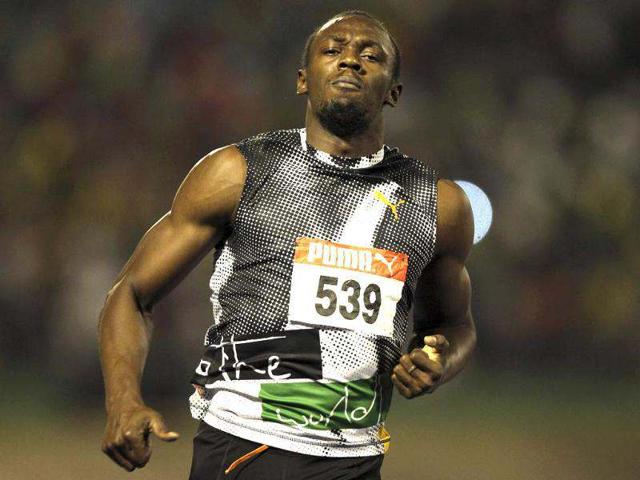
Usain Bolt runs during their men's 100 meters final event at the Jamaican Olympic trials in Kingston city. At Beijing 2008, Bolt's 100m run was astonishingly emphatic. Reuters/Ivan Alvarado
17/19
 View Photos in a new improved layout
Updated on Jul 23, 2012 2:08 PM
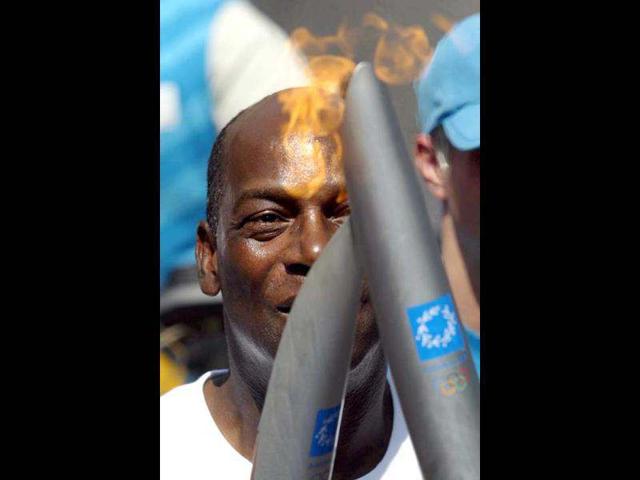
Former US Olympian Bob Beamon passes the Olympic flame during the torch relay in New York. Beamon set an Olympic and world record at the Mexico City games in 1968 with a long jump of 29 feet, two-and-a-half inches. His record stood for 23 years. Reuters/Todd Warshaw
18/19
 View Photos in a new improved layout
Updated on Jul 23, 2012 2:08 PM
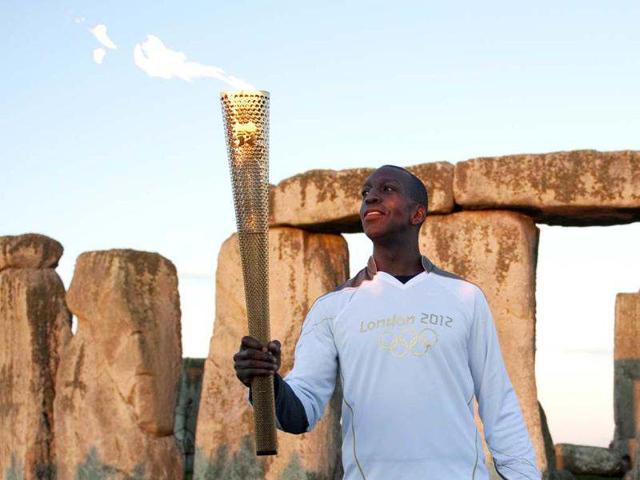
Former US Olympic athlete Michael Johnson holds the Olympic Torch at Stonehenge, a World Heritage site, in Salisbury, southern England. Come what may, Johnson will forever have Atlanta and those 10 days when he became the only male athlete ever to win both the 200 metres and 400 metres at the same Olympics. Reuters/Kieran Doherty
19/19
 View Photos in a new improved layout
Updated on Jul 23, 2012 2:08 PM


