
 E-Paper



Photos: The faces behind Cuba’s famed cigars
One is a weathered tobacco picker who harvests bright-green leaves in the fields of Pinar del Rio province. Another is a Havana resident who selects the best leaves with elaborately manicured hands, her delicate nails decorated with acrylic swoops of color and tiny beads. Both are among the many faces of Cuba's tobacco industry, which is a rare bright spot in the island's struggling economy, having witnessed among its best years in 2017.
Updated on: Mar 7, 2018 10:24 AM IST


Share via


Copy link

1/10
 View Photos in a new improved layout
Updated on Mar 7, 2018 10:24 AM
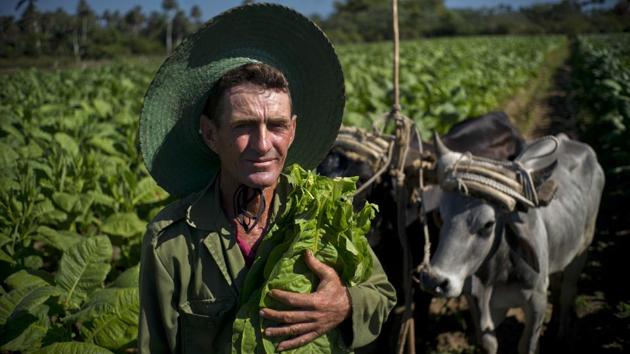
The journey of a Cuban cigar begins with tobacco pickers like Jorge Luis Leon Becerra seen here with his oxen and a handful of freshly harvested tobacco leaves, at the Martinez tobacco farm in Cuba’s western province of Pinar del Rio where much of the island’s tobacco is grown. (Ramon Espinosa / AP)
2/10
 View Photos in a new improved layout
Updated on Mar 7, 2018 10:24 AM
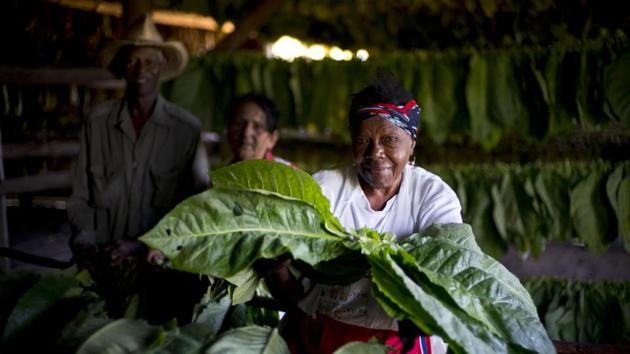
Once harvested the leaves are moved to high-ceilinged drying houses, where workers like 75-year-old Delma Mendivez Martinez thread them and hang them for the first in a series of drying and curing sessions. Delma has worked in this tobacco farm since she was 14 years old. (Ramon Espinosa / AP)
3/10
 View Photos in a new improved layout
Updated on Mar 7, 2018 10:24 AM
The Martinez tobacco farm is run by Roberto Armas Valdes. He assumed the running of the family farm when his father-in-law passed away 5 years ago. “It is a very hard and complicated job to manage a farm, but this year has been very good for tobacco,” he said. Increased yields and better quality made 2017 one of the best ever for Cuban farmers and cigar producers. (Ramon Espinosa / AP)
4/10
 View Photos in a new improved layout
Updated on Mar 7, 2018 10:24 AM
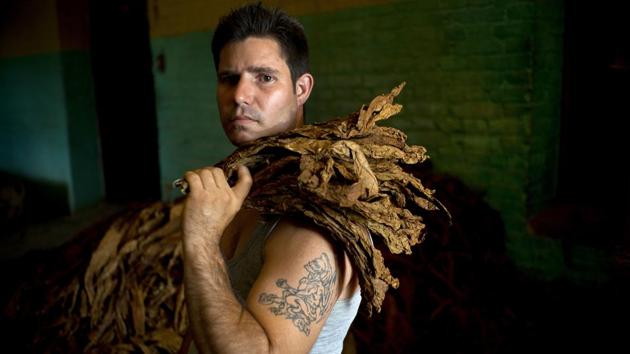
After the private Martinez farm, the tobacco goes to state-run warehouses in the town of San Luis, where workers like Juan Hernando Regalado Rosales shake the leaves dry as soon as they arrive. Rosales has been working at this center for 15 years. (Ramon Espinosa / AP)
5/10
 View Photos in a new improved layout
Updated on Mar 7, 2018 10:24 AM
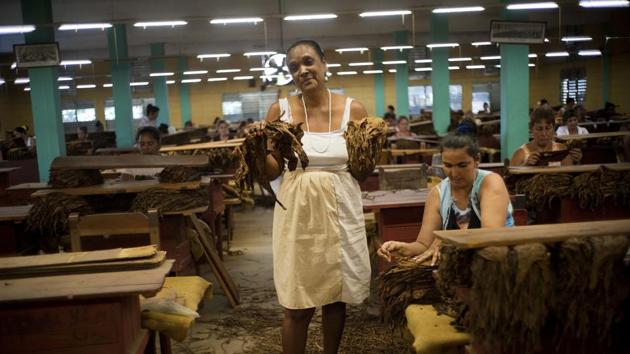
Specialists in the “despalillo”, like Farra Marquez Rubiera, run the dry harvested leaves through a destemming process to make them more pliable at the warehouse. Marquez's whole family works in the cultivation of tobacco. (Ramon Espinosa / AP)
6/10
 View Photos in a new improved layout
Updated on Mar 7, 2018 10:24 AM
Luis Miguel Vergara poses in front of an image of late Cuban leader Fidel Castro with handfuls of fermented tobacco leaves in preparation for more drying. Depending on the leaf, tobacco is left to dry in a dark space from anywhere between 45 days to 90 days. (Ramon Espinosa / AP)
7/10
 View Photos in a new improved layout
Updated on Mar 7, 2018 10:24 AM
From San Luis, the aged tobacco finds its way to Havana, into the hands of experts like Milagros Suarez Tamayo who chooses the best colors and textures for specific lines of cigars, which are rolled and packaged at the La Corona factory. (Ramon Espinosa / AP)
8/10
 View Photos in a new improved layout
Updated on Mar 7, 2018 10:24 AM
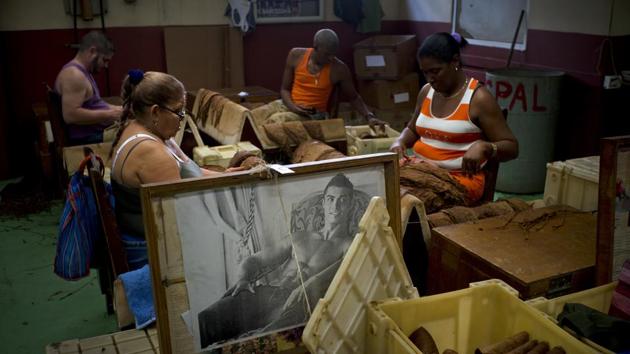
Workers sort tobacco leaves, choosing only the best for rolling, next to a portrait of Portuguese football star Cristiano Ronaldo, at La Corona cigar factory. Most of the workers in the factory are women, and while men put up images of sports stars in action, the women prefer more relaxed images of the footballer. (Ramon Espinosa / AP)
9/10
 View Photos in a new improved layout
Updated on Mar 7, 2018 10:24 AM
Puffing on a cigar between work is Yordanka Herrera, a cigar roller at the factory. Propped up on her shoulder is one side of a mould where tobacco leaves are placed, pressed and shaped into cigars. The cigar rollers undergo specialised training programmes before they can roll top quality Cuban cigars. (Ramon Espinosa / AP)
10/10
 View Photos in a new improved layout
Updated on Mar 7, 2018 10:24 AM


