
 E-Paper



Photos: Covid-19 test positivity in India’s second wave still rising, data shows
With Covid-19 in India registering daily spikes in new cases not seen anywhere in the world so far – the proportion of cases returning positive for Covid-19 – is also rising in every major state in the country despite testing record levels, according to an HT analysis. This suggests that this wave is yet to peak and that daily cases may continue to grow in most states -- at least in the near future. To analyse the trends of the outbreak, HT analysed data from the past month (between March 23 and April 22) in India’s 20 most populous regions, looking at two factors — positivity rate and daily tests for Covid-19.
Published on: Apr 24, 2021 4:05 PM IST


Share via


Copy link

1/9

 View Photos in a new improved layout
Published on Apr 24, 2021 4:05 PM
A health worker wearing PPE carries a patient suffering from Covid-19, outside the casualty ward at Guru Teg Bahadur Hospital, in New Delhi on April 24. With daily cases touching new highs, the positivity rate (proportion of cases testing positive) is still rising in every major state in the country despite testing at record levels, according to an HT analysis. (Adnan Abidi / REUTERS)
2/9
 View Photos in a new improved layout
Published on Apr 24, 2021 4:05 PM
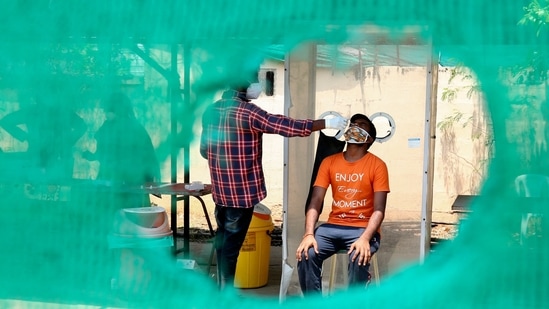
A health worker takes a nasal swab sample from a man to test for Covid-19 in Hyderabad on April 24. The country is testing at the highest rate ever – in the week ending April 22, India on average, tested 1.56 million samples every day. And this number is increasing: on April 23, the country set a single-day testing record with 1.75 million samples tested. (Mahesh Kumar A. / AP)
3/9
 View Photos in a new improved layout
Published on Apr 24, 2021 4:05 PM
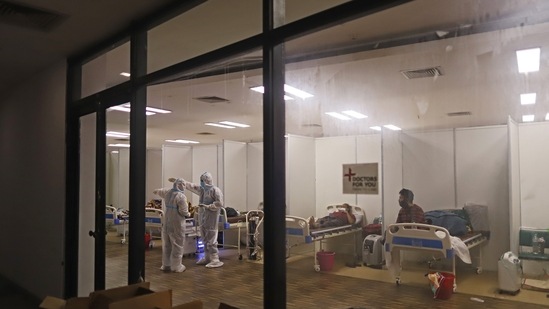
Health workers in full personal protective equipment (PPE) in a Covid-19 hospital set up inside a stadium in New Delhi on April 23. However, the seven-day average of positivity rate is rising in all of India’s 20 most populous regions. Only three of these regions – Assam (3%), Jammu and Kashmir (4.3%) and Telangana (4.4%) – are currently below the World Health Organization’s recommended threshold of 5%. (Anindito Mukherjee / Bloomberg)
4/9
 View Photos in a new improved layout
Published on Apr 24, 2021 4:05 PM
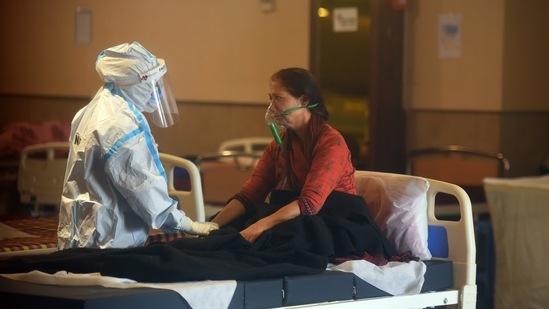
Medical staff in PPE attending to a person in the temporary Covid-19 care centre attached to LNJP Hospital in New Delhi on April 23. At the national level, the average positivity rate has gone from 4.2% a month ago to 18.4% in the week ending April 22 – a rise of 14.2 percentage points. A rising positivity rate as tests increase is the worst possible scenario from an epidemiological perspective. (Raj K Raj / HT Photo)
5/9
 View Photos in a new improved layout
Published on Apr 24, 2021 4:05 PM
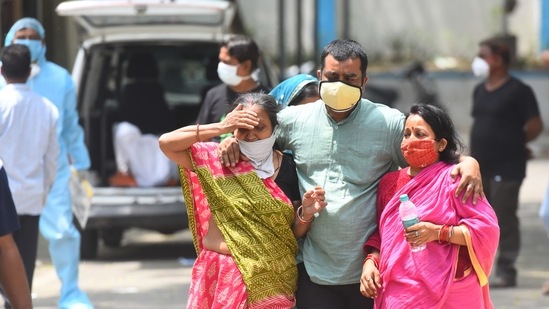
Relatives of a person who died due to Covid-19, mourning at LNJP hospital in New Delhi on April 23. Delhi saw its positivity rate increase the most in the past month – the number went up 26.7 percentage points, from an average of 1.1% for the week ending March 23 to 27.8% for the week ending April 22 — along with Chhattisgarh (also up 26.7 points, from 3.8% to 30.4%). Chhattisgarh has the highest positivity rate in the country currently, while Delhi is on the second spot. (Raj K Raj / HT Photo)
6/9
 View Photos in a new improved layout
Published on Apr 24, 2021 4:05 PM
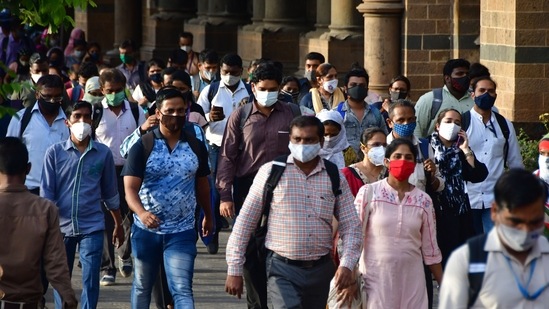
Essential service workers rush to board a suburban train at CSMT station in Mumbai on April 23. At the other end of the spectrum, Maharashtra, India’s worst-hit state by the disease, has seen the second least change in positivity rate – the number went from 21.9% to 25.2%, a rise of 3.3 percentage points. If the state manages to turn this number around, then it may point to a peak to a peak of infections in the state. (Bhushan Koyande / HT Photo)
7/9
 View Photos in a new improved layout
Published on Apr 24, 2021 4:05 PM
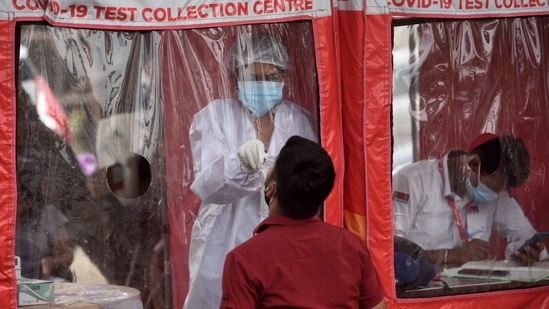
A BMC healthcare worker collecting swab samples from people at a Covid-19 Test Collection Centre in Goregaon, Mumbai on April 23. The rising positivity rate cannot be explained by low testing. Nationally, the seven-day average of daily tests per million residents have risen 53% in the past month – from 766 samples a day per million, to 1,176. (Satish Bate / HT Photo)
8/9
 View Photos in a new improved layout
Published on Apr 24, 2021 4:05 PM
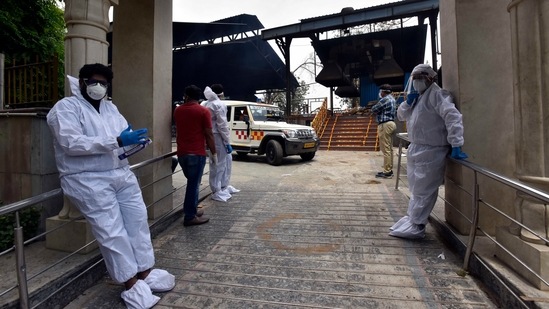
Relatives of a person who died of Covid-19 waiting their turn to cremate the body at Nigambodh Ghat crematorium, in New Delhi on April 23. Experts said both positivity rate rising despite increased testing is an alarming trend. (Sanjeev Verma / HT Photo)
9/9
 View Photos in a new improved layout
Published on Apr 24, 2021 4:05 PM


