
 E-Paper



Photos: Delhi’s funeral services stretched thin by rising Covid-19 deaths
The surge in Covid-19 cases in the Capital has not only burdened the city’s medical infrastructure and health care workers but also stretched thin Delhi’s crematoriums and burial grounds, which are now struggling to dispose of bodies with limited resources and staff.
Published on: Apr 17, 2021 3:54 PM IST


Share via


Copy link

1/9

 View Photos in a new improved layout
Published on Apr 17, 2021 3:54 PM
A man is consoled by a relative as he sees the body of his father, who died from the coronavirus disease (Covid-19), before his burial at a graveyard in New Delhi on April 16.. Delhi reported 141 deaths on April 16, the city’s highest single-day fatality count since the pandemic began. (Danish Siddiqui / REUTERS)
2/9
 View Photos in a new improved layout
Published on Apr 17, 2021 3:54 PM
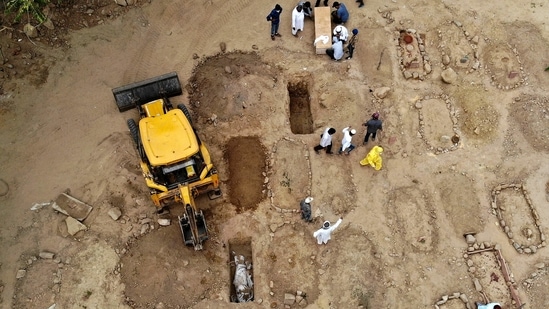
Relatives and friends gather to bury the dead bodies of Covid-19 victims at a graveyard in New Delhi on April 16. With more bodies arriving at the burial ground, officials of the ITO graveyard--one of the largest burial grounds in Delhi--have brought in earth movers to dig several graves. (Archana Thiyagarajan / AFP)
3/9
 View Photos in a new improved layout
Published on Apr 17, 2021 3:54 PM
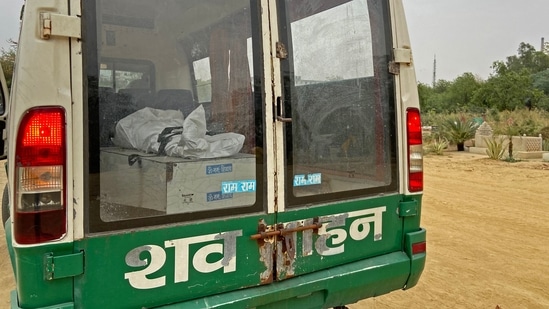
A dead body of a Covid-19 victim lies inside an ambulance for burial at a graveyard in New Delhi on April 16. The most deaths before this were reported on November 18 last year, when 131 died of the infection. The city has reported 597 fatalities from the infection in the last seven days, compared to 174 deaths in all of February and March. (Aishwarya Kumar / AFP)
4/9
 View Photos in a new improved layout
Published on Apr 17, 2021 3:54 PM
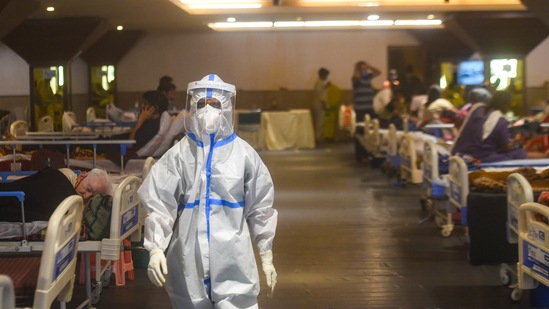
A health worker in PPE on the rounds in a Covid-19 ward at the temporary Covid Care facility at Shehnai Banquet in New Delhi. The fourth wave of the infection that has stormed the Capital over the past few weeks has been the most devastating so far, with infections and deaths soaring to levels not seen at any stage since the outbreak of the pandemic. (Amal KS / HT Photo)
5/9
 View Photos in a new improved layout
Published on Apr 17, 2021 3:54 PM
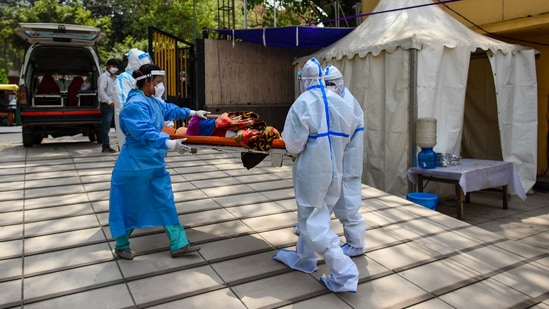
Health workers in PPE moving a Covid-19 patient to an isolation ward at a Covid care facility in New Delhi on April 16. Delhi has added the last 100,000 Covid-19 cases in eight days. In comparison, the previous 100,000 cases were registered over 120 days. (Amal KS / HT Photo)
6/9
 View Photos in a new improved layout
Published on Apr 17, 2021 3:54 PM
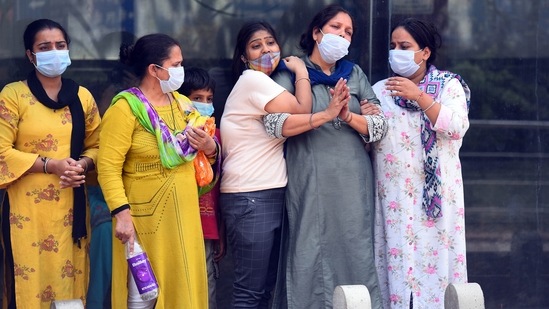
Relatives and family members of a person who died of Covid-19, break down during the cremation, at Nigambodh Ghat crematorium on April 16. Six hospitals are attached with the Nigambodh Ghat--one of the biggest crematoriums in the city for Covid-related funerals. Suman Gupta, the general secretary of Badi Panchayat Vaishya Beese Agarwal organisation that manages the city’s main crematorium at the ghat, said around 120 bodies were cremated on April 15, which is the highest number of cremations so far this year. (Raj K Raj / HT Photo)
7/9
 View Photos in a new improved layout
Published on Apr 17, 2021 3:54 PM
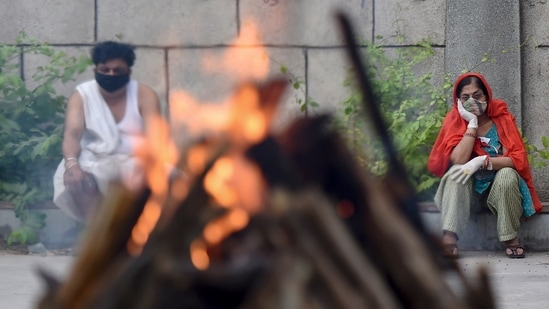
Family members look on during the cremation of a person who died of Covid-19 at the Seemapuri Cremation Grounds in New Delhi on April 16. The crematorium, attached to Guru Teg Bahadur Hospital and Rajiv Gandhi Super Speciality Hospital, said they have also witnessed an increase in the number of cremations. Hemant Sharma, a priest at the crematorium, told HT that sometimes, staff have to work 14-hour shifts because of the huge pile up of bodies. (Manvender Vashisht / PTI)
8/9
 View Photos in a new improved layout
Published on Apr 17, 2021 3:54 PM
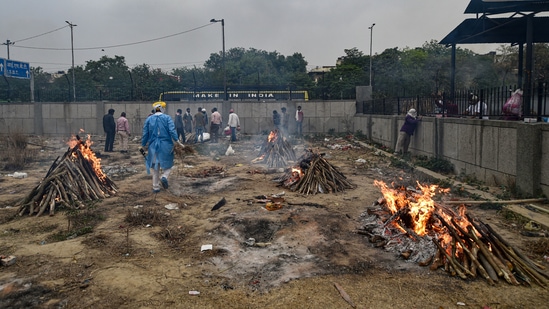
People who died of Covid-19 being cremated at a field near the Seemapuri Cremation Grounds in New Delhi on April 16. “The workers come at 5am and start putting the wood on the pyre so that people don’t have to wait. From two to three bodies, we are now cremating around 35 bodies per day. Earlier, we would take time but now, we have to ensure that the cremation is wrapped in less than 30 minutes so that there is no backlog. The number of bodies arriving here for cremation is more than what we saw in November,” said Sharma. (Manvender Vashisht / PTI)
9/9
 View Photos in a new improved layout
Published on Apr 17, 2021 3:54 PM


