

 E-Paper


Eager weavers of Chandigarh
1 / 9
 View Photos in a new improved layout
Updated on Jul 20, 2018 11:30 am IST
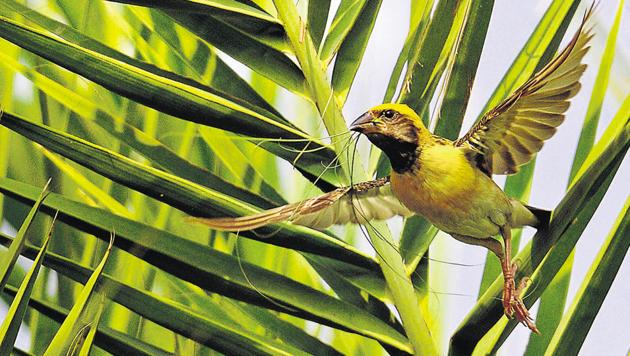
Baya weaver collecting plant materials for building a nest. Weaver birds get their name because they are masters of their craft of intricately weaving unusual apartment-house nests. Unfortunately, the population of these birds that build their nests near wetlands is decreasing at an alarming rate due to encroachment of their habitat by humans. (Anil Dayal/HT)
2 / 9
 View Photos in a new improved layout
Updated on Jul 20, 2018 11:30 am IST
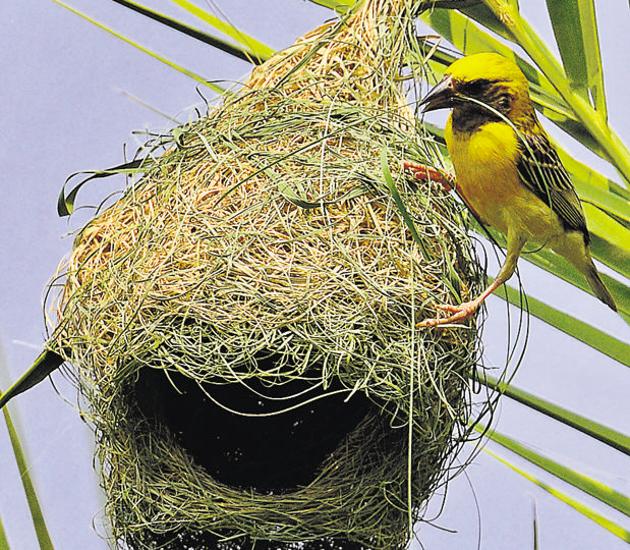
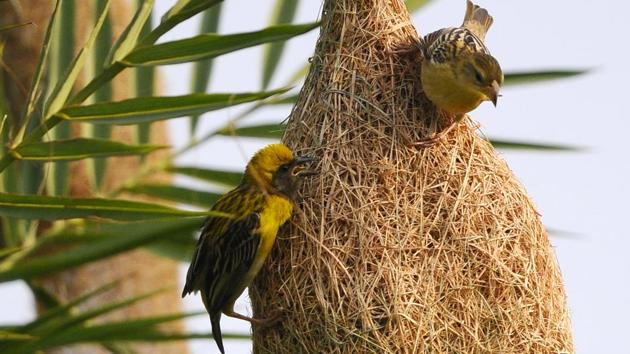
Male weaver skillfully weaving grass blades and leaf strips. The most common type of weaver-bird that is found across the Indian subcontinent is the Baya weaver, which resembles the house sparrow. (Anil Dayal/HT)
3 / 9
 View Photos in a new improved layout
Updated on Jul 20, 2018 11:30 am IST
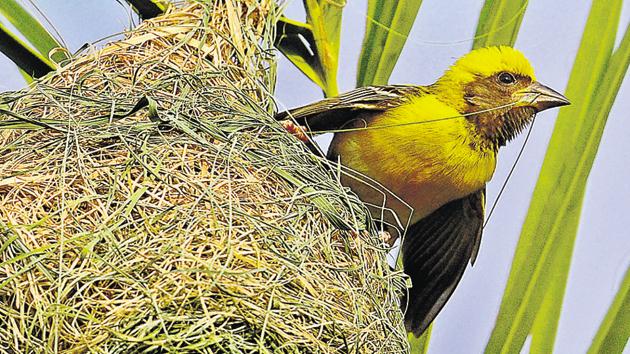
Weaver using its strong conical beak to tie sturdy knots. One can easily spot these brightly coloured gregarious birds in the lush green landscape of city beautiful as they noisily brace up for mating in the monsoons. (Anil Dayal/HT)
4 / 9
 View Photos in a new improved layout
Updated on Jul 20, 2018 11:30 am IST
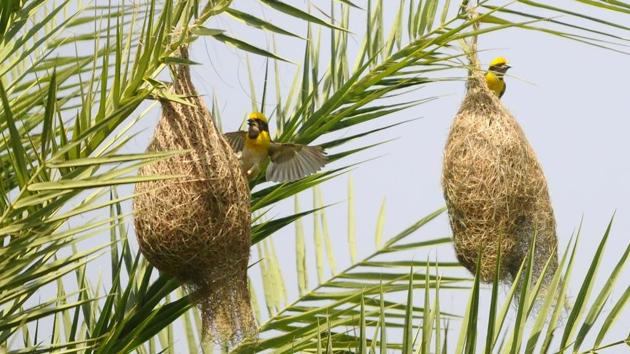
Birds working to finish their beautiful home. “Among all the categories of weaver birds: Finn’s, Baya, Streaked and Black- breasted, the most common type found in Chandigarh is of the Baya weaver that nests in colonies,” says Chandigarh Bird Club president Matinder Sekhon. (Anil Dayal/HT)
5 / 9
 View Photos in a new improved layout
Updated on Jul 20, 2018 11:30 am IST
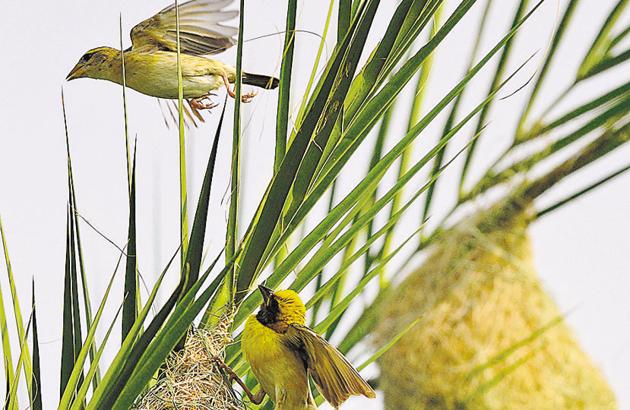
A male weaver flaps its wings to attract a female flying past. If interested, she will have to ‘approve’ the nest for mating. The males build remarkably strong and pliant nests in isolation, away from the human world, to woo females and for a secure place to incubate the eggs. (Anil Dayal/HT)
6 / 9
 View Photos in a new improved layout
Updated on Jul 20, 2018 11:30 am IST
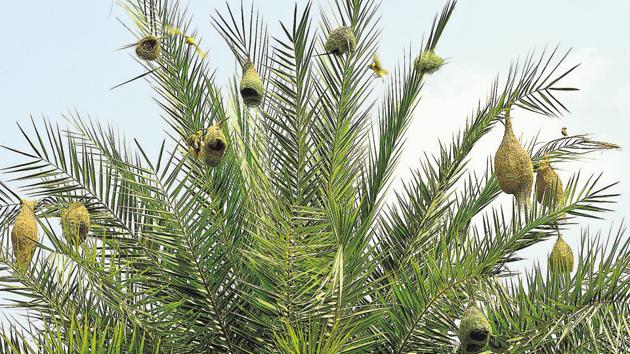
A colony of nesting Baya weavers at the Japanese Garden, Sector 31, Chandigarh. “Baya weavers weave their nests with leaf fibre of weed and grass on thorny trees like Acacia, date (Phoenix dactylifera), palm (Arecaceae), kikar (Vachellia nilotica) and jungle jalebi (Pithecellobium dulce),” says Kulbhushan Kanwar, ex-directorate, health and family welfare, Chandigarh. (Anil Dayal/HT)
7 / 9
 View Photos in a new improved layout
Updated on Jul 20, 2018 11:30 am IST
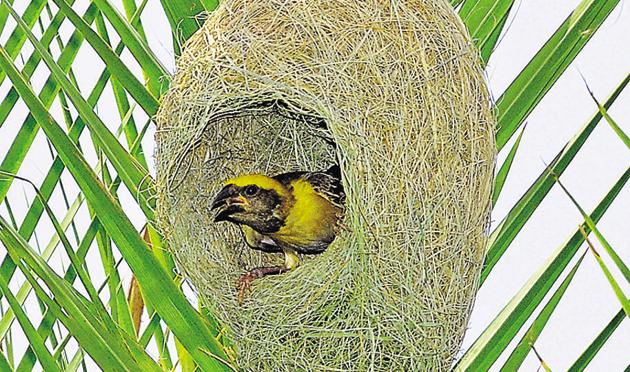
Nest completed, a bird checks out the interiors. Urging the birdwatchers’ community to educate people about conserving wildlife, Gurmeet Singh, chief wildlife warden of Punjab, says, “Unlike pigeons or crows, Baya weavers have not accepted or adapted to human habitats. The loss of natural environment questions the long-term survival of the species.” (Anil Dayal/HT)
8 / 9
 View Photos in a new improved layout
Updated on Jul 20, 2018 11:30 am IST
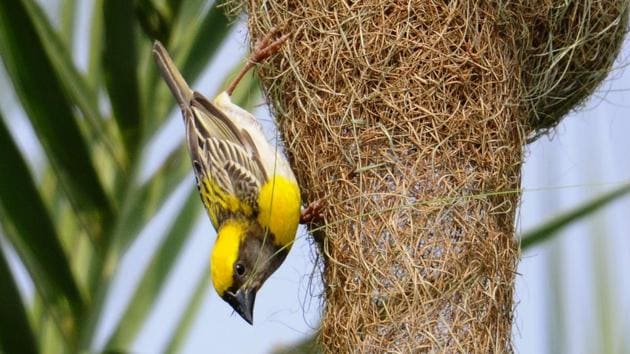
The removal of date palms in Chandigarh has altered the natural life patterns of the birds. (Anil Dayal/HT)
9 / 9
 View Photos in a new improved layout
Updated on Jul 20, 2018 11:30 am IST