
 E-Paper



Photos: Bolivia coca farmers in anguish after Evo Morales exit
Driven back by security forces and now leaderless after the departure of ex-president Evo Morales, Bolivian indigenous coca farmers have been left "orphaned" in their fight against the country's right-wing caretaker government. Mostly farmers from Morales' political birthplace in the central coca-growing region of Chapare, the protesters are demanding the resignation of caretaker President Jeanine Anez. During his reign, Morales had embraced the cause of the Chapare farmers to defend the chewing of coca leaves and other ancestral uses, despite pressure of the United States to eradicate the plantations that are also the raw material for cocaine.
Updated on: Nov 27, 2019 12:12 PM IST


Share via


Copy link

1/8

 View Photos in a new improved layout
Updated on Nov 27, 2019 12:12 PM
People amid sacks of coca leaves at the coca market in La Paz, Bolivia. A sense of abandonment now pervades the indigenous coca farmers after the departure of ex-president Evo Morales, the socialist leader who encouraged cultivation of coca, and under whose reign, extreme poverty reduced from 38% to 17% and the country achieved an average economic growth rate of 4.8%. (Ronaldo Schemidt / AFP)
2/8
 View Photos in a new improved layout
Updated on Nov 27, 2019 12:12 PM
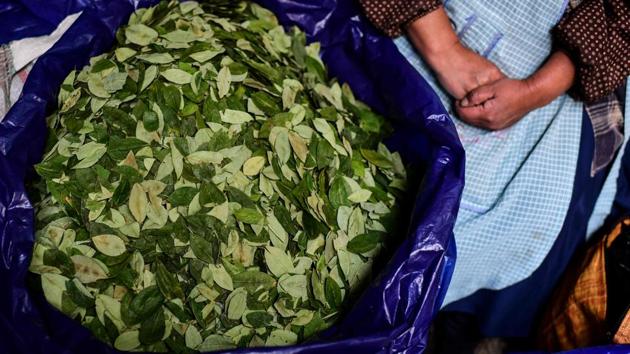
A woman sells coca leaves at the market in La Paz. “He was our father, our father,” wailed Sonia Pena, 51, at a roadside camp where hundreds of protesters retreated after a violent confrontation with police on November 15 that left nine people dead. Mostly farmers from Morales’ political birthplace in the central coca-growing region of Chapare, the protesters are demanding the resignation of caretaker President Jeanine Anez. (Ronaldo Schemidt / AFP)
3/8
 View Photos in a new improved layout
Updated on Nov 27, 2019 12:12 PM
A man prepares to carry sacks of coca leaves at the coca market in La Paz. With a copy of the Bible in her hands, the right-wing senator took power after Morales quit on November 10 and fled to Mexico, where he was granted political asylum, after taking refuge in Chapare. (Ronaldo Schemidt / AFP)
4/8
 View Photos in a new improved layout
Updated on Nov 27, 2019 12:12 PM
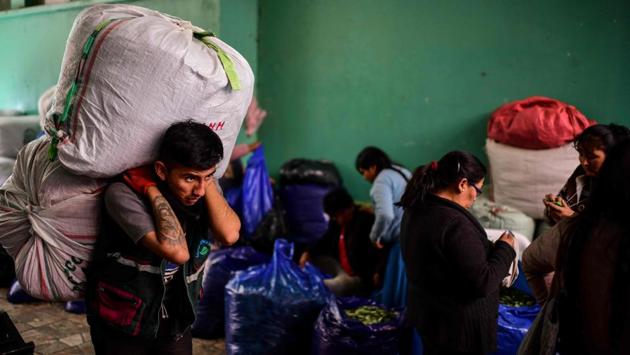
A man carries a sack of coca leaves. A day after the nine farmers were shot dead, Anez issued a presidential decree granting security forces immunity from prosecution for acts of violence, fuelling the farmers’ rage. At least 32 people have been killed in weeks of unrest over Morales, who after nearly 14 years as president sought a fourth term in the October 20 ballot. (Ronaldo Schemidt / AFP)
5/8
 View Photos in a new improved layout
Updated on Nov 27, 2019 12:12 PM
Morales claimed victory in the vote, but opposition groups said it was rigged. An audit by the Washington-based Organization of American States found irregularities in results. Opposition groups, with the support of the urban middle and upper classes outraged by Morales’ attempt to extend his reign, took to the streets and forced his resignation. He fled to Mexico claiming to be a victim of a coup after losing support of defence forces. (Ronaldo Schemidt / AFP)
6/8
 View Photos in a new improved layout
Updated on Nov 27, 2019 12:12 PM
An indigenous woman rests on sacks of coca leaves at the coca market in La Paz. A socially fractured Bolivia took the first step into a future without Morales over the weekend with the annulment of the October 20 vote and the approval of new elections that exclude the former leader. (Ronaldo Schemidt / AFP)
7/8
 View Photos in a new improved layout
Updated on Nov 27, 2019 12:12 PM
Women sit on sacks of coca leaves at the coca market. With 57,000 acres Bolivia is the world’s third largest producer of the drug after Peru and Colombia. As a congressman in 1997, Morales had embraced the cause of the Chapare farmers to defend the chewing of coca leaves and other ancestral uses, despite pressure of the United States to eradicate the plantations that are also the raw material for cocaine. (Ronaldo Schemidt / AFP)
8/8
 View Photos in a new improved layout
Updated on Nov 27, 2019 12:12 PM


