

 E-Paper


Photos: Cuba’s worker bees boost thriving honey business
Shrinking bee populations around the world have caused scientists and conservationists to sound the alarm over the effects of intensive agriculture, disease and pesticides. But not in Cuba, a Communist-run island nation that has become a kind of apicultural paradise, thanks to the purity of its countryside. Life is sweet for Cuba's winged wonders, and Europe's honey-lovers are catching on.
1 / 14
 View Photos in a new improved layout
Updated on Apr 14, 2019 02:48 pm IST
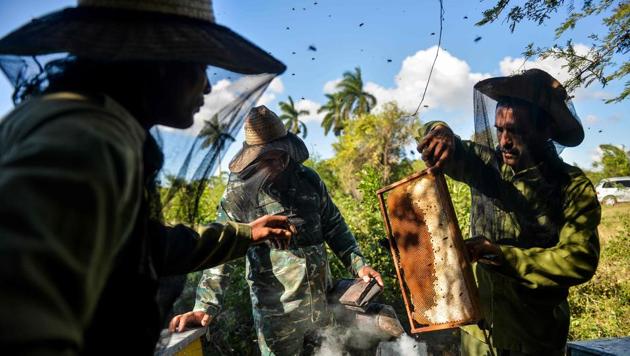
Beekeepers collect honeycombs at an apiary. In the floral valleys of Matanzas, old fashioned farming means bees can swarm without the threat of pesticides that have decimated populations across the world. “The bee is made neither for urban areas nor rural areas. It is made for the mountains,” said Rogelio Marcelo Fundora, surveying a lush mountain valley east of Havana where his bees thrive. (Yamil Lage / AFP)
2 / 14
 View Photos in a new improved layout
Updated on Apr 14, 2019 02:48 pm IST
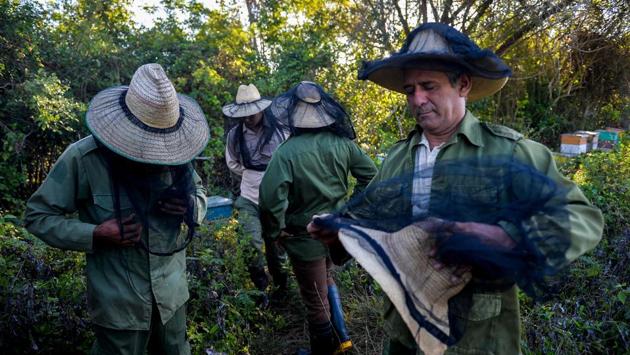
Fundora, 51, is a mechanical engineer by trade. His 54-year-old brother Santiago Esteban (not pictured) is a teacher. But both have become Cuba’s best-known beekeepers by passion, owning 600 hives. In this idyllic valley, “last year we produced 80 tonnes of honey,” Santiago said, his face covered by a black net to avoid stings while bees swarmed in agitation. (Yamil Lage / AFP)
3 / 14
 View Photos in a new improved layout
Updated on Apr 14, 2019 02:48 pm IST
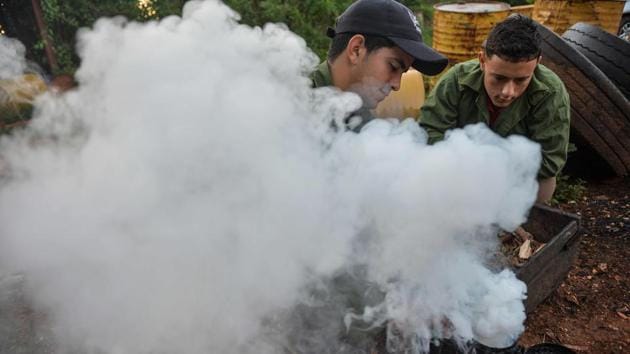
Beekeepers prepare their bee smoker. Environmental integrity dates back to Cuba’s economic crisis of the 1990s, following the Soviet collapse, cutting pesticide, fertilizer and herbicide aid. Deprived, Cuba had to develop natural alternatives. In the process, it reduced to almost zero the use of chemicals, harmful to bee populations and the quality of honey. (Yamil Lage / AFP)
4 / 14
 View Photos in a new improved layout
Updated on Apr 14, 2019 02:48 pm IST
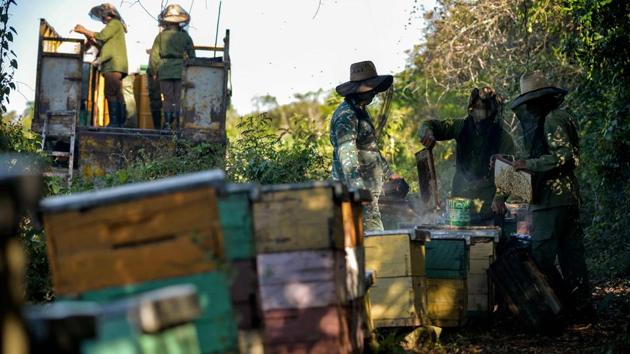
Beekeepers work at an apiary. Average production is 51 kilograms of honey per hive, a level considered high. However, the Fundora brothers, considered the nation’s beekeeper kings, show yields of up to 160 kilograms of honey per hive -- triple the national average. (Yamil Lage / AFP)
5 / 14
 View Photos in a new improved layout
Updated on Apr 14, 2019 02:48 pm IST
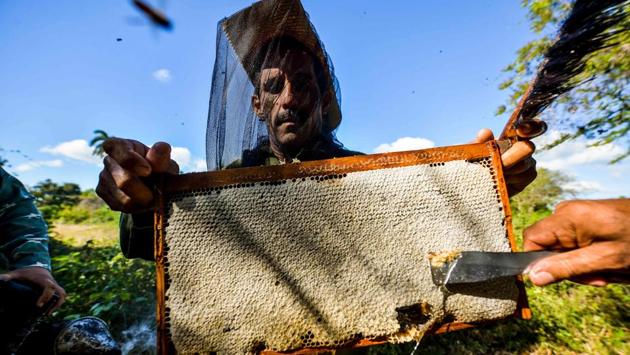
“There’s no miracle, just a lot of work,” said Santiago. “It’s endless work to change out the queen, select the bees,” he said, his face tanned by hours under the sun. From their 21 apiaries on the flank of a hill near the village of Navajas, the two brothers extract a honey they say is absolutely “clean” -- meaning chemical free. (Yamil Lage / AFP)
6 / 14
 View Photos in a new improved layout
Updated on Apr 14, 2019 02:48 pm IST
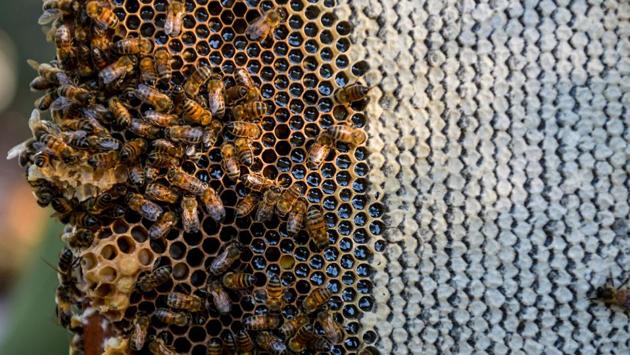
The beekeepers’ success means organic honey has joined rum and cigars as one of Cuba’s quality exports. The island produced 8,834 tonnes of honey in 2018, 1,500 tonnes more than the target set by Apicuba, the Cuban Beekeeping Company. There’s still some way to go to catch Argentina, however. Latin America’s leading producer brought 76,000 tonnes to the market in 2017. (Yamil Lage / AFP)
7 / 14
 View Photos in a new improved layout
Updated on Apr 14, 2019 02:48 pm IST
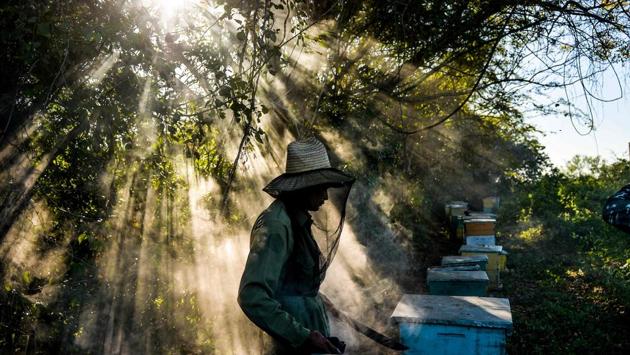
A beekeepers at work. In the Cuban countryside, bees are exposed to no great natural risk or human threat and enjoy year-long summer temperatures with enough humidity to ensure a permanent supply of flowers. “The bees are in very good health,” said Santiago. (Yamil Lage / AFP)
8 / 14
 View Photos in a new improved layout
Updated on Apr 14, 2019 02:48 pm IST
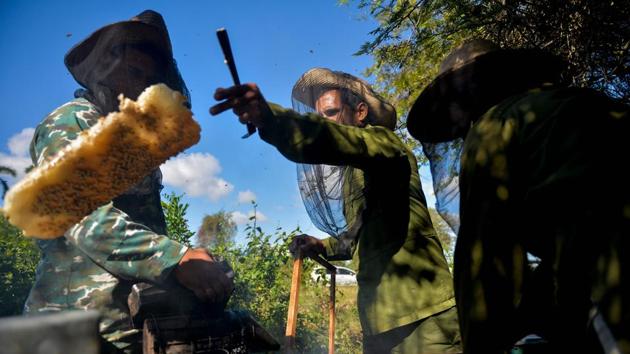
“We don’t use any chemicals when fumigating apiaries or weeding,” and “no antibiotics” -- products that are anyhow hard to come by because of the US trade embargo in place since 1962. That’s not to say they don’t have to use a certain ingenuity to keep pests at bay, particularly the potentially devastating Varroa mite -- a tiny red parasite that sucks the blood from the bees. (Yamil Lage / AFP)
9 / 14
 View Photos in a new improved layout
Updated on Apr 14, 2019 02:48 pm IST
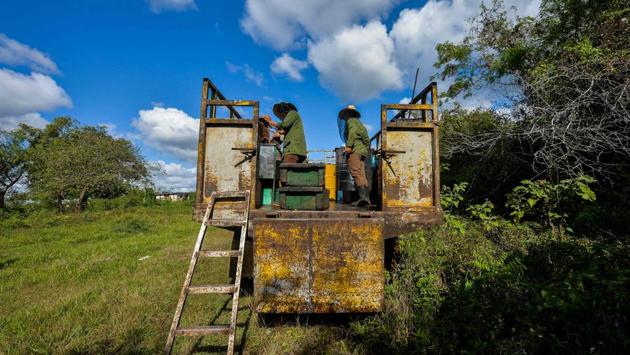
On harvest day, the two brothers headed up the hill in an old truck they call Frankenstein, accompanied by eight young workers. They pay them 80 dollars a month, 50 dollars above the national average. Nearly all of them are in military uniform, because the material is resistant and the camouflage pattern doesn’t excite the bees. (Yamil Lage / AFP)
10 / 14
 View Photos in a new improved layout
Updated on Apr 14, 2019 02:48 pm IST
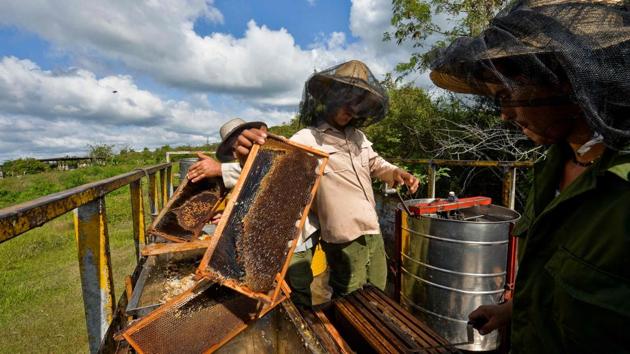
Beekeepers process honeycombs. Under a crushing sun, they spend the day collecting honeycombs and put them in a mechanical centrifuge that separates the wax from the honey. (Yamil Lage / AFP)
11 / 14
 View Photos in a new improved layout
Updated on Apr 14, 2019 02:48 pm IST
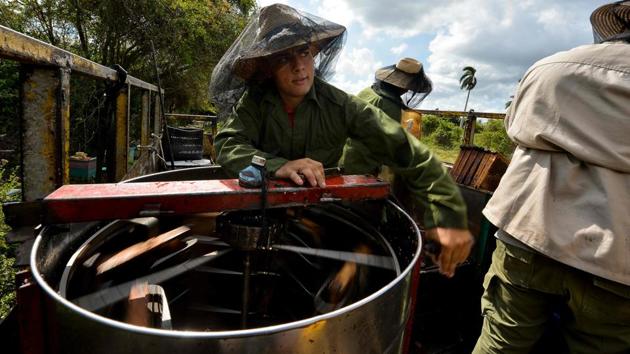
Cuban beekeepers use a honey extractor. Here, the downside of Cuba’s years of isolation is apparent. Rogelio complains about the equipment, which he says is “a little archaic.” “We need an efficient centrifuge to extract the honey, and the truck is very old.” (Yamil Lage / AFP)
12 / 14
 View Photos in a new improved layout
Updated on Apr 14, 2019 02:48 pm IST
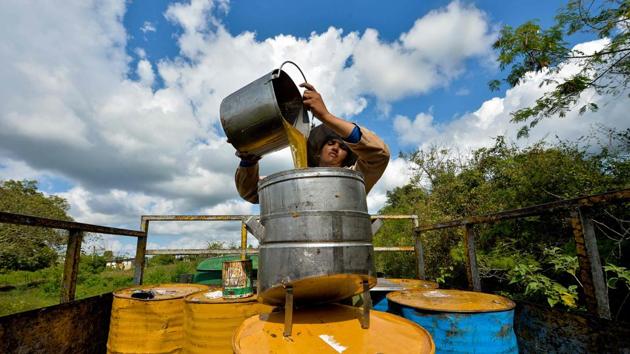
A beekeeper pours honey into a metal container. Of the total 8,834 tonnes produced last year in Cuba, around 1,900 tonnes of Cuba’s honey have been certified as organic honey, a “national record” said Dayron Alvarez, the director of technology and development at Apicuba. (Yamil Lage / AFP)
13 / 14
 View Photos in a new improved layout
Updated on Apr 14, 2019 02:48 pm IST
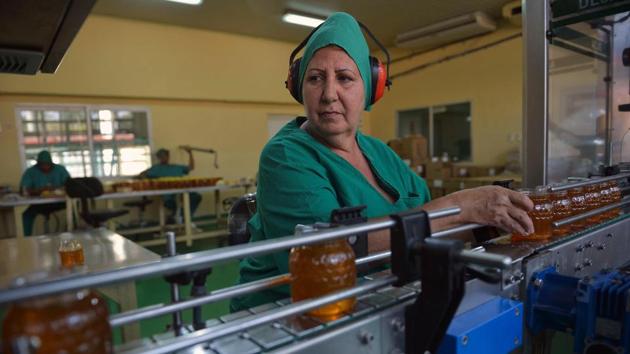
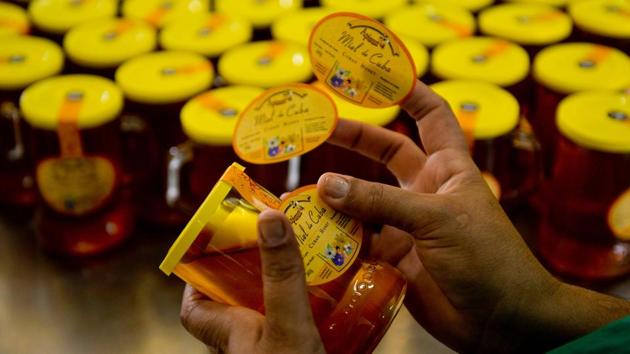
An employee controls honey jars at the production line of a honey packaging plant in Havana. Almost every drop is exported, with Germany, France, Spain, Britain and Switzerland the main markets worth $18 million in 2017. And there’s likely more to come: “We are working on entering the Chinese and Saudi markets,” said Alvarez. (Yamil Lage / AFP)
14 / 14
 View Photos in a new improved layout
Updated on Apr 14, 2019 02:48 pm IST