

 E-Paper


Photos: Greece’s last bellmakers keeping a time-honoured trade alive
In one of Greece's last remaining bell foundries in the small, western town of Paramythia, the Galanopoulos brothers are busy casting church bells in a painstaking craft, a process of mostly manual labour that has remained largely unchanged since the 12th century. Their family-run business has been around for 215 years. These days, exports heading to Ethiopia and Romania keep it alive. At its peak, the foundry was producing 120 tonnes of bells a year for steeples across Greece. Now, it's down to 50 tonnes and their main customers are churches in the Balkans and Africa
1 / 11
 View Photos in a new improved layout
Updated on Jul 20, 2018 09:56 am IST
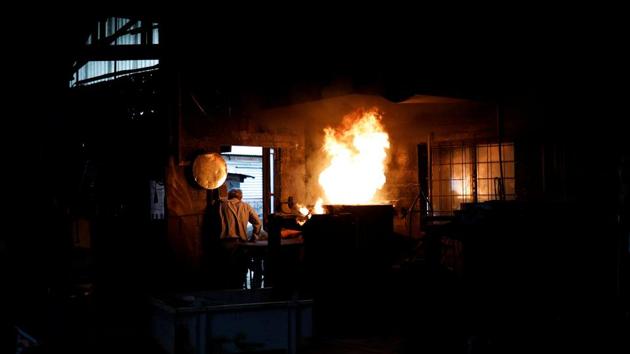
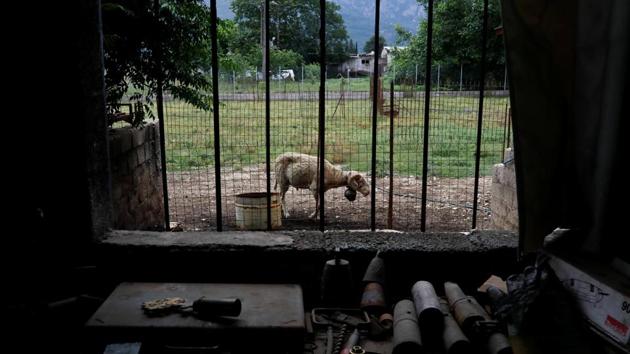
Flames rise from a furnace where metal alloy that will be cast in bell moulds is prepared, at the Galanopoulos bell foundry in Paramythia, Greece. The silence blanketing the Greek plain is broken by the tinkle of a cowbell and the rumble of the foundry’s blazing furnace. (Alkis Konstantinidis / REUTERS)
2 / 11
 View Photos in a new improved layout
Updated on Jul 20, 2018 09:56 am IST
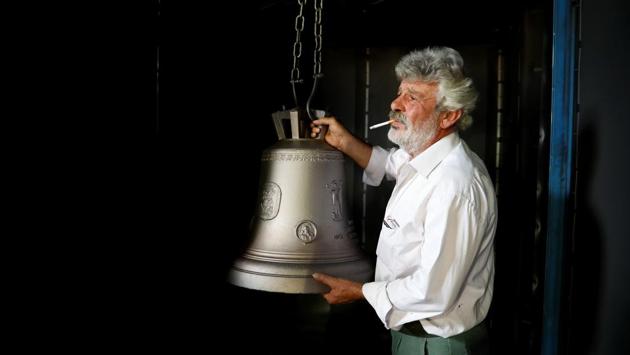
Thomas Galanopoulos, 59, holds a cleaned bell at his family's bell foundry. In one of Greece’s last remaining bell foundries in the small, western town of Paramythia, the Galanopoulos brothers are busy casting church bells heading to Ethiopia and Romania, pouring red-hot molten metal into moulds of varying sizes. (Alkis Konstantinidis / REUTERS)
3 / 11
 View Photos in a new improved layout
Updated on Jul 20, 2018 09:56 am IST
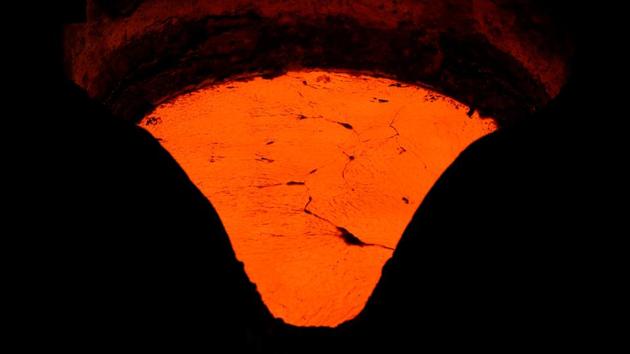
Melted metal alloy that will be cast in bell moulds at the Galanopoulos bell foundry. This family-run business has been around for 215 years. These days, exports keep it alive. “More than half of our production goes abroad,” said Thomas Galanopoulos, 59, the elder of the two, wreathed in smoke rising from melting copper and tin. (Alkis Konstantinidis / REUTERS)
4 / 11
 View Photos in a new improved layout
Updated on Jul 20, 2018 09:56 am IST
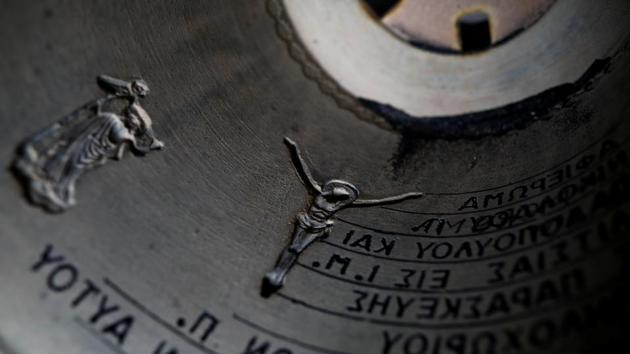
An engraving of crucified Jesus Christ is seen inside a bell mould at the Galanopoulos bell foundry. At its peak, the foundry was producing 120 tonnes of bells a year for steeples across Greece, Thomas said. Now, it’s down to 50 tonnes and their main customers are churches in the Balkans and Africa, while they also ship to Israel, Lebanon and Australia. (REUTERS)
5 / 11
 View Photos in a new improved layout
Updated on Jul 20, 2018 09:56 am IST
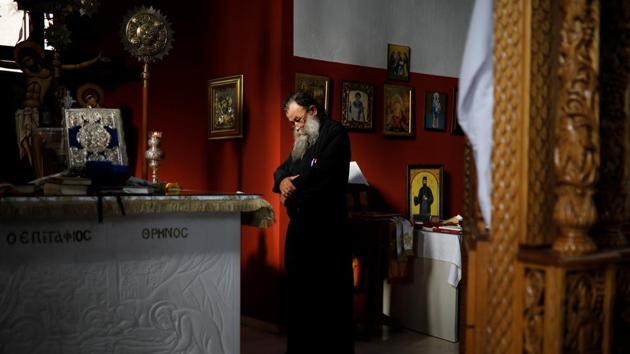
Father Theodoros Zois, who bought six bells from the Galanopoulos, prays inside his church in Igoumenitsa, Greece. The Greek Orthodox Church permeates life in Greece. But when the economic crisis hit, domestic demand collapsed. The Church, not spared by the crisis, cut expenses to meet the costs of its soup kitchens and charities. Building or restoration work on churches often ceased. (Alkis Konstantinidis / REUTERS)
6 / 11
 View Photos in a new improved layout
Updated on Jul 20, 2018 09:56 am IST
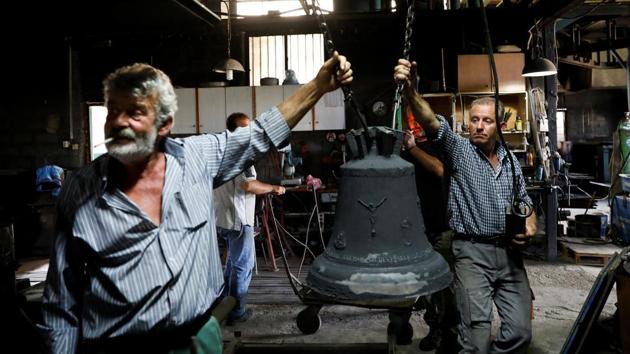
Thomas (L), 59, and Christos Galanopoulos, 55, prepare to clean a bell covered with sand. The Galanopoulos’s biggest bell, weighing 3.5 tonnes, hangs from a church in northern Greece. But those days are gone. The volatile commodities market made the bells too costly to produce at times. Six people now work in the foundry, down from nine. (Alkis Konstantinidis / REUTERS)
7 / 11
 View Photos in a new improved layout
Updated on Jul 20, 2018 09:56 am IST
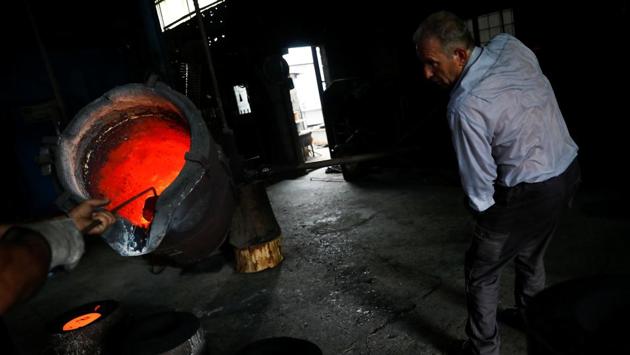
Christos Galanopoulos, 55, casts melted metal in a bell mould at the Galanopoulos bell foundry. Still, the buzz of the foundry rarely stops. The craft, a painstaking process of mostly manual labour, has remained largely unchanged since the 12th century. (Alkis Konstantinidis / REUTERS)
8 / 11
 View Photos in a new improved layout
Updated on Jul 20, 2018 09:56 am IST
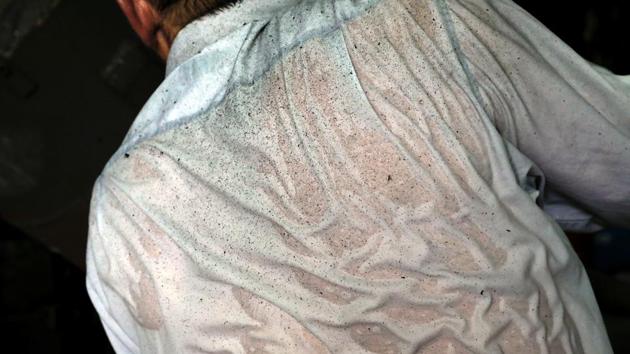
Sweat and sand are seen on Christos Galanopoulos' shirt as he casts melted metal in a bell mould. Christos also applies figures and inscriptions by hand, stenciling backwards. When they’re not casting bells, they’re tuning cowbells on a grindstone. “I spend more time here than at home. Even Sundays,” he smiled. (Alkis Konstantinidis / REUTERS)
9 / 11
 View Photos in a new improved layout
Updated on Jul 20, 2018 09:56 am IST
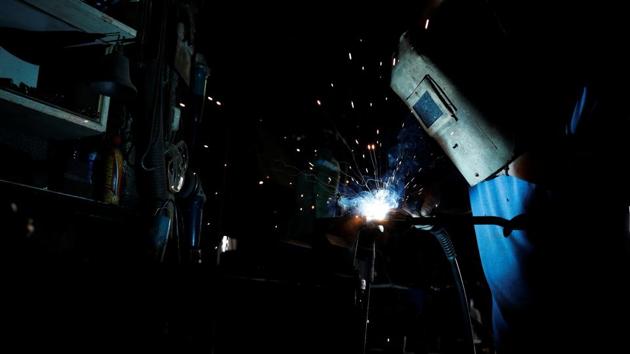
Almir Melishte, 46, works on a bell clapper at the Galanopoulos bell foundry. For the brothers, the foundry is a labour of love. “You have to be nuts about this job to do it. It’s not for everyone,” said Thomas, who took over aged just 12 when their father suddenly died. (Alkis Konstantinidis / REUTERS)
10 / 11
 View Photos in a new improved layout
Updated on Jul 20, 2018 09:56 am IST
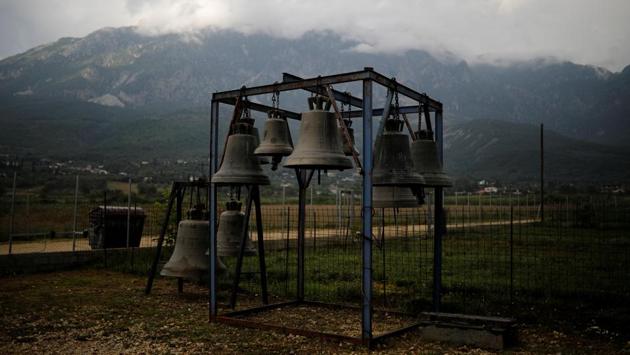
Discarded bells engraved with the family name, some dating back to the 19th century, are stacked in the yard. Christos’ first bell from 40 years ago still hangs in a church in town. (Alkis Konstantinidis / REUTERS)
11 / 11
 View Photos in a new improved layout
Updated on Jul 20, 2018 09:56 am IST