
 E-Paper



Photos: New York’s ‘island of the dead’ to welcome more of the living
Around a million people lie buried in unmarked mass graves dug by prisoners on an eroding, once-off limits island in New York that's about to become more accessible. Since the late 1860s, unclaimed bodies, the poor, still-born children and AIDS victims have been laid to rest on the mile-long Hart Island, making it one of America's largest public cemeteries. Nicknamed "the island of the dead," access is heavily restricted. AFP attended the most recent of two escorted media trips a year while relatives can only visit on two days a month chosen by the prisons department.
Updated on: Dec 6, 2019 9:34 AM IST


Share via


Copy link

1/9

 View Photos in a new improved layout
Updated on Dec 6, 2019 9:34 AM
White stones mark burial sites at the Potter's field on Hart Island, in New York. Once completely off-limits, the islet has for over a century been run by the US prisons department, which heavily restricts access. Relatives are only allowed to visit on two designated days a month, while correctional officers escort media there just twice a year. (Don Emmert / AFP)
2/9
 View Photos in a new improved layout
Updated on Dec 6, 2019 9:34 AM
A sign on the ferry dock warns against trespassing on the Potter's field at Hart Island. “I don’t want somebody to tell me when I can visit my baby’s gravesite. I want to go when I want to go,” Elaine Joseph, 65, told AFP.Her daughter Tomika was just a few days old when she died in January 1978 after being born prematurely. Joseph wasn’t able to visit her burial place until 2014. (Don Emmert / AFP)
3/9
 View Photos in a new improved layout
Updated on Dec 6, 2019 9:34 AM
White stones mark burial sites at the Potter's field. Soon, the retired nurse will be able to pay her respects regularly thanks to plans to open up Hart Island, which Mayor Bill de Blasio signed on Wednesday. It is a major development in a years-long campaign to make the site, which has signs reading “prison property keep out,” more dignified for the dead and their families. (Don Emmert / AFP)
4/9
 View Photos in a new improved layout
Updated on Dec 6, 2019 9:34 AM
Hart Island became a potter’s field in 1869 after the city purchased it from a private landholder. Approximately 1,200 burials, some of unidentified people, still take place every year. Adults are buried in pine coffins stacked three deep; children five deep in plots of 1,000. Small white markers indicating the trenches dot the island’s burial grounds. (Don Emmert / AFP)
5/9
 View Photos in a new improved layout
Updated on Dec 6, 2019 9:34 AM
A US flag flies near a monument to early veterans buried at Hart Island. Inmates from nearby Rikers Island, one of America’s most notorious jails, are paid $1 an hour to bury the dead. Around half of the interred are young children, officials say. Many HIV-positive people were buried on a separate site there during the 1980s AIDS crisis, after losing touch with their families or because private graveyards refused to take them. (Don Emmert / AFP)
6/9
 View Photos in a new improved layout
Updated on Dec 6, 2019 9:34 AM
A memorial cross is seen on the Potter's field. The island has served as a prison camp for captured Confederates in the US Civil War, a mental asylum, a sanatorium for tuberculosis sufferers, a youth detention center and even a Cold War-era missile base. Geese roam the windswept, low-lying island. Deer and raccoons are also present, while ospreys nest there and seals bob off its shore. (Don Emmert / AFP)
7/9
 View Photos in a new improved layout
Updated on Dec 6, 2019 9:34 AM
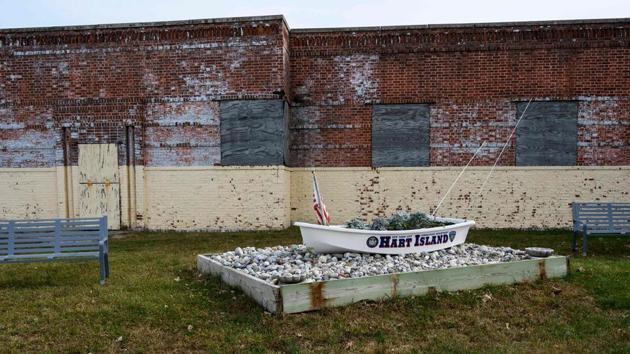
A dinghy sits near the ferry dock and greets visitors. Several nationalities are among the dead noted Justin von Bujdoss, a prison chaplain who gave AFP a guided tour. “Hart Island represents a cross section of the diversity of New York City, which is why it really ought to be considered sacred ground,” he explained. Between 40 and 50 exhumations happen every year after relatives trace a loved one and opt to rebury them privately. (Don Emmert / AFP)
8/9
 View Photos in a new improved layout
Updated on Dec 6, 2019 9:34 AM
Flowers left for a father. Last month, New York’s city council voted to end prison control of Hart Island by transferring jurisdiction to its parks department. It also pledged to start regular ferry services. “It lifts the stigma of city burials,” Melinda Hunt, who has been campaigning for three decades to make the cemetery more accessible, told AFP. Hunt has helped countless relatives, including Joseph, trace their loved ones to Hart Island. (Don Emmert / AFP)
9/9
 View Photos in a new improved layout
Updated on Dec 6, 2019 9:34 AM


