
 E-Paper



Poll pitch: AAP names and shames ‘corrupt’ Akali ministers at Moga rally
Raising its anti-corruption rhetoric for the upcoming Punjab elections, the Aam Aadmi Party (AAP) on Sunday promised to jail four Shiromani Akali Dal (SAD) ministers in the Parkash Singh Badal government if voted to power.

 Prefer HTon Google


Upping the ante on the corruption plank to an unprecedented level, the Aam Aadmi Party (AAP) farmers’ manifesto for the assembly polls carries the names of four Shiromani Akali Dal (SAD) ministers in Punjab’s SAD-BJP government and promises to jail them, if it comes to power.
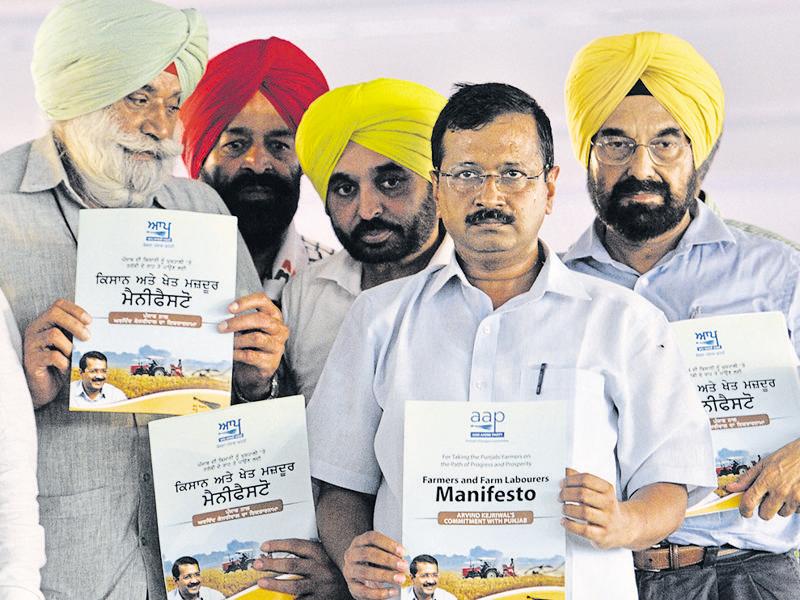
The manifesto was released at a well-attended rally here on Sunday by AAP convener and Delhi chief minister Arvind Kejriwal, who reiterated corruption charges against Tota Singh (agriculture), Adaish Partap Singh Kairon (food and civil supplies), Bikram Singh Majithia (revenue) and Sikander Singh Maluka (rural development).
Significantly, two of them are part of the larger Badal clan – Kairon is the son-in-law of chief minister Parkash Singh Badal, and Majithia is the brother of Union minister Harsimrat Kaur Badal, who is the wife of the CM’s son and deputy, Sukhbir Singh Badal.
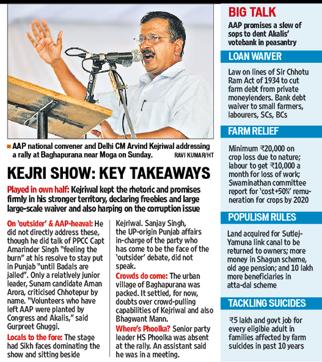
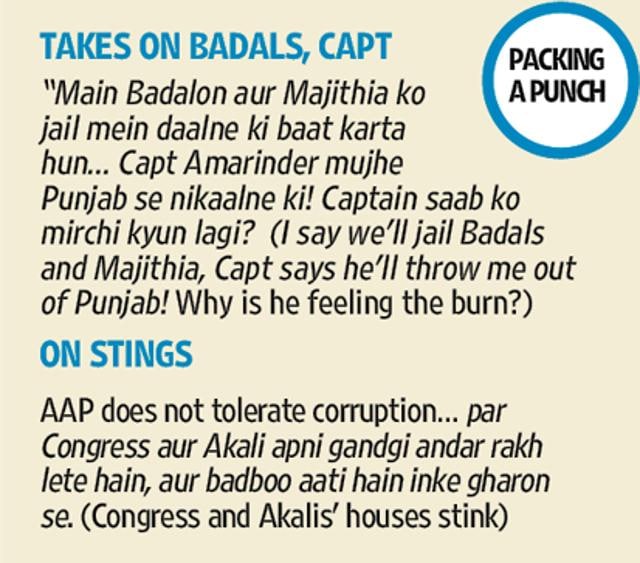
This is arguably the first time that a party has named rivals and given it in writing that it will jail them. It gains significance as the AAP has been stressing that it considers its manifesto sacrosanct and will implement it in toto. Former journalist Kanwar Sandhu, who read out some points of the manifesto, has led a team in preparing the document.
Don’t miss | Ban not affected, school buses used for ferrying crowd to AAP rally
Kejriwal did not touch upon any of the recent controversies dogging the party, be it the sacking of Sucha Singh Chhotepur as state AAP convener over allegations of accepting unaccounted cash in a sting operation, or former BJP MP Navjot Singh Sidhu forming his own political forum after talks to his joining the AAP failed. The only time he got close to the Chhotepur issue was when he said the AAP has “no compromise” on corruption, and underlined how “AAP is the first party since Independence to have sacked three ministers (in Delhi) on the charges of corruption”. Reiterating other key points that he has made repeatedly in his four-day trip that concludes on Monday, Kejriwal kept the focus firmly on farmers and corruption.
He started his speech by reiterating the promise to give ‘holy city’ status to Amritsar and Anandpur Sahib in two months of coming to power, and then went on to blame the “Amarinder and Badal-led governments of the Congress and SAD-BJP over the last 10-15 years” for “snatching the joy out of farmers’ lives and giving them tears”.
Must read | Arvind Kejriwal promises holy cities what they already have
He named Tota Singh in the supply of spurious pesticide to cotton farmers that had hit the crop last year; Kairon for Rs 12,000 crore worth of grains “gone missing”; Majithia for “running the business of narcotics”; and also named Sukhbir, though he did not talk of a specific scam.
“They will be jailed, and their property will be confiscated and used for building schools, hospitals and roads,” he said.
He even declared that buses of Badal-owned transport firms will be seized and given to unemployed youth to ply to make a living. “Our government will take the buses in its custody,” he said.
From the manifesto, he made specific mention of the plan to re-enact the Sir Chhotu Ram Act of 1934 to ease debt taken from non-institutional moneylenders.
“Under no circumstances will the interest exceed the principal amount,” he underlined. It also ambitiously plans to register all private lenders and give passbooks to borrowers.
Another key promise is the waiver of bank loans for “poor” farmers, labourers, SCs and BCs, and a stop till December 2018 on coercive action by banks against defaulters. “By December 2018, all farmers of Punjab will be debt-free,” he quoted the manifesto.
This manifesto follows a ‘youth manifesto’ released in July, and the party plans to next launch a Dalit manifesto besides other such parts.


