
 E-Paper



Proper investment, poor return: Systemic flaws exposed in India's badminton campaign
It was an underwhelming performance from the Indian badminton contingent, which missed opportunities at critical moments across disciplines

 Prefer HTon Google


India’s badminton campaign at the Asian Games in Aichi-Nagoya ended on a grim note on Sunday, yielding just a single medal — a bronze in the men’s team event — after four individual quarter-finals ended in defeat at Ichinomiya.
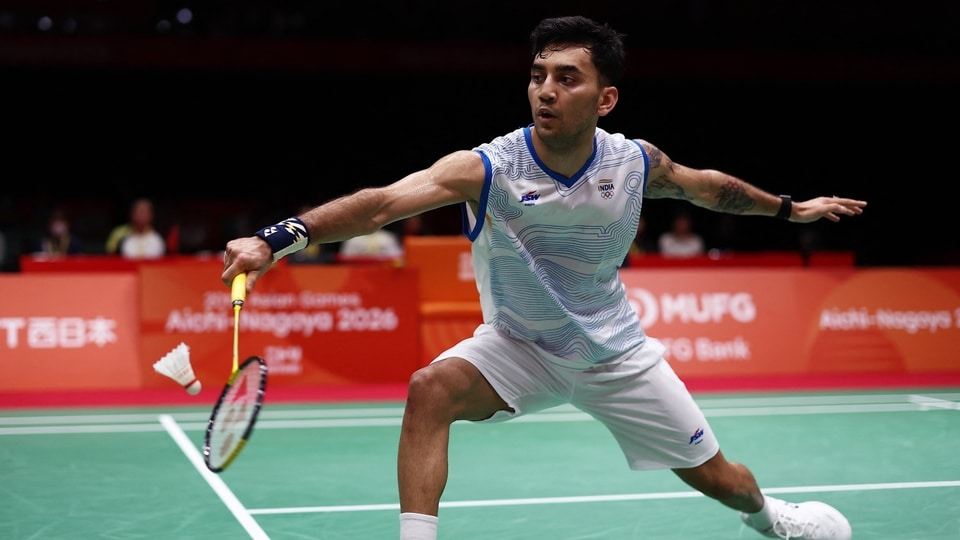
The solitary podium finish represents a sharp decline from Hangzhou 2023 where Indian shuttlers delivered a landmark campaign with three medals: a historic maiden gold in men’s doubles through Satwiksairaj Rankireddy and Chirag Shetty, a silver in the men’s team event and a men’s singles bronze via HS Prannoy.
While 2026 marks the fourth consecutive Asian Games where Indian shuttlers have secured at least one medal, the historical trajectory — one medal at Incheon 2014, two in Jakarta-Palembang 2018 and three in Hangzhou 2023 — has taken an alarming downhill turn, exposing critical gaps in preparation, consistency and player management.
Sunday’s quarter-finals saw India’s remaining medal prospects unravel in close contests. PV Sindhu fell in three games to world No.4 Chen Yufei, 19-year-old Unnati Hooda was edged by Japan's Akane Yamaguchi, women’s doubles pair Treesa Jolly and Gayatri Gopichand lost to Malaysia’s Pearly Tan and Thinaah Muralitharan and the mixed doubles duo Dhruv Kapila and Tanisha Crasto were eliminated by China’s Feng Yanzhe and Huang Dongping.
It was an underwhelming performance, to say the least, from the Indian badminton contingent, which missed opportunities at critical moments across disciplines.
“We could have done much better, especially in men’s singles and men’s doubles,” Sagar Chopda, former India international and coach to Ayush Shetty and Lakshya Sen, told HT.
“Sindhu had a good chance... she was playing very close matches. Today also, she was there till the 18th point (in the second game and three points away from a medal) but then gave away that lead. At this level, nobody is going to leave. You have to grab your opportunities. Ayush also had his chances. He was leading till 17-16 in the third game against Chou Tien Chen (of Chinese Taipei). Overall, I personally feel we definitely could have done better, at least equalled the number of medals that we got last time.”
While tournament scheduling forced players like Sindhu into late-night finishes before morning matches, Chopda emphasised that fatigue cannot shield senior players from scrutiny.
“Somebody as experienced as Sindhu or Lakshya (Sen) who have played in previous editions, they knew about it and that definitely cannot be an excuse for not delivering. Unnati (Hooda) was exceptional in how she played, but eventually, the medals count,” said Chopda, who has also been part of Sindhu’s coaching staff in the past.
Former India international Anup Sridhar, who has coached both Sindhu and Lakshya in the past, offered a far more scathing assessment. He blamed systemic inertia, a lack of coaching accountability and high injury rates among Indian shuttlers despite massive financial backing from the Sports Authority of India (SAI) and Badminton Association of India (BAI).
“Very poor,” Anup told HT on the overall outcome. “Nobody can claim that investment in sport is not enough, especially in badminton. We have had every possible facility, advantage, every possible thing given to us. But we have the same system. Across all countries, across events, you will find only Indians constantly being injured.”
Anup, who was also Singapore’s singles head coach until last year, pointed out that talent is suffering from physical breakdown early in their careers.
“Lakshya played phenomenally well in March at the All England and now he’s not able to produce even 50% of that performance anymore. Why so? Ayush, at 21, is already struggling with the shoulder (he played with a taped shoulder at Asiad). Unnati has started taping her shoulder up again. How is it that France and Denmark — tiny (badminton) countries compared to us with far less investment — players are never injured? Are our guys inherently defective? I don't think so.”
Anup singled out overtraining in Indian sports culture as a problem and called for direct accountability from coaching staff at the three primary national training centres — Centre of Badminton Excellence in Bengaluru, the Pullela Gopichand Badminton Academy in Hyderabad and the National Centre of Excellence in Guwahati.
“In India, the one epidemic among sportspeople is overtraining,” said Anup, 43. “There is that feeling that if you're not doing more and more, then you are lazy. Honestly, Lakshya’s Korean coach (Yoo Yong-sung) should be asked from March to now: What is it that has changed? Until we start having accountability from everybody and not just the players, I suspect you will see the same thing play itself out year after year.”
As the campaign drew to a close, the decline from Hangzhou’s historic gold to a single team bronze leaves Indian badminton facing urgent questions. With peak financial support and world-class logistics already guaranteed, the responsibility now falls on coaching leadership and administrators to fix workload management and establish clear accountability before preparation begins for the 2028 Los Angeles Olympics.


