
 E-Paper



'Novak Djokovic isn't retiring', but experts fear his body may have other plans: 'So many questions'
Novak Djokovic went down in five sets against Mariano Navone at the US Open, suffering his first opening-round loss at a Grand Slam since 2006

 Prefer HTon Google


Novak Djokovic suffered a painful blow at the US Open, losing in the first round of the Grand Slam for the first time in New York and suffering his earliest exit at a major in 20 years. The seismic defeat raised questions over whether the end for Djokovic was nearer than he may have realised. But former world No. 1 Mats Wilander has backed the Serbian to continue fighting, saying he still feels capable of challenging the best.
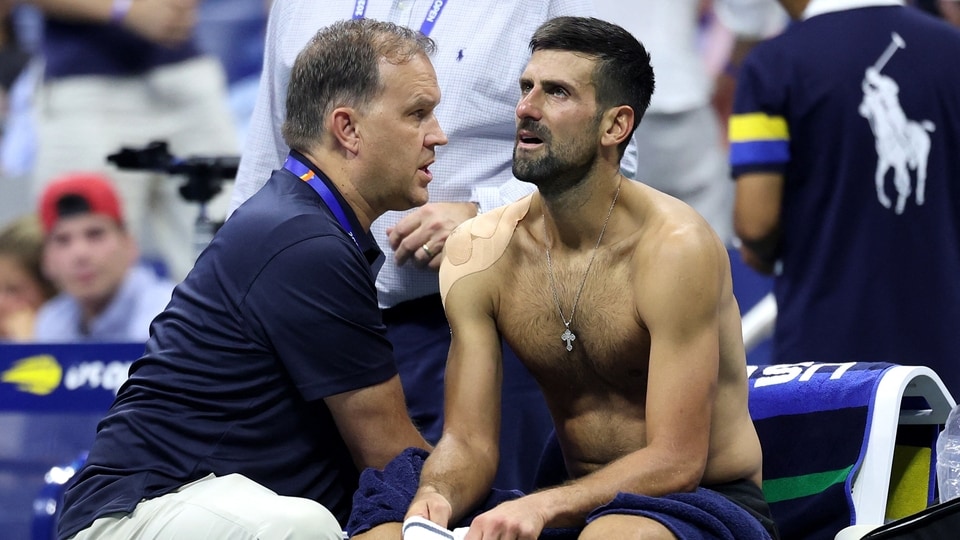
The Arthur Ashe crowd on Sunday witnessed Djokovic at his lowest during the opening-round match. He struggled physically, was seen vomiting on multiple occasions on court and, by the end of it all, was left sobbing as the inevitable result neared.
Djokovic went down in five sets against Mariano Navone, suffering his first opening-round loss at a Grand Slam since the 2006 Australian Open, when he was an unseeded player. Prior to Sunday, he was 19-0 in opening-round matches at the US Open.
"It was very sad," said Wilander. "I'm not exactly sure what happened to him, how bad he was feeling before, because he did throw up on the court. Was it because of the length of the match or was it something that he had fought with before?
"To see him in tears because he can't play at 100% level, that's very sad. But it just tells the whole story: he's not retiring, he's going to come back another year and he's going to keep pushing and keep trying, because he feels like he can still be a threat."
Former British No. 1 Johanna Konta, speaking along similar lines, backed Djokovic to find a solution to the physical issues that had troubled him during his opening-round exit in Cincinnati a fortnight earlier as well.
"He has been physically struggling - he hasn't named what it is but he does struggle in humidity. He has alluded that something is going on but he also has said that he's going to try to find a solution to it. I don't think he's going away. He is going to give it his best crack to find a way to keep playing on his own terms and retire on his own terms," she said.
However, in a contrasting view, tennis legend Justine Henin raised the question that has perhaps become the bigger concern surrounding Djokovic: whether his body will allow him to continue competing at the level he expects of himself.
"There are so many questions about his capacity to keep working hard," Henin said.
"Because coming into tournaments and trying to perform still the way he did in the past few years at Grand Slams, making semi-finals and the Australian Open final, that requires a lot of effort from him and probably the body gets tired in certain ways and there are maybe some issues we are not aware of.
"Mentally it is probably so hard for him also to accept that he is not able anymore to respond the way he did for so many years.
"We could see the emotions were at the highest level at the end of the match and it shows how hard it is for him to deal with the situation."
Djokovic himself spoke about his condition after the match, admitting that the issue had troubled him throughout the year.
"It’s something that I’ve been carrying, unfortunately, pretty much every match this year. You know, vomiting, throwing up, a serious issue there.
"Then my whole body starts to collapse, basically cramping and pain. The back just gave up in the end and shoulder, and I couldn’t close it out.
"When it comes to the match itself and the overall feeling of how I felt with my body and playing, it was really not enjoyable. I pretty much despised every moment that I spent on the court for that."


