
 E-Paper



Germany opens world's first-ever fully hydrogen-powered railway line: All you need to know
On Wednesday, a total of five units of the Coradia iLint – the world's first hydrogen train – began operations in the European nation's Lower Saxony region. Nine more will be launched by the end of the year.

 Prefer HTon Google


Germany has launched the world's first-ever railway line powered entirely by hydrogen, with passenger trains commencing operations in the European nation's Lower Saxony region. On Wednesday, a total of five units of the Coradia iLint – the world's first train to be powered by hydrogen – were launched in the country after a 2-year test run, which began in September 2018 and was held with a pair of pre-series trains.
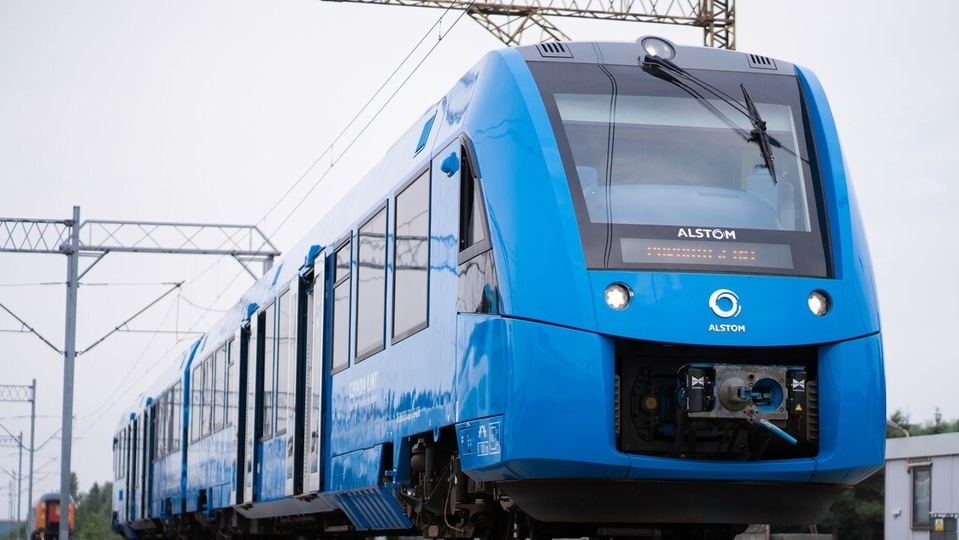
Here's all you need to know about this route, and the train:
(1.) A total of 14 Coradia iLint units are scheduled to replace 15 diesel trains on the route between Cuxhaven, Bremerhaven, Bremervörde and Buxtehude. Each of these will be in operation by the end of the year, which means that the remaining nine, too, will be launched soon.
(2.) These are being run under an agreement signed between LVNG – a German state subsidiary – and French manufacturer Alstom, which has developed these trains. The agreement is worth 93 million euros ($92.3 million, INR 741 crore), according to a report in CNN.
(3.) The Coradia iLint, which has a range of 1,000 kilometres, can operate on this route for one whole day with just one tank of hydrogen. Nevertheless, a filling station has been established on this network, at Linde.
(4.) These trains are emission-free, only emit steam and condensed water, and operate with a low level of noise. These have a top speed of 140 kph (87 mph), though regular speed on this line is much less, between 80-120 kph.
(5.) At present, Alstom has three more contracts for the Coradia iLint, which is powered by a hydrogen fuel cell that generates electrical energy for propulsion. The contracts include another one in Germany (for 27 units in the Frankfurt metropolitan area), as well as one each in Italy (six units in the Lombardy region) and France (12 units across four different regions).
More information is available on this link.


