
 E-Paper



Mother denies money for alcohol, man climbs pole, sleeps on electric wire in Andhra Pradesh
A man in Andhra Pradesh's caused panic by climbing an electric pole while intoxicated.

 Prefer HTon Google


A bizarre and alarming incident unfolded in the Manyam district of Andhra Pradesh, where a 32-year-old man in M. Singipuram village from Palakonda mandal created a scene of panic by climbing an electric pole and eventually falling asleep on live wires. The unsettling event left residents in shock as the intoxicated man, in a state of distress following a heated argument with his mother, placed himself in immediate danger, causing widespread concern among the locals who quickly gathered to witness the bizarre situation unfold.
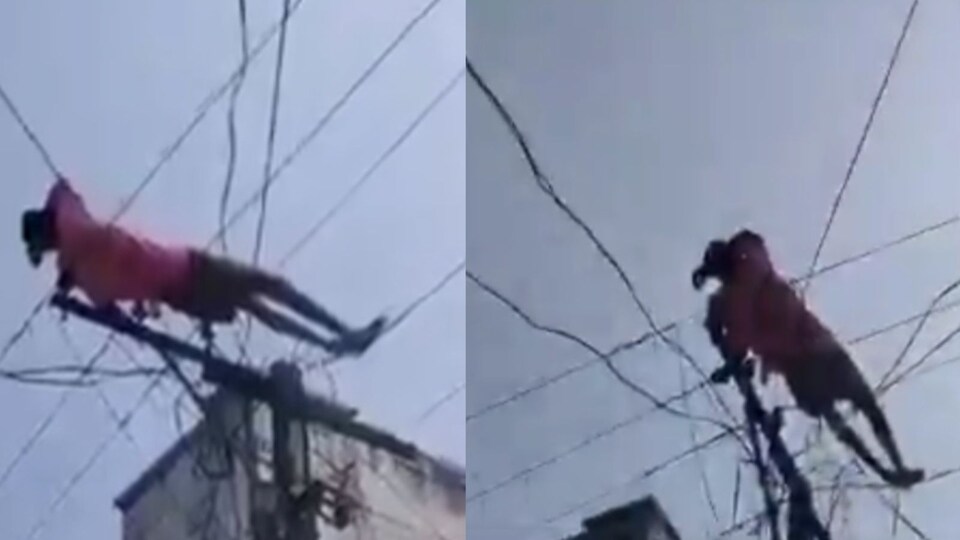
The incident occurred on Tuesday after the man, identified as Yaggala Venkanna, reportedly had a heated argument with his mother. The quarrel began when he demanded money from her after learning that she had received her NTR Bharosa social security pension (the NTR Bharosa Pension Scheme provides assistance to a diverse range of individuals falling under the below poverty line).
She refused, citing his intoxicated state, which led to an outburst from Venkanna, causing him to storm out of the house and climb a nearby electric pole, reported the New Indian Express.
Concerned villagers quickly sprang into action to prevent a tragedy by turning off the local transformer, cutting power to the pole. Their swift intervention helped avoid potential electrocution, and the man escaped unharmed.
Also read: Caught on camera: Drunk man smashes police Scorpio glass, peeks out to abuse officers
A video of the bizarre scene, showing Venkanna lying on a bundle of wires seemingly asleep while a crowd of concerned villagers looked on, quickly went viral across social media platforms. The footage has since sparked widespread attention, with viewers expressing both concern and disbelief.
Take a look at the video:
The incident concluded with no harm done, much to the relief of the community. As the situation was resolved, power was restored to the area, and the villagers were able to return to their routines, grateful for the timely intervention that prevented a potential disaster.


