
 E-Paper



Biden-Xi summit had good optics but no strategic shift in US-China ties
The optics of the exercise were good, but at the end of the day, US President Joe Biden called China's President Xi Jinping a dictator.

 Prefer HTon Google


US president Joe Biden and Chinese leader Xi Jinping met on Wednesday to ease friction between the two world powers over a host of issues like avoiding military conflicts, drug-trafficking and artificial intelligence. In his opening remarks, Biden said the United States and China must ensure that competition between them "does not veer into conflict". Biden said the two sides agreed on calling one another if they had a concern. However, he later called Jinping a dictator.
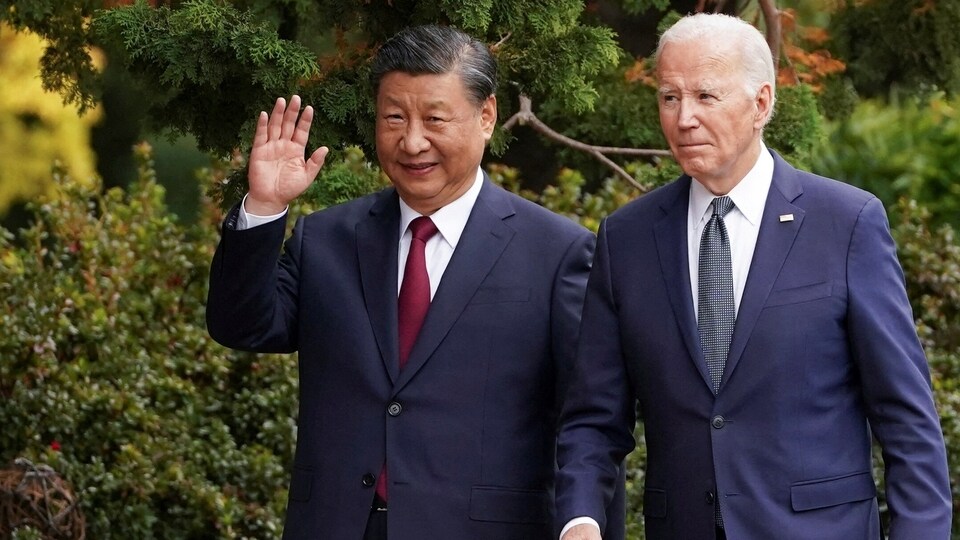
Is the US-China meeting an indication of an attempt to reset the relationship?
The world had a sigh of relief when the Power Number 1 (the United States) met the Power Number 2 (China). There is a conflict which is going on in Ukraine, there is a conflict in Gaza. The world cannot afford a third conflict, where the two main powers confront each other. The talks are a stabilizing factor for the world. But to say that there is a reset in their relationship is tantamount to exaggerating the scenario. What has actually happened is that the two sides have decided that they will avoid accidental collisions. They will avoid further destabilizing the world, they will talk to each other -- and reduce the chances of any accidental collisions.
One must understand that the optics of the exercise were good, but at the end of the day, US President Joe Biden called China's President Xi Jinping a dictator, which is actually a statement of fact. Saying that it is a reset of relations is wrong. The world is a better place to live as far as any future wars are concerned.
On Joe Biden's dictator comment
Joe Biden called spade a spade. It wouldn't have gone down very well. It is a fact because the Communist Party of China is a single party ruling China. Joe Biden wasn't wrong in qualifying or calling Xi Jinping a dictator.
Agreements on US-China talks
It is very important for the theatre commanders to talk to each other, so that there is no accidental firing or any accidental collision. If you read the statement that has come out of White House, President Biden has come out very clearly on where the United States stands, what it wants from China, and under no circumstances, if you read the statement, there is any concession. There are only two things that have come out of it which is good for the global good. One is narcotics, which is the production of fentanyl. Where are the drugs coming from? 99 percent of meth tablets are coming to India from Myanmar. These come from the Myanmar state that is held by China-sponsored militias. So it is important that the world actually takes action against synthetic drugs. What is the other thing? The other thing is climate change. Both sides have decided to actually join hands on climate change for concrete action.
That obviously can have political overtones because if the two sides gang up together to force a third side to take a particular climate change action -- that could be a possibility. But what is important in this entire thing for the world to look at is -- the Taiwan elections just coming up in January. Now what is happening is that the current dispensation is locking horns with a united opposition, which is not so anti-China as the current DPP is. If there is a change of regime, it will help China. Rather than conquering Taiwan, it can actually engineer change within Taiwan. This is something that has to be watched.


