
 E-Paper





Follow the latest breaking news, major developments and agenda-setting stories from India and around the world with the newsdesk at Hindustan Times. Operating round the clock, the desk brings together experienced editors, reporters and correspondents to deliver fast, accurate and contextual reporting across subjects that influence public policy, governance, business, society and international affairs. The HT News Desk covers politics, elections, government policies, the economy, business and markets, science and technology, the environment, law and order, infrastructure, education, climate issues and geopolitics, while closely tracking developments across states, institutions and global capitals. The team also leads coverage of major breaking news events, policy announcements, court proceedings, natural disasters, public emergencies and significant international developments. Reports published by the newsdesk are based on information gathered from reporters on the ground, official statements, government agencies, court records, regulatory filings, recognised institutions and other authoritative sources. Stories undergo editorial scrutiny and verification processes to ensure accuracy, fairness and relevance, and are updated as events evolve and additional information becomes available. Whether covering a key political decision in New Delhi, an economic policy shift affecting millions, a landmark court ruling or a major global event, the HT News Desk aims to provide readers with reliable, fact-based journalism that delivers not only the latest developments but also the context and analysis needed to understand their wider implications.
 Trending News
China intercepts US radiation-sniffing plane, Pentagon calls it unprofessional
China is deeply suspicious of any US military activity in the South China Sea. In February, a US Navy P-3 spy plane and a Chinese military aircraft came close to each other over the South China Sea.


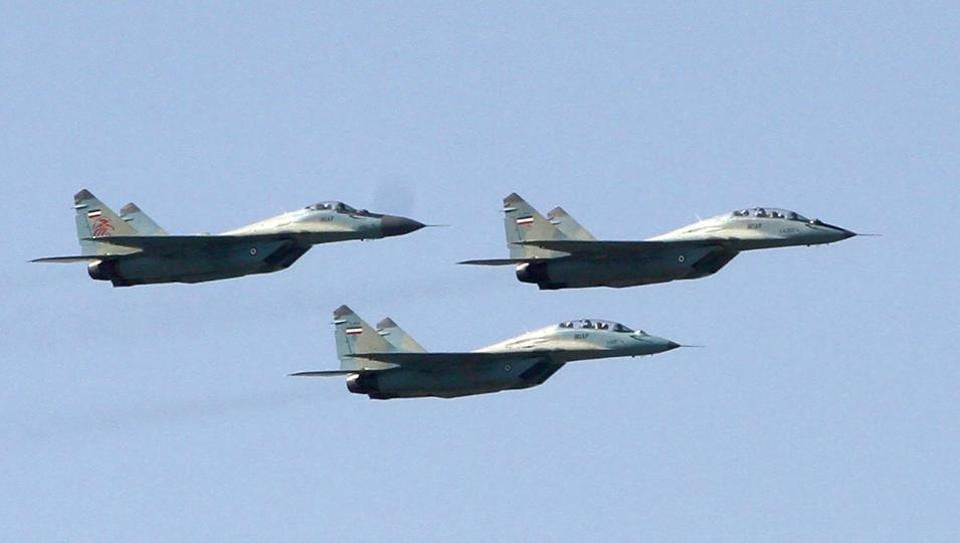
Two Chinese SU-30 aircraft carried out what the US military described as an “unprofessional” intercept of a US aircraft designed to detect radiation while it was flying in international airspace over the East China Sea.
“The issue is being addressed with China through appropriate diplomatic and military channels,” said Air Force spokeswoman Lieutenant Colonel Lori Hodge.
Hodge said the US characterisation of the incident was based on initial reports from the US aircrew aboard the WC-135 Constant Phoenix aircraft “due to the manoeuvres by the Chinese pilot, as well as the speeds and proximity of both aircraft.”
“Distances always have a bearing on how we characterize interactions,” Hodge said, adding that a US military investigation into the intercept was underway.
She said the WC-135 was carrying out a routine mission at the time and was operating in accordance with international law.
China is deeply suspicious of any US military activity in the resource-rich South China Sea.
On February 8, a US Navy P-3 spy plane and a Chinese military aircraft came close to each other over the South China Sea in an incident the Navy saw as unsafe but also inadvertent.
Reuters reported at the time that the aircraft came within 1,000 feet (305 metres) of each other in the vicinity of the Scarborough Shoal, between the Philippines and the Chinese mainland.


