
 E-Paper



Ebola outbreak in Guinea: Symptoms, modes of transmission | All you need to know
The confirmation of Ebola cases by the country’s national laboratory marked the first known resurgence in west Africa since an outbreak ended in 2016 after claiming more than 11,300 lives.

 Prefer HTon Google


Guinea declared the latest Ebola virus disease (EVD) outbreak as an “epidemic” after seven cases of the viral infection and four related deaths were confirmed on Sunday. The confirmation of Ebola cases by the country’s national laboratory marked the first known resurgence in west Africa since an outbreak ended in 2016 after claiming more than 11,300 lives. The earlier Ebola outbreak also began in the same southeastern region where new cases have been found.
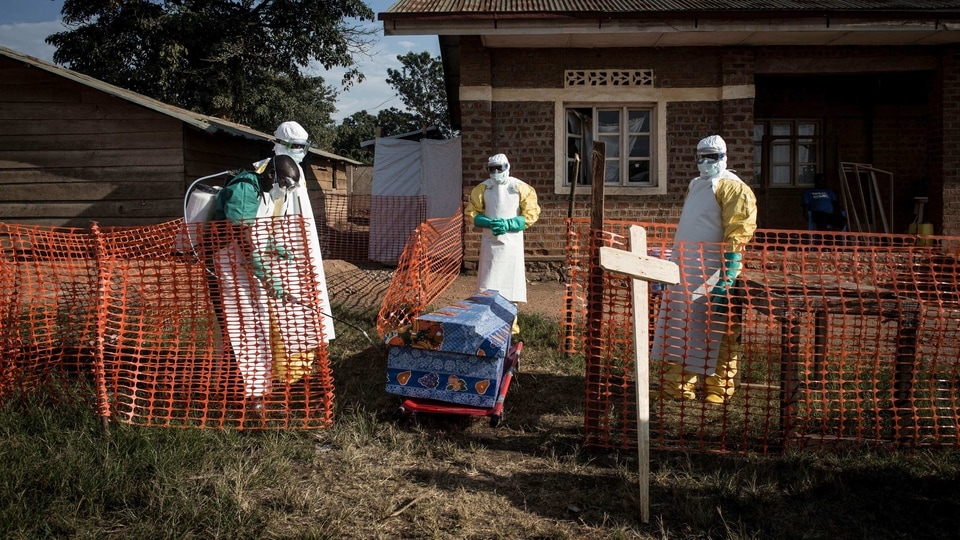
Dr Matshidiso Moeti, the World Health Organization (WHO) regional director for Africa, said that the UN health agency is supporting the authorities in Guinea to bring the overall response to full speed by helping them set up testing, contact-tracing and treatment structures. “It’s a huge concern to see the resurgence of Ebola in Guinea, a country which has already suffered so much from the disease,” he added.
What are the modes of transmission?
The Ebola virus infects the human population through contact with blood, secretions, organs or other bodily fluids of infected animals such as fruit bats and nonhuman primates like chimpanzees, gorillas, monkeys, and forest antelope. After the spillover event, the virus spreads through human-to-human transmission via direct contact with infected blood and body fluids, which includes urine, saliva, sweat, faeces, vomit, breast milk, and semen. According to the UN health agency, humans can only spread the virus after they develop signs and symptoms of Ebola.
Read | Ebola outbreak in Guinea: Why is it a huge concern? Who is 'patient zero'?
What are the symptoms of EVD?
The sign and symptoms of the disease may appear anywhere from 2 to 21 days after a person gets infected with the Ebola virus. The initial symptoms often include fever, fatigue, muscle pain, headache, and sore throat, which is followed by vomiting, diarrhoea, rash, both internal and external bleeding (for example, oozing from the gums, or blood in the stools). Laboratory findings of Ebola patient include low white blood cell and platelet counts and elevated liver enzymes.
EVD is a rare but severe disease which often proves fatal for humans if untreated. The average case fatality rate of EVD is around 50 per cent and has varied from 25 per cent to 90 per cent in past outbreaks. The recovery depends on good supportive clinical care and the patient’s immune response.
Ebola vaccine
The US Food and Drug Administration (FDA) approved the injectable single-dose Ebola vaccine rVSV-ZEBOV in December 2019. The vaccine, manufactured by Merck, Sharp & Dohme (MSD) Corp. with financial support from the US government, is now prequalified by the WHO and licensed in eight African countries.
On January 12, 2021, the four leading international health and humanitarian organisations, including the WHO and Unicef, announced the establishment of a global Ebola vaccine stockpile to ensure outbreak response. The UN health agency said that the stockpile is stored in Switzerland and ready to be shipped to countries for emergency response.


