
 E-Paper



Holy Father, moral voice: Who is a pope, what are his duties?
The pope is the head of state and the ruler of the Vatican City, which is the smallest state in the world with a measure of mere 44 hectares.

 Prefer HTon Google


Pope Francis, the Argentinian pontiff who died at the age of 88 last month, was laid to rest at Rome's Santa Maria Maggiore on April 26. With this, the Vatican Conclave is all set to gather to elect a new pope.
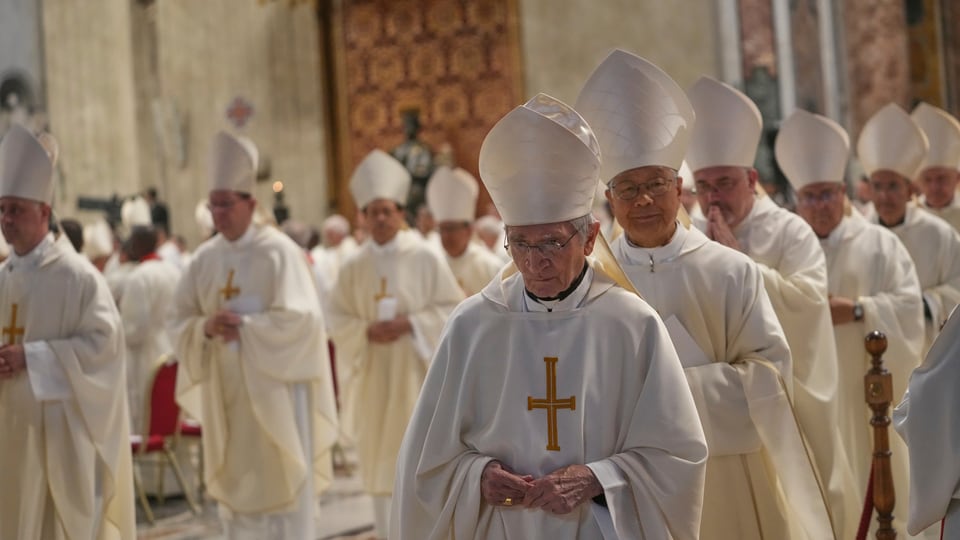
The Vatican announced that the secret conclave, where all the cardinals will gather to elect the next pope, will begin on May 7, Wednesday.
Who is a pope?
The pope, also known as the Bishop of Rome, is the head of the worldwide Catholic Church and the sovereign of the Vatican City.
The pope's duties are on both a spiritual and a political level. They give blessings, lead religious gatherings and celebrations, and meet with bishops from across the globe.
According to Canon 332 of the Church's Code of Canon Law, "The Roman Pontiff obtains full and supreme power in the Church by his acceptance of legitimate election together with episcopal consecration. Therefore, a person elected to the supreme pontificate who is marked with episcopal character obtains this power from the moment of acceptance. If the person elected lacks episcopal character, however, he is to be ordained a bishop immediately."
ALSO READ | Cardinals, ballots, anticipation: How long does it take to elect a new pope
Meaning, any Catholic can become the pope, but if they are not already a bishop, then they will immediately be ordained.
The pope carries out several duties as the head of the Vatican City. Here are the pontiff's responsibilities:
Preserving Christian faith
The word 'pope' comes from the Greek word 'pappas', which means father or patriarch. This is why the pontiff is referred to as the Holy Father.
Jesus Christ is said to have entrusted the mission of leading the Church to St Peter, whose successor is considered to be the pope.
The pope's role is to preserve, interpret and teach the Christian faith, as well as ensure the maintenance of the Catholic Church's unity. The pontiff today is the spiritual guide of around 1.4 billion Catholics globally, a news agency AFP report said.
Head of State
The pope is the head of state and the ruler of the Vatican City, which is the smallest state in the world with a measure of mere 44 hectares. The Vatican City is located in the Italian capital of Rome.
The pontiff exercises absolute power in all areas, starting from hiring and firing to taking the final calls on the Vatican's properties. However, he delegates a lot of the work to the senior clergy as well.
Though the pope has his own diplomats, he often meets world leaders at the Vatican, known as 'private audiences'.
Moral Voice
The pope is an influential force not just on the Vatican Catholics but those of the entire world. He is a moral voice on the global stage.
Many non-Catholic leaders, as well, seek an audience with the pontiff. His pronouncements often are stronger than that of several elected politicians.
ALSO READ | No phone signals, jammers, lockdown: Vatican's world to seal for Conclave to elect pope
At the United Nations, the Vatican holds a non-member observer status and is many a times called in as neutral party in cases of conflict.
Appointments
The pope is also the one to approve the appointment of bishops, around 3,000 clergy who lead the Catholic dioceses across the world, and also the cardinals.
Cardinals, also known as princes of the church, are the senior-most clergy. Cardinals under the age of 80 are also eligible to vote in the election of a new pope.
The pontiff also holds the final decision in elevating an individual to become 'blessed' or a 'saint'. The call is taken after a thorough investigation is completed on the basis of miracles and virtues.
The pope also has the power to convene Synods, worldwide gatherings that the late Pope Francis opened to lay people for the first time, to discuss particular issues.
Bishop of Rome
As the Bishop of Rome, the pontiff is responsible for administering his diocese. Considering the limitations on the pope's time, this duty is delegated to a Vicar General.
ALSO READ | Papal election: How the longest Conclave to elect a pope unfolded
However, the pope does take part in local events and also regularly visit churches in Rome for celebrations or other symbolic moments or sites in the city.
Travel to Connect
The pontiff also travels to connect with the faithful and the spiritual around the world.
As per a report from AFP, John Paul II carried out the most apostolic voyages, with 104 visits abroad during his 26 years as pope.
The late Pope Francis, meanwhile, took 47 trips abroad and used the visits to highlight marginalised communities or other issues such as migration or inter-religious dialogue.
Pope Francis, notably, engaged in teachings as well. Through his homilies and written texts, he provided a guidance on everything in daily life.
ALSO READ | Papal Conclave: What do Cardinals eat during Pope's election?
He also published several encyclicals, open letter to the Church worldwide and covered many topics such as social friendship and climate change.
Pope Francis also paved the way for the blessing of same-sex couples, put a limit on the use of the Latin Mass, and took measures to tackle sexual abuse of children by clergy.
All of the 133 Cardinals have gathered in Rome and are expected to take part in the papal conclave behind the closed, wooden doors of the Sistine Chapel on Wednesday.


