E-Paper



In 1998, 12,000 tonnes of orange peels and pulp covered ruined Costa Rican cattle pasture; 16 years on, tree diversity tripled, woody biomass up 176%
In 1998, a juice firm dumped orange waste on a Costa Rican pasture. By 2014, it had triple the woody species and 176% more woody biomass than a nearby plot.

 Prefer HTon Google


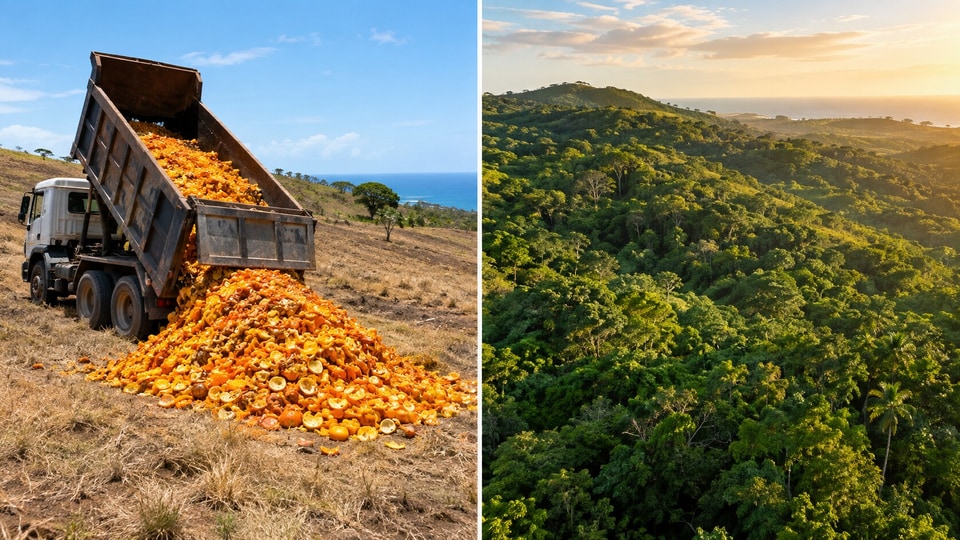
Most of us throw away the orange peels without a second thought. A juice factory can end up with mountains of them, and somebody has to decide where they go. In 1998, an unusual idea in northwest Costa Rica offered one answer. Trucks dumped an estimated 12,000 metric tons of orange pulp and skins on a devastated cattle pasture. It sounds like a dumping story. But a peer-reviewed study published in the journal Restoration Ecology by a Princeton University team led by Timothy Treuer shows how the waste helped that land regrow as forest.
A tired pasture and a strange deal
The land lay within Área de Conservación Guanacaste, a protected area. Years of overgrazing and fire-based land management had left the soil hard, rocky, and low in nutrients. For years, the presence of an invasive grass called jaragua had been inhibiting regrowth. It also fuels hot fires that can kill young trees.
Park science advisers Daniel Janzen and Winnie Hallwachs thought they had an answer. Del Oro was a juice company that had to figure out what to do with its orange waste. The firm would provide the park with forested land under a 20-year agreement. In return, it could dump its pulp and peels free on damaged pasture. The peels were dumped across some 3 hectares.

What 16 years of regrowth looked like
Then a lawsuit came. The contract was canceled after a rival juice company alleged it hurt a national park. Janzen, Hallwachs and others kept visiting the site, watching the grass give way to woody plants. But no one tracked the changes rigorously until 2014, 16 years after the peels arrived.
Treuer’s team compared the treated area to an adjacent untreated plot that year. After 16 years, the treated plot had three times as many species of woody plants. It also had 176% more woody biomass above ground, that is, wood in the trunks and branches. The canopy photos showed denser cover, and the soil samples taken two and 16 years after the peels were dropped showed higher levels of nutrients.
In a follow-up commentary in Tropical Conservation Science, the authors suspected the peels did two things, though they could not confirm it. Within a couple of months, the waste had killed the grass, probably by smothering it. It then broke down into a nutrient-rich layer that may have helped tree seedlings take hold.
What the results don’t prove
This was just one 3-hectare site, and the project was never repeated. That's why the researchers couldn't be sure what drove the recovery. The peels were from several hundred hectares of orchards but were used on only 3 hectares. The authors noted that more research was needed to figure out the right amount of waste. They also called for careful pilot tests including runoff into waterways and greenhouse gas emissions. Most of the citrus growers who spoke to the team farm in Mediterranean climates, where results could be different.
It remained a case worth watching. The deal offered the juice company free waste disposal and the park a solution for a damaged pasture. The authors say future tests may show that lightly processed farm waste could be a low-cost way to speed up tropical forest recovery. One patch in Costa Rica, for now, offers a hopeful hint: what one industry throws away might help a forest grow back.