E-Paper



In the mid-1800s, lantana came to South African gardens; it spread over 2 million hectares and may use up to 97 million cubic meters of water a year
Lantana was brought to South Africa for gardens in the mid-1800s. It has invaded over 2 million hectares, and decades of control have had limited success.

 Prefer HTon Google


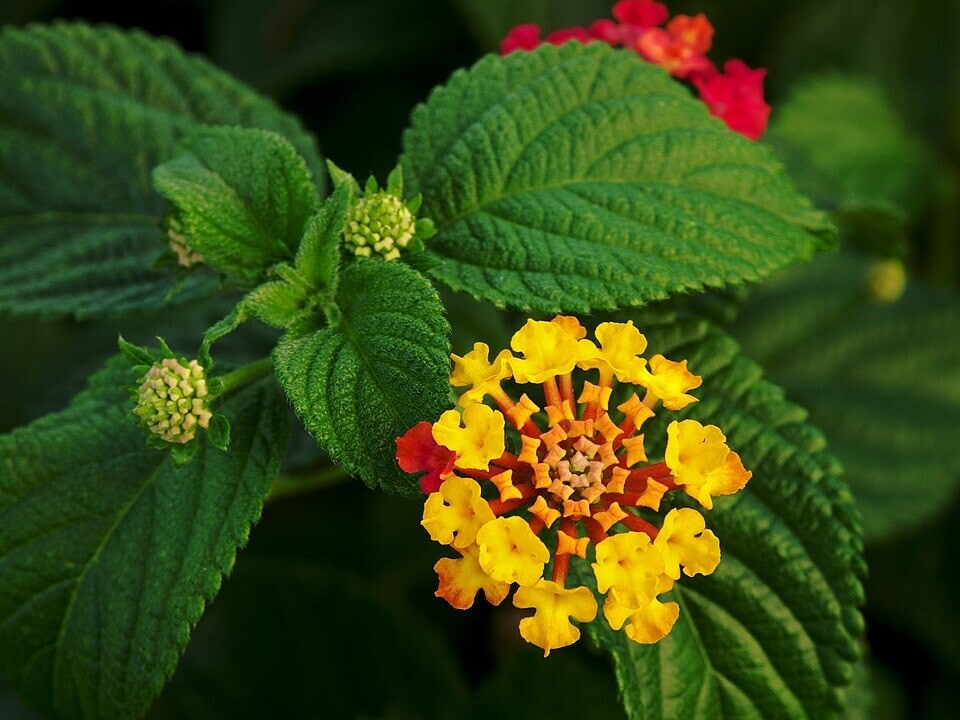
There’s a flower that looks great in a garden but can end up spreading across millions of hectares. That's the story of lantana in South Africa. The shrub was brought to the country in the mid-1800s for gardens, according to a 2014 study by Subhashni Taylor and Lalit Kumar in the African Journal of Environmental Science and Technology. The study cites earlier research showing it has invaded more than 2 million hectares. Today, researchers describe it as a major invasive species in South Africa.

A garden favorite that got out of hand
Lantana camara is native to central and northern South America and the Caribbean, but the study says it has now been found in about 60 countries or island groups. It was introduced into South Africa as an ornamental, but has become invasive in forests, savannas, and grasslands. It is among the world’s 100 worst invasive species. It also crosses readily with related plants in South Africa, where many varieties occur. Authors add that little is known about the plant’s classification, which has made it difficult to select appropriate biological control agents.
A thirsty plant, with a catch
A 2000 national assessment cited in the review estimated that the plant can use up to about 97 million cubic meters of surface water a year. The assessment was termed preliminary, and its authors said the findings should be taken with a grain of salt. Lantana’s share was roughly 3% of the total extra water used by all invading plants. Trees such as wattles and pines used far more.
Nevertheless, the review references other evaluations of lantana’s harm. Among the plant invaders examined in the 2004 study, Lantana received the highest rating for its impact on biodiversity. South Africa also classifies lantana as a Category 1b invasive species, which means it must be controlled wherever it occurs.
Decades of effort, little success
South Africa has tried hard to fight back. Researchers evaluated 30 potential biological control agents over 23 years. Of these, seven were found suitable for release, but only five became established. Even so, the study says these agents do not kill lantana plants, or prevent the weed from growing.
A similar pattern appears in another study. In a 2012 PLOS ONE study, Shonil Bhagwat and colleagues reviewed historical records from Australia, India, and South Africa and found that governments took aggressive measures to eradicate lantana, but were largely unsuccessful. The authors point out that the archival record is only a partial picture. Instead of losing the battle, conservationists will need strategies for adaptive management, they suggest.
What climate change might mean for lantana
Taylor and Kumar also used computer models to project where the climate might be suitable for lantana in 2030, 2070 and 2100. The models suggest suitable areas could shrink in Limpopo, Mpumalanga and coastal Western Cape, but the plant may be able to establish itself further inland in KwaZulu-Natal and Eastern Cape. These maps indicate climate suitability, not expected future spread. Real spread also depends on the dispersal ability of the plant and the response of land managers.
Where conditions are expected to get less suitable, they suggest the focus should be on controlling how dense lantana becomes. In places where conditions are expected to become more favorable, they recommend continued surveillance to prevent further spread. For the rest of us, the lesson is simple: before you bring a plant home, check to see if it’s considered invasive.