
 E-Paper



Nasa to send its ‘futuristic’, next-generation atomic clock to space
Nasa will send its next-generation atomic clock into space later this year, a key advance for safely navigating future human exploration of the solar system.


Nasa will send its next-generation atomic clock into space later this year, a key advance for safely navigating future human exploration of the solar system.
Timekeeping plays a critical role in spacecraft navigation and will be especially important for future deep space missions.
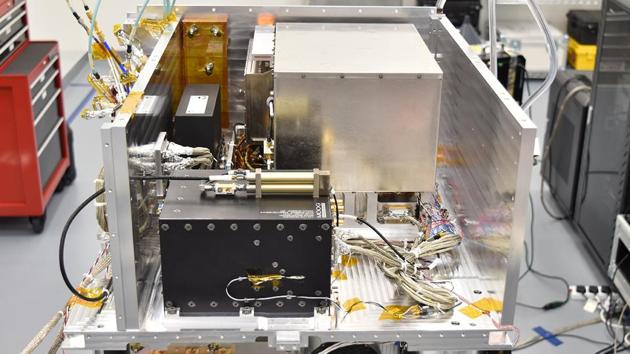
The clock will be smaller, lighter with magnitudes more precise than any atomic clock flown in space before, Nasa said.
The Deep Space Atomic Clock was developed by Nasa’s Jet Propulsion Laboratory in California.
Last month, JPL engineers monitored integration of the clock on to the Surrey Orbital Test Bed spacecraft, which will take it into the orbit later this year.
Most spacecraft are tracked using “two-way” methods: the ground-based antenna ‘pings’ the spacecraft and waits for the signal to return. By measuring how long the signal takes to travel, the distance to the spacecraft can be calculated.
A navigation team then processes this information to determine the spacecraft’s flight path and determine if any course corrections are required.
The clock enables “one-way” tracking, where the spacecraft does not need to send the signal back to Earth.
The tracking measurements could be taken on board and processed with a spacecraft-based navigation system to determine the path and whether any manoeuvres are needed to stay on course, Nasa said.
This will be a key advance for safely navigating future human exploration of the solar system by providing astronauts with their position and velocity when they need it.
It will lighten the load on the antennas in Nasa’s Deep Space Network, allowing more spacecraft to be tracked with a single antenna.
The Deep Space Atomic Clock would also improve the precision and quantity of the radio data used by scientists for determining a planet’s gravity field and probing its atmosphere.


