
 E-Paper



Properly handling border dispute with India part of Xi Jinping doctrine: China
The Chinese government analysis avoided referring to the ongoing discussions between India and China to resolve stalemate in the troop disengagement process in eastern Ladakh.

 Prefer HTon Google


Properly handling the boundary dispute with India but safeguarding China’s territorial integrity is part of President Xi Jinping’s blueprint for Beijing’s “major country” diplomacy, the Chinese foreign ministry has said.
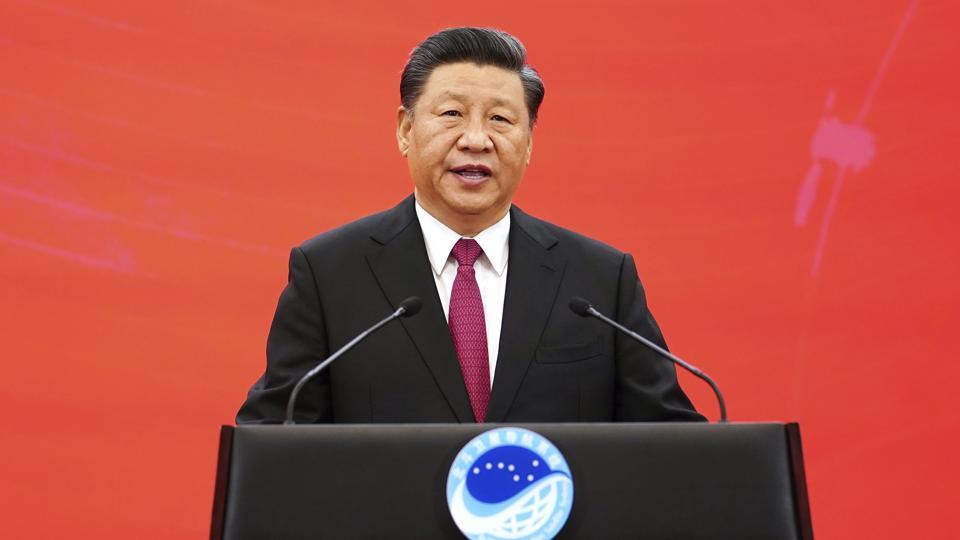
In an analysis of “Xi Jinping on Governance and Politics”, the ministry indicated that maintaining peace and tranquility along the boundary with India is as important as stabilising the “maritime situation” in the South China Sea (SCS) where Beijing is entangled in disputes with multiple littoral states over the ownership of islands, reefs and the surrounding seas.
The analysis by the ministry also hailed the “new model” of informal meetings between Prime Minister Narendra Modi and President Xi.
There was no mention of the ongoing friction with India along the Line of Actual Control (LAC) in eastern Ladakh, which has plunged bilateral ties to the worst low in decades.
The ministry, quoting Xi, said China will “resolutely” safeguard China’s “...sovereignty, territorial integrity, and maritime rights and interests, steadily advance the consultation process of the ‘Code of Conduct in the South China Sea’, stabilise the maritime situation, properly handle border disputes between China and India, and maintain peace and tranquility in the border areas.”
Published by the Chinese foreign ministry’s Communist party committee in Mandarin in the party mouthpiece, People’s Daily, the analysis claimed that China’s relation with “regional powers” like India has improved.
“Relations with neighbouring countries continue to improve. For regional powers, the leaders of China and India have created a new model of bilateral exchanges at annual informal meetings, leading the two countries to deepen strategic mutual trust, properly manage differences, and stably develop bilateral relations,” the analysis said.
It was referring to the two informal summits between Modi and Xi held in Wuhan in 2018 and in Chennai in 2019.
The Chinese government analysis avoided referring to the ongoing discussions between India and China to resolve stalemate in the troop disengagement process in eastern Ladakh.
India had rejected China’s contention that disengagement has been completed at most locations along their disputed border, and called on Beijing to work sincerely for complete de-escalation and full restoration of peace along the LAC.
The new analysis comes a week after the foreign ministry had said in a statement that maintaining peace along the disputed boundary and deepening strategic trust with India is one of China’s diplomatic priorities.
“For the China-India relationship, the two sides should jointly safeguard peace and security in the border areas and maintain a steady and sound development of bilateral ties,” spokesperson Zhao Lijian had said.
Responding to a query about China’s future diplomatic priorities as the Covid-19 pandemic impacts the world, Zhao was briefly outlining Beijing’s plans for the way ahead in bilateral ties with the US, Russia, EU, Japan, and India.
The current analysis also looked at Beijing’s ties with the US, Russia, the European Union, Japan, South Korea besides Latin America, Africa and Central Asian countries.
The ministry said that since the 19th National Congress of the Communist Party of China, held in October 2017, Xi had travelled for 2,15,000 km and visited 27 countries.
“In the direction of Northeast Asia, General Secretary Xi Jinping made a historic visit to North Korea. The top leaders of China and North Korea met 5 times,” it said.
In context of the ongoing Covid-19 pandemic, China, under Xi’s guidance as per the ministry, provided or is providing medical material assistance to more than 150 countries and international and regional organisations, and has sent 32 medical expert teams to 30 countries.
Last month, the Chinese foreign ministry had inaugurated the Xi Jinping Thought on Diplomacy research centre, which aims to coordinate resources to conduct “comprehensive, systematic, and in-depth study, interpretation, and promotion of Xi’s thinking.”


