
 E-Paper



New UK visa figures show most Indians do not overstay
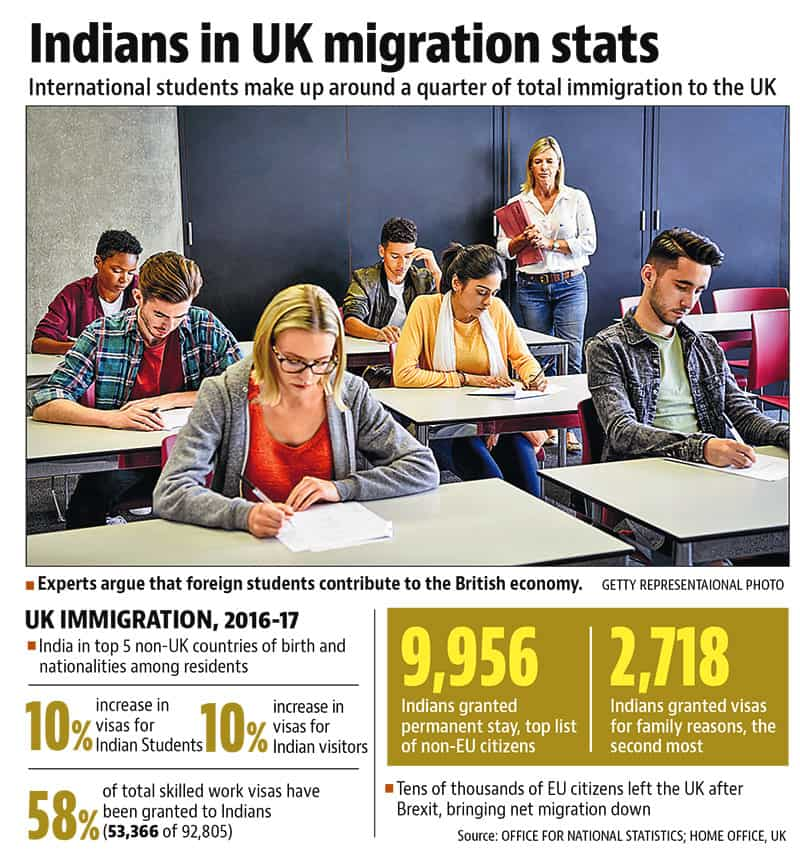
Net migration to the UK has dropped as many EU citizens left after the Brexit vote while the number of Indian students in Britain rose by 10%, according to new figures from the Office for National Statistics .


New UK immigration figures released on Thursday show Indians – including students – have one of the highest compliance rates of non-EU citizens as they depart before the expiry of visas, casting doubt on claims that a large number of Indians abuse the visa system.

Ninety-seven percent of the 330,127 Indian citizens who entered Britain during 2016-17 returned before the expiry of their visas, according to Home Office analysis of its exit checks programme.
Indian professionals – particularly in the IT sector – were given the most visas: 58% of the total granted during the year.
Figures for the year ending March 2017 released by the Office of National Statistics (ONS) confirm doubts long expressed by UK universities and higher education stakeholders about claims that large numbers of Indian and non-EU students do not return to their countries after completing studies.
ONS said that “there is no evidence of a major issue of non-EU students overstaying their entitlement to stay”, spreading cheer among stakeholders, who have been demanding that non-EU students be taken out of the overall migration statistics.
The new set of figures is unlikely to lead to an immediate change in policy, but will add pressure on the Theresa May government to remove students from migration statistics. However, indications are that more curbs are likely in 2018.
The figures also show a 10% rise in Indian student numbers from the previous year, considered significant in the backdrop of a 50% drop in their numbers since 2010. The marginal increase is estimated to be at the postgraduate level, while the largest drop was for vocational courses.
The visa figures related to Indians prompted calls on the government to improve the overall UK visa offer. Prime Minister May had linked this to expediting the speed and volume of the return of illegal Indians in the UK during her November 2016 visit to India.
Responding to the figures, Jitesh Gadhia, a Conservative member of the House of Lords, said: “Indian visitors, students and workers bring huge benefits to the UK economy through their purchasing power, academic contributions and skill sets – enriching our country.
“Going forward, the UK government should now have much greater confidence in providing Indian visitors, students and skilled workers with favourable visa access terms which are not discriminatory in any way.”
Industrialist Swraj Paul added: “The UK is losing students to its detriment. My personal experience tells me both UK students and economy gain from international students.”
The ONS figures also revealed that tens of thousands of EU citizens left the country after the Brexit vote, confirming reports that uncertainty over their future stay in the UK had prompted many to leave and discourage others from moving to the UK.
Since 2010, governments headed by David Cameron and May have cracked down on abuse of student visas, which included closure of the post-study work visa that was popular among self-financing Indian students, and the shutting down of nearly 920 bogus colleges that were admitting Indian and other non-EU students for allegedly non-academic purposes.
Faced with new statistical doubts, home secretary Amber Rudd – who has promised more curbs on international students – announced a new study by the influential Migration Advisory Committee on the financial and other impact of students coming to the UK.
Rudd said: “There is no limit to the number of genuine international students who can come to the UK to study and the fact that we remain the second most popular global destination for those seeking higher education is something to be proud of.
“We understand how important students from around the world are to our higher education sector, which is a key export for our country, and that’s why we want to have a robust and independent evidence base of their value and the impact they have.”
Responding to Rudd’s new study, Universities UK chief executive Alistair Jarvis said: “This is an opportunity to build on the considerable evidence that shows that international students have a very positive impact on the UK economy and local communities.
“Recent research by Oxford Economics showed that international students generate more than £25 billion for the economy and support over 200,000 jobs in communities across the UK. International students also enrich our campuses and the experience of UK students, culturally as well as economically. Many return home having built strong professional and personal links that provide long-term soft power benefits to the UK.”


