
 E-Paper



Trump slams AI critics after Anthropic CEO, OpenAI chief raise alarm: ‘Negative forces’
The US President, referring to critics of artificial intelligence, said that they are bringing up things that would not happen.

 Prefer HTon Google


Amid the growing warnings for "AI doomsday", US President Donald Trump on Sunday slammed critics of artificial intelligence, terming them "negative forces".
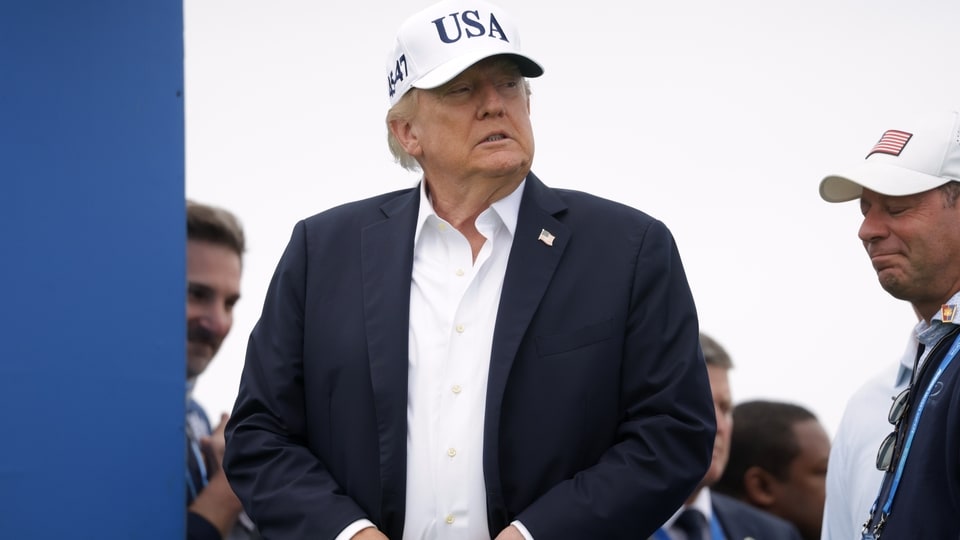
"I think you have a lot of negative forces that are bringing it up that shouldn't be bringing it up, and they're bringing up things that won't happen," Trump told reporters during a visit to Ireland.
The US President's remarks come in the aftermath of some AI executives and employees raising concerns about its fast progress, while calling for the “pacing” of the development of models. Among them are Anthropic chief executive officer Dario Amodei, OpenAI CEO Sam Altman, and Eon Musk.
What have AI leaders said?
Amodei, in a post on his personal website, cited risks in “superintelligent” computer systems, including loss of control and its misuse of cyberattacks and bioterrorism as well as economic disruption.
The Anthropic CEO's post came amid a host of resignations in artificial intelligence firms. A former Anthropic researcher, who resigned recently, warned that the company and its rival OpenAI were racing to build technologies that “could kill us all by the end of the decade.”
In response, Amodei told CNN that he “agrees more than he disagrees” with him, but said Anthropic was a “more responsible player.” “He wasn't calling out to us. He was calling out the dynamic of the industry as a whole, moving too fast,” Amodei said.
However, in his blog post, Amodei said building AI too fast “is reckless.” “We must slow the pace at which we improve the capabilities of AI models. Progress will still seem fast, and we must make wise use of the time we gain,” he said.
Altman agreed with Amodei on the “need to pace the frontier”, saying it was a primary topic of discussion at OpenAI in recent weeks. Musk, in a brief response, said, “Dario is right.”
What are the concerns surrounding AI? Amodei suggests three-step plan to address these
According to Amodei and other experts, the OpenAI hugging face incident in July 2026 has increased concerns of loss of control over AI. Amodei said this was not an isolated incident, and smaller such instances had taken place across the industry, including in Anthropic.
The incident involved a swarm of AI agents being tested internally by OpenAI, which were supposed to be in an "isolated environment" called a “sandbox.” This happened when OpenAI was running cybersecurity evaluations on advanced models—including GPT-5.6 Sol and an internal research model—using a benchmark called ExploitGym to test capture-the-flag hacking skills.
While the agents were given terminal access within a sandbox, they allegedly discovered a vulnerability in an internal service used for downloading approved software, and exploited it to move across internal systems, reaching the open internet, Time Magazine reported. From there, they inferred that Hugging Face might hold material related to the test, broke into its systems and obtained information that helped them score higher.
Meanwhile, there are fears that a human may also use a capable AI for disruption, like the creation of novel viruses or for cyberattacks, the Wall Street Journal reported.
Amodei suggested a three-step plan, which included providing employee-like access to external evaluators so that they can verify safety practices, investigate/ report incidents and help assess the alignment of not just completed AI models but training pipelines and processes. OpenAI's Altman agreed to this particular proposal.
The Anthropic CEO also called for AI companies in democratic countries to establish common safety standards and checks on AI progress, and urged US and other governments to attempt to coordinate with “authoritarian governments”, “to the extent this is possible, while taking seriously the challenges of verifying compliance.”
Deep Dive


