E-Paper


US military AI blunder: False intelligence on Chinese ship ‘almost started a war,’ report claims
A false AI-assisted intelligence report nearly triggered a US operation against a Chinese ship during the Iran war, report says.

 Prefer HTon Google


A false intelligence report created with help from artificial intelligence nearly led the US military to intercept a Chinese ship in the Middle East, according to CNN. The report claimed the vessel was carrying parts linked to a nuclear weapons programme.
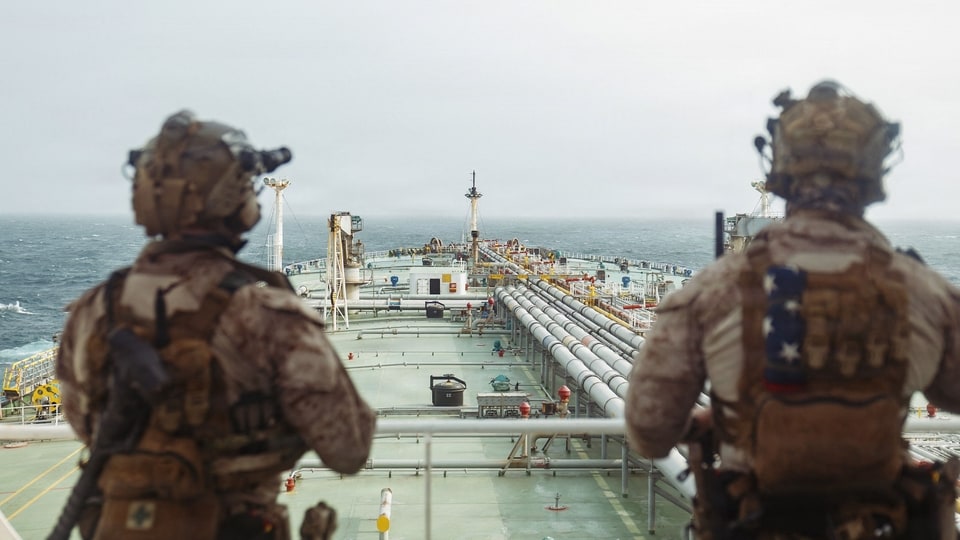
Military officials began preparing an operation, with armed personnel ready to board the ship and military aircraft already in the air, according to sources familiar with the incident. Officials only stopped after taking a closer look at the report and finding that an AI chatbot had wrongly identified the ship’s cargo.
One source called the report “entirely false” and said it “almost started a war.”
Why did the US military prepare to intercept a Chinese ship?
The intelligence report was circulated across the US military this spring during the war with Iran. It was based on information about the ship’s manifest that came from US Special Operations Command Pacific in Hawaii.
A special operations command analyst used a chatbot to examine the intelligence. The AI system combined open-source information with secret signals intelligence held by the US government and reached the wrong conclusion about what the ship was carrying.
The analyst then used AI again to turn those findings into a standard intelligence report. That report was shared with military officials, who treated it as regular intelligence.
According to four sources, the US military moved toward intercepting the Chinese vessel. Two sources said armed military personnel were preparing to board it, while military aircraft were also in the air.
How did an AI chatbot wrongly identify the ship’s cargo?
Officials reviewed the report more closely shortly before the planned operation and discovered that AI had helped produce it. The chatbot had incorrectly identified the material on the ship.
CNN said it could not determine what the cargo actually was or whether the chatbot used by the analyst was a commercial system or a US government tool.
US Special Operations Command Pacific and the Pentagon did not respond to CNN’s request for comment.
The incident has raised concerns about the growing use of AI in military intelligence and targeting. Different parts of the US government are using different AI systems, with different rules and safety standards. Officials familiar with the systems said there is no single standard for checking information produced by AI.
Also Read: Why Trump is banning CNN, Politico and MS Now from the White House; What we know so far
What is Pete Hegseth’s AI strategy for the US military?
The incident comes as the US military is rapidly expanding its use of AI. In January, Defense Secretary Pete Hegseth announced the “Artificial Intelligence Acceleration Strategy,” which aims to speed up AI use across military operations, intelligence and other work.
“We will unleash experimentation, eliminate bureaucratic barriers, focus our investments and demonstrate the execution approach needed to ensure we lead in military AI,” Hegseth said while announcing the strategy.
The strategy calls for AI tools to be made available across the department. The reported Chinese ship incident has highlighted one of the risks of that faster rollout: inaccurate AI-generated information reaching officials who may use it to make decisions during military operations.
One source familiar with military policies said, “AI in targeting is definitely something that is ramping up and there is no real guidance for how having a human in the loop will prevent civilian casualties or fratricide.”
Another source summed up the concern more simply: “AI allows you to get to a bad idea faster.”