
 E-Paper



Volkswagen's plan to make parts for Israel's missile defence Iron Dome triggers irony posts on ‘Nazi past’
Under the proposed deal, the Volkswagen plant would produce components for the Iron Dome system, including transport vehicles, launch units and power generators

 Prefer HTon Google


German automobile giant Volkswagen is all set for a landmark shift from car manufacturing at one of its factories to help Israel with its missile defence production — in a move linked to economic uncertainty, Germany's ties with Israel, and some cues tracing back to the Second World War and Nazi Germany.
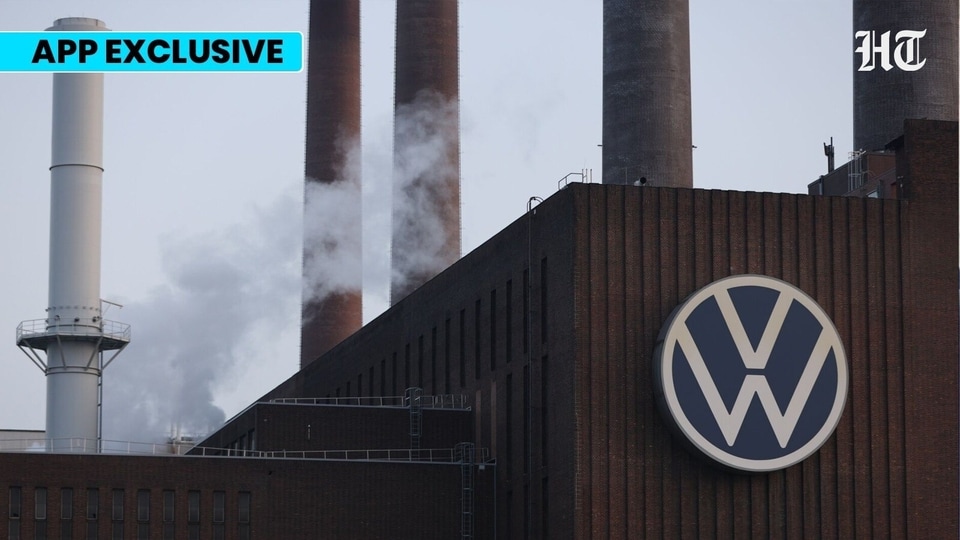
The German automaker is in talks with Israel's Rafael Advanced Defence Systems to make components for Iron Dome air defence system, the Financial Times has reported.
Follow latest updates on US-Iran war
The potential deal would see one of Europe's largest automakers shift towards defence manufacturing amid uncertain future over geopolitical and economic risks and a broader push towards strengthening Europe's defence capabilities.
What is part of Volkswagen-Rafael Advanced Defence Systems
Volkswagen has been looking at options to save around 2,300 jobs at the Osnabrück plant in German state of Lower Saxony since the 2024.
The new deal would allow Volkswagen to convert the Osnabrück plant to make components of the advanced air defence system, the FT report said citing people familiar with the deal.
Under the proposed deal, the Volkswagen plant would produce components for the Iron Dome system, including transport vehicles, launch units and power generators. The manufacturing is likely to begin in the next 12 to 18 months, once the agreement comes into force.
“The aim is to save everybody, maybe even to grow. The potential is so high. But it’s also an individual decision for the workers if they want to be part of the idea," one of the people familiar with the matter told FT.
Also Read: Iran thanks ‘people of India’ after 83rd wave of missile strikes on Israel, US
The tie-up would ensure the company saves jobs at the Germany plant amid falling profits as Chinese competition is rising along with a transition to electric vehicles, the report said.
Volkswagen already makes military trucks for German arms group Rheinmetall. The latest partnership is with Israel's Rafael, different from the French firm Dassault that makes fighter jets by the name ‘Rafale’.
The Israeli firm is also planning to set up a separate production facility in Germany for the Iron Dome missiles.
Germany remains Israel’s second-largest arms supplier, after the United States, and its fifth-largest export partner, according to Al-Jazeera.
Volkswagen arms push has links to WWII
Volkswagen, which has largely remained a civilian automobile firm since 1937, has a few episodes where it went into arms manufacturing.
One such event was in the years following the automaker's initial years which coincided the rise of Nazi regime.
The Holocaust Encyclopedia closely links the foundation of Volkswagen to the rise of Adolf Hitler.
According to their website, the propaganda-laden foundation-laying for Volkswagen Works was done by Nazi dignitaries in 1938, as part of Hitler’s admiration for technology and automobiles.
In the following years, the automaker started manufacturing weapons for the war and become one of the first users of forced labour and Soviet prisoners of war. While it continued making "people's cars", priority was given to armaments.
The automobile group later admitted to have used forced labour for the manufacture of the military goods and weapons at the Volkswagen plant.
But the height of the crime was reported in 1946, when the company's executives were directly linked to war crimes.
In the northern German village of Rühen in Lower Saxony, with a population of just 5,000, it was alleged that the company's executives — who weren't Nazi officials — oversaw the murder of hundreds of infants. The revelations of the crimes were made in a British war-crimes tribunal held in Helmstedt in 1946, where it was alleged that several of the company's employees were involved in “killing by willful neglect".
Hitler is the ultimate villain for the Jews in particular, and VW's collabs in the Jewish country of Israel formed after WW2 did ignite online chatter on the purported irony.
A user on X, Uri Pilichowski, said that during the Holocaust and World War II, the Volkswagen factory at Wolfsburg relied heavily on forced labor from concentration camp inmates, including Jews.
“Volkswagen, a company founded by the Nazi regime under Hitler in the 1930s, is now supporting genocidal Israel through arms production,” Clash report said in a post on X.
Germany, however, has since sought to actively denounce the Nazi era of its history, and VW is now a global firm with several brands like Skoda and Audi under its umbrella.
Germany's recent role in Gaza War
As of 2026, Germany, together with the US, is a major arms supplier to Israel. In the Gaza War, which began following Hamas attack in October 2023, the Germany government authorised 308 military export licenses to Israel worth $380 million, a ten-fold rise from a year ago, according to Al Jazeera.
Israel has used German made Dolphin-class submarines, which remains the backbone of Tel Aviv's submarine fleet. In return, Israel sold goods worth $2.6 billion to Germany, including advanced technologies and electronics.


