
 E-Paper



Gaza crisis: UN Security Council calls for 'unconditional ceasefire'
The council adopted the presidential statement at an emergency meeting just after midnight on Monday as Muslims started celebrating the Eid al-Fitr holiday marking the end of the fasting month of Ramadan.


The UN Security Council called for "an immediate and unconditional humanitarian cease-fire" in the Gaza war between Israel and Hamas at an emergency meeting just after midnight (04:00 GMT) Monday morning.

The council met as Muslims started celebrating the Eid al-Fitr holiday marking the end of the fasting month of Ramadan.
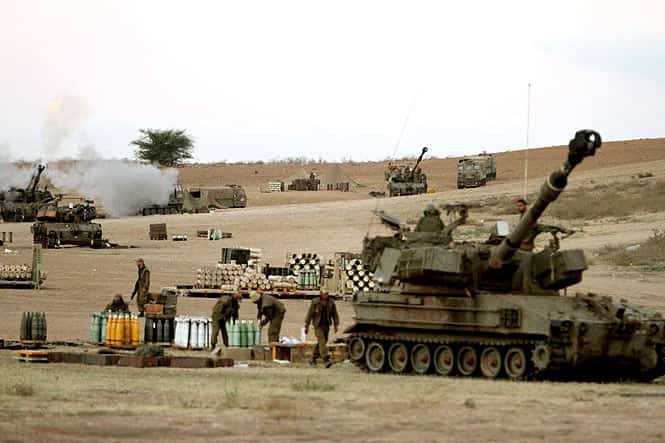
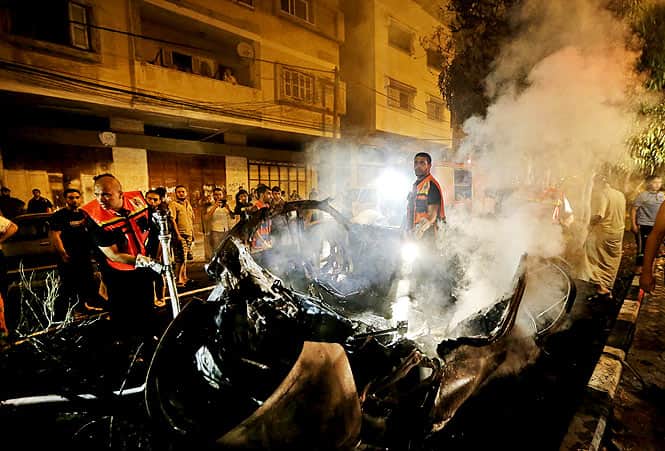
The pressure for a cease-fire followed new attacks launched by Israel and Hamas on Sunday despite back-and-forth over proposals for another temporary halt to nearly three weeks of fighting. A 12-hour lull Saturday, agreed to by both sides following intense US.and United Nations mediation efforts, could not be sustained.
The Security Council urged Israel and Hamas "to accept and fully implement the humanitarian cease-fire into the Eid period and beyond." It said this would allow for the delivery of urgently needed assistance.
The council's presidential statement also called on the parties "to engage in efforts to achieve a durable and fully respected cease-fire, based on the Egyptian initiative."
The 20-day war has killed more than 1,030 Palestinians, mainly civilians, according to the Palestinian health ministry. Israel has lost 43 soldiers, as well as two Israeli civilians and a Thai worker killed by rocket and mortar attacks from Gaza, according to the Israeli military.
The Palestinians and the Israelis both criticised the statement adopted by the council.
Palestinian UN ambassador Riyad Mansour said the council should have adopted a strong and legally binding resolution a long time ago demanding an immediate halt to Israel's "aggression," providing the Palestinian people with protection and lifting the siege in the Gaza Strip so goods and people can move freely.
Nonetheless, Mansour expressed hope that Israel will "honor and respect" a new humanitarian cease-fire which the Palestinians hope will last "for a long time" so all outstanding issues can be addressed, especially the siege.
"You cannot keep 1.8 million Palestinian civilians in the Gaza Strip in this huge prison," he told reporters. "That is a recipe for disaster, It is inhumane, and it has to be stopped and it has to be lifted."
Israel's UN ambassador Ron Prosor said the presidential statement didn't mention Hamas or the firing of rockets into Israel or Israel's right to defend itself.
He sidestepped several questions on whether Israel would accept a new humanitarian cease-fire, but stressed that it had agreed to five cease-fires since the conflict began.
"Every single time the international community called for a cease-fire, we ceased and Hamas fired," he said.
Prosor directed his statement to countries that give money to the Palestinians in Gaza, saying, "Your tax dollars are not being used towards education, civil services or development - they are being used to develop a terrorist stronghold."
The Security Council is often deeply divided on Israeli-Palestinian issues, with the United States, Israel's most important ally, often blocking or using its veto on statements and resolutions pressed by the Palestinians and their supporters.
Rwanda, the current council president, announced agreement on the presidential statement Sunday night and called an immediate, and rare, emergency meeting at midnight to approve it. The statement was drafted by Jordan, the Arab representative on the U.N.'s most powerful body.
Jordan's deputy UN ambassador Mahmoud Hmoud said the presidential statement was the first Security Council document on the Israeli-Palestinian conflict since January 2009, when the council called for an immediate cease-fire and withdrawal of Israeli forces from Gaza after another conflict with Hamas.
Presidential statements become part of the council's official record and must be approved at a council meeting. They are a step below Security Council resolutions, but unlike resolutions they require approval of all 15 members.
The statement never names either Israel or Hamas. Instead, it expresses "grave concern regarding the deterioration in the situation as a result of the crisis related to Gaza and the loss of civilian lives and casualties."
The presidential statement also commends efforts by UN secretary-general Ban Ki-moon and US secretary of state John Kerry to achieve a cease-fire. Ban is scheduled to address UN correspondents on Monday morning on his mission.
In the longer term, the statement urges the parties and the international community to achieve a comprehensive peace based on the vision of two democratic states, Israel and Palestine, living side-by-side in peace "with secure and recognised borders."


