E-Paper



Nepal summons Indian envoy; turns to China for supplies
With supplies from India remaining affected due to protests over the new constitution, Nepal has requested China to reopen trade routes which have remained closed since the devastating earthquake in April this year.


The Nepal government on Friday summoned the Indian envoy over “obstruction” in the supply of essential goods across the border even as it turned to China for help.
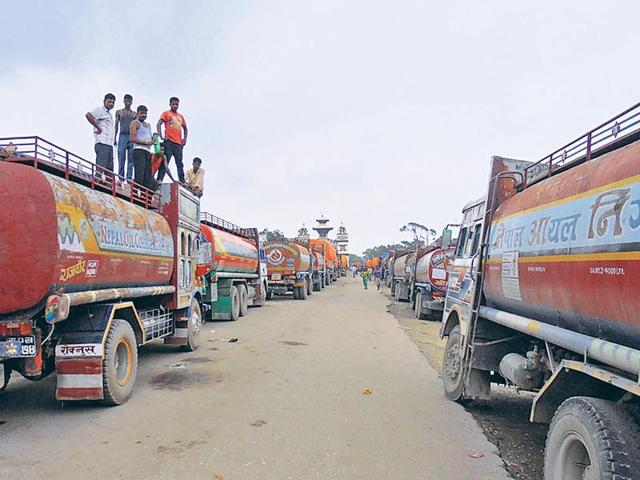
Indian envoy Ranjit Rae was called in by the acting Nepalese foreign minister Khaga Raj Adhikari after hundreds of protesters opposing the new constitution blocked a key trade checkpoint on the Indo-Nepal border.
According to sources, Rae told the Nepalese leader that the obstruction was due to unrest, protests and demonstrations on the Nepalese side, by sections of their population.
Significantly, earlier in the day, India had asked Nepal to address the underlying causes of the continuing unrest “credibly and effectively”
India’s external affairs ministry issued a statement clarifying that “reported obstructions are due to unrest, protests and demonstrations on the Nepali side, by sections of their population”.
Madhes-based parties, who are unhappy with demarcation of states in the new statute, have intensified protests along border points since Thursday. On Friday too, they staged sit-in protests to prevent entry of goods from India.
India is yet to welcome Nepal’s new constitution and have requested major parties to accommodate demands of the protesting parties. New Delhi’s stance is being seen as interference in internal matters by many in Nepal
Nepal turns to China
Kathmandu also requested China to reopen trade routes which have remained closed since the devastating earthquake in April this year.
Officials from Nepal’s ministry of commerce and supplies held discussions with Chinese embassy officials in Kathmandu on Wednesday to seek reopening of the two trade routes.
Nepal and China share two trade routes, one at Tatopani and the other at Rasuwagadhi. The route through Rasuwagadhi had been opened only in December last year.
“With Dashain festival round the corner, we have requested the northern neighbour to resume border operation as soon as possible,” The Kathmandu Post quoted Naindra Prasad Upadhyay, secretary with the commerce ministry.
The Chinese side is reported to have responded positively to the request and the Rasuwagadhi route could become operational soon. The trade routes were closed due to damages to the highways on both sides in the quake.
Nepal mainly imports readymade garments, fruits, electronic items, machinery parts, cosmetics, hardware and footwear from China trough the trade routes.
Supply of goods from India, Nepal’s main trading partner, has remained affected for over 40 days due to protests by Madhesi and Tharu groups against the new constitution.
Nearly 2,000 trucks and petrol tankers are stranded on the Indian side of border points with Nepal due to increased security arrangements since promulgation of the statute on Sunday.
India has increased security checks along the border since Tuesday due to the protests and also because of the forthcoming assembly elections in Bihar. Indian transporters are also unwilling to take the risk of entering Nepal.
( With PTI reports)