
 E-Paper



On Mahatma’s birthday, meet a Brazilian band that celebrates his philosophy

 Prefer HTon Google


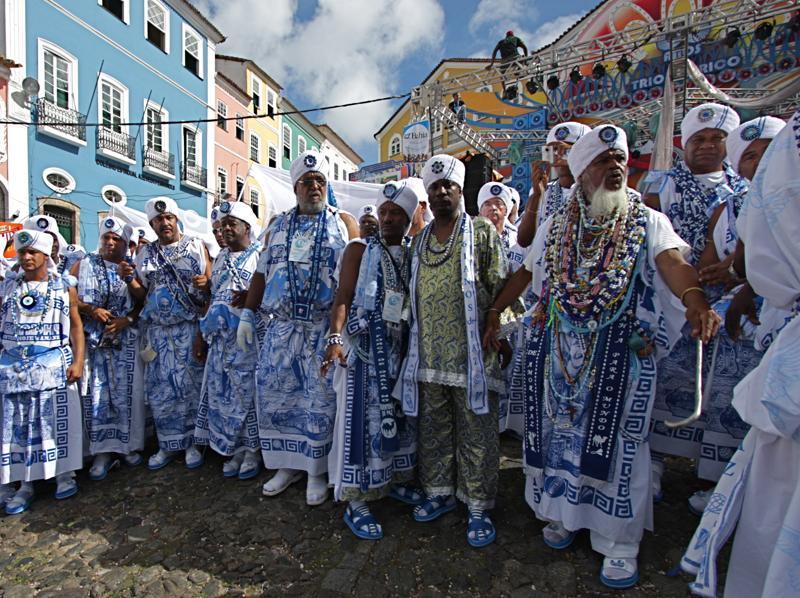
It may sound remarkable but a large congregation of men — now over 8,000 — in the city of Salvador of Brazil’s Bahia state has been celebrating Gandhi since the last 68 years as part of their annual carnival.
It is difficult to trace how deep and far reaching Mahatma Gandhi’s influence has been on the world community.
His principles of non-violence and simple living have not only left an impact Indians but also people in lands as far as Africa and Brazil.
It may sound remarkable but a large congregation of men — now over 8,000 — in the city of Salvador of Brazil’s Bahia state has been celebrating Gandhi since the last 68 years as part of their annual carnival.
The group, Filhos de Gandhy or Sons of Gandhi, was founded in 1948, two months after Gandhi was killed. Thanks to his non-violent fight for justice, Gandhi is still the poster boy of the oppressed Afro-Brazilians, who are trying to fight for equality through peaceful means.
The group, in celebrating Gandhi, pays tribute to the heroes of both African and Afro-Brazilian history, and other great leaders who have fought for racial justice and equality.
During the procession, the participants wear a customary long white tunic, a terrycloth turban, leather sandals, sapphire-blue socks, beaded necklaces (which they trade for kisses), a large plastic sapphire and a sash that reads Filhos de Gandhy: Sons of Gandhi.
However, despite the revelry, the costume and the many people, the most distinct feature of the parade remains its music that the men create while they celebrate on the streets.
Called afoxé, the music — mostly drums, double gongs and Yoruba chants — is inspired by the Afro-Brazilian religion, Candomblé.
Follow @htlifeandstyle for more.


