E-Paper



‘UnIslamic’: Fatwa issued against Muslim participation in Narmada Yatra rituals
The fatwa stressed that Muslims “guilty” of shouting slogans such as ‘Narmada-maiya ki jai’ and participating in the kalash ritual should not “touch their wives” until they repent. Those who don’t obey the religious stricture will face social boycott, and their bodies won’t be allowed into the community graveyard.

 Prefer HTon Google


Two days ahead of Prime Minister Narendra Modi’s visit to Amarkantak as part of the five-month-long Narmada Seva Yatra’s concluding function, Islamic clerics in Madhya Pradesh have issued a fatwa objecting to the “ritualistic” participation of Muslims in the event.
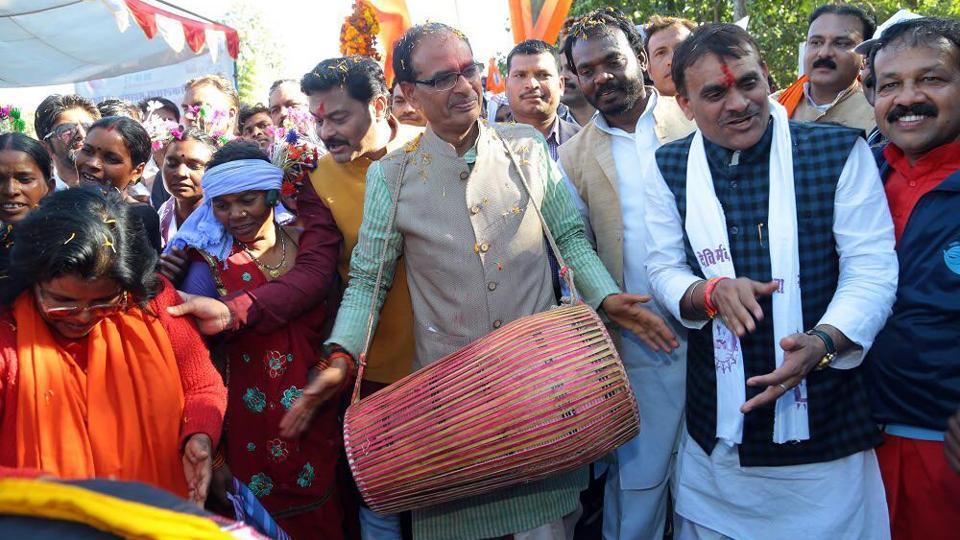
The religious ruling – pronounced by Jabalpur-based mufti-e-azam Maulana Mehmud Ahmed Qadri and Mufti Naeem Akhtar Qadri – termed shouting slogans such as ‘Narmada-maiya ki jai’ (Hail Mother Narmada), participating in the kalash (pot) ritual, and showering flowers on saffron flags as “unIslamic”. It went on to state that members of the community who have already played a part in the event stand excommunicated from Islam unless they go for ‘tauba’ (repentance) at the earliest and reaffirm their faith.
The fatwa also stressed that Muslims guilty of committing the afore-mentioned religious offences should not “touch their wives” until they repent. Those failing to go for ‘tauba’ at the earliest would face social boycott, and their bodies won’t be allowed into the community graveyard.
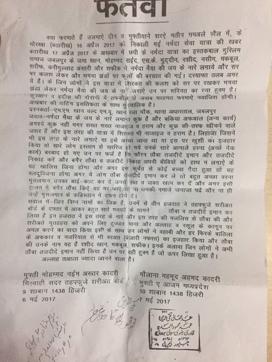
Nearly a dozen Muslim leaders had accorded a grand welcome to the Narmada Seva Yatra when it reached Jabalpur on April 16. Several members of the community showered flowers on saffron flags and carried the kalash on their heads, even as others provided refreshments to Hindu devotees.
The fatwa was issued in response to a query by Jabalpur resident MM Khan regarding Islamic jurisprudence on the participation of Muslims in such a yatra. It said that three Muslim leaders have already repented for their “najaayij and haraam (illegal and forbidden)” acts, and promised to refrain from repeating them in the future.
Mufti-e-azam Maulana Mehmud Ahmed Qadri told HT that he was not against Muslims participating in the Narmada yatra, only in their carrying out various religious rituals such as the ‘pooja’, keeping the kalash on their heads, shouting slogans like ‘Narmada Maiya ki Jai’, and showering flowers on saffron flags. “We can’t allow our people to participate in unIslamic rituals. While I have no problems with the Narmada yatra, I don’t want Muslims to do things that are not permitted in Islam,” he said.
Masood Ahmed Khan, secretary of the state coordination committee for Indian Muslims, expressed similar sentiments. “Islam had nothing against river conservation, but it does forbid idolatry and bowing down before anybody but the Almighty Allah,” he said.
The 3,500-km yatra was launched on December 11 with the objective of conserving the Narmada, a river that many residents of the state depend on for subsistence.
(With inputs from Monika Pandey in Jabalpur)