
 E-Paper



Ayesha Muzaffar: “A jinn is almost comforting compared with devilish humans”
In The Haunting of Dr Shamsi, the supernatural is not an intruder; it has been living in the house all along

 Prefer HTon Google


What sparked the idea for Dr Shamsi, a dentist with an ominous sixth finger, “caught between science and the unseen”?
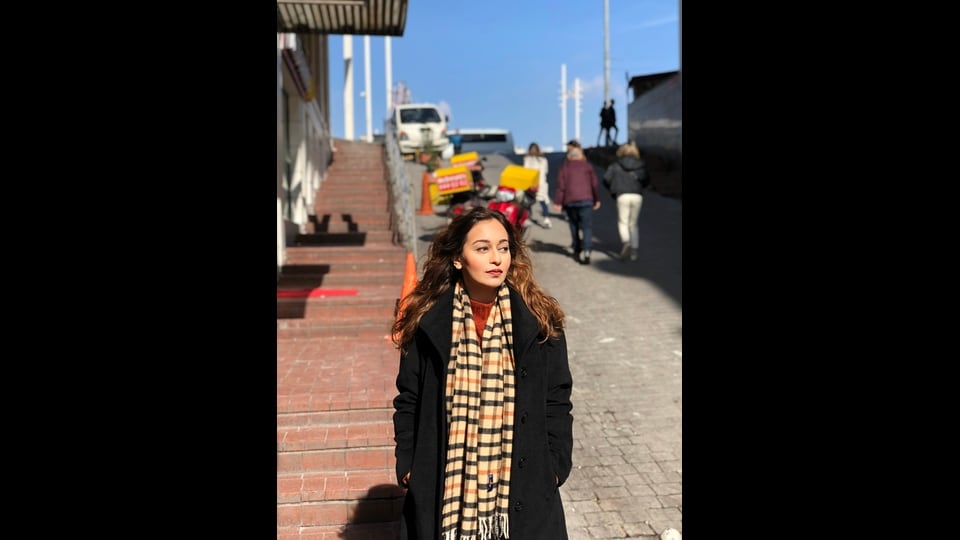
I wanted a man who belonged completely to the rational world, accustomed to finding an explanation for almost everything around him, and then I gave him one thing about his own body that resisted explanation: that sixth finger. In our part of the world, something like that rarely remains simply anatomical. Someone will call it a deformity, someone will call it a sign, and someone like Dr Shamsi will insist it means absolutely nothing. I loved putting him exactly there, between those two worlds: the world he had made for himself and the world that had been waiting for him all along.
I think that contradiction is also very South Asian. We can spend the morning at a doctor’s clinic discussing blood reports and X-rays and spend the evening listening very seriously to our phupho tell us why something that happened in 1987 was definitely the work of a jinn. Both realities somehow survive in the same household, often in the same person. I’ve always been fascinated by that coexistence rather than by choosing which side gets to be right.
And that is essentially what I wanted to do to Shamsi. I didn’t want to give the supernatural to somebody already looking for it. Because there is something much more frightening about encountering the impossible when you have spent your entire life being certain that the impossible does not exist.
Farwah’s story turns on a husband who returns but isn’t quite himself. What draws you to grief and memory as horror material, rather than horror built purely on scares?
Because grief is already a haunting. Someone can disappear from your life and still occupy a chair, a room, a particular hour of the evening. You remember how they cleared their throat, which side of the bed they slept on, the ridiculous thing they always said when you travelled extra miles to get them their favourite biscuit that the local shop no longer stocks. The person is gone, but your brain is extraordinarily stubborn about keeping them alive.
Farwah came from a question that genuinely frightens me: if you desperately wanted someone back and they returned, how much wrongness would you be willing to overlook before admitting that this was no longer the person you loved? There is a shair by Firaq Gorakhpuri that I think understands this strange persistence of memory beautifully: Ek muddat se teri yaad bhi aayi na humein, Aur hum bhool gaye hon tujhe, aisa bhi nahin.
You may go a very long time without consciously remembering someone, and still never really have forgotten them. I think grief lives somewhere in that contradiction.
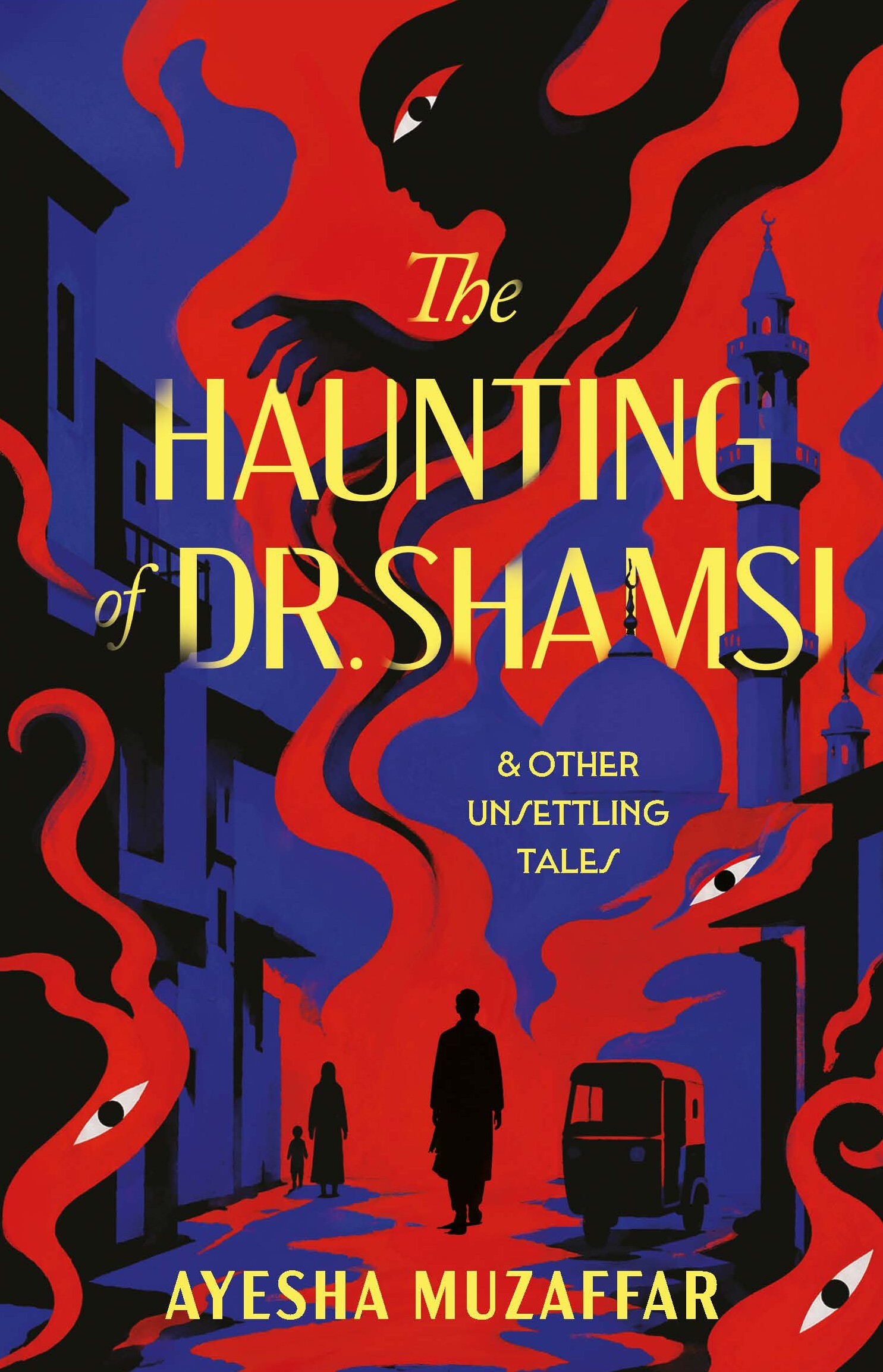
The book is steeped in 1990s Lahore and Karachi. There’s chai, the babas, the specific textures of home. How important was it to you that the horror felt inseparable from place and era?
Completely inseparable. I never wanted to take a generic haunted-house story, put a cup of chai in somebody’s hand and call it desi horror. I wanted the supernatural to feel so native to these homes that removing Pakistan from the stories would break them.
The Lahore and Karachi I write about aren’t backdrops. They are the haunting. The darkness feels different in a house you have known since childhood. When something is suddenly not where it has always been, you notice.
The 1990s matter to me for another reason: you could still be unreachable. There was no WhatsApp location, no Google search at 2 am, no Reddit thread reassuring you that the strange sound in your wall was probably plumbing. Information travelled through people. Your mother knew something because her mother had told her. Someone knew a pir. Someone had a cousin who had seen this exact thing happen once in a rented house in Multan.
And even though, as horrid as it may sound, which it does to everyone around me — I dislike chai. But I know that you do not, and hence I am convinced that South Asians would offer tea to the Angel of Death before asking why he was there.
You draw on desi horror traditions like the jinn, tarot/baba consultations and folk belief, rather than Western horror tropes. Tell us about your interest and fascination with these traditions.
I grew up on stories that were never presented to me as horror. They were pieces of information that required obedience: don’t stand beneath that tree at this hour. Don’t pour hot water there without saying Bismillah. Don’t clean the house after the sun sets. And the adults telling you these things would then casually return to eating dinner. Jokes aside, we have a wonderful storytelling culture because nobody stops to establish the rules of the supernatural for you. The supernatural has already been granted residence.
And perhaps what fascinates me most is how naturally these stories travel from one generation to another. There are things rooted in Islam, like the existence of jinn, and then there is an enormous world of folklore, superstition and family wisdom that has grown around the unseen. As children, we don’t necessarily know which is which. We only know that our grandmother said not to go upstairs after Maghrib, and frankly, we are not going upstairs after Maghrib. Somewhere along the way, these warnings become stories, the stories become memories, and the memories become part of how we imagine fear.
Western horror has given us extraordinary monsters, but I don’t need to borrow a mythology to be frightened. I grew up in one of the richest supernatural storytelling cultures in the world. I want to know what is standing in our corridor.
A lot of the “unsettling” in these tales comes not from the supernatural itself but the social and domestic pressures your characters live under. Could you elaborate a little on the real horrors that we live amongst, that are in fact scarier than the imaginary paranormal?
A jinn is almost comforting compared with certain devilish human beings because at least you know what you’re dealing with can be cast out.
There are horrors we have become so accustomed to that we don’t call them horror anymore. A woman learning to measure her husband’s mood from the sound of a door closing. A child knowing which adult not to be alone with. A family protecting its reputation more fiercely than the person who has been wrongfully harmed. A woman being told to endure something because marriages require adjustment and adjustment will somehow lead to love. And if it doesn’t, having a boy definitely will.
These are all frightening things because they don’t disappear when the story ends. The supernatural gives me a language through which I can sometimes make the ordinary grotesque again.
The belief in jinn is rooted in Islamic theology but also carries centuries of local folk practice. How did you navigate writing supernatural elements that rest on religious dogmas?
This distinction is extremely important to me. Jinn aren’t folklore within Islam; their existence is explicitly part of Islamic scripture. But almost everything popularly said about jinn isn’t therefore automatically Islamic.
Growing up in South Asia, the two can become tangled very easily. Religion says one thing, culture adds 10 things, someone’s dado adds another three, and by the time the story reaches you there is an entire supernatural rulebook nobody can actually source.
As a Muslim writing horror, I am conscious of that line. I don’t want my fiction to masquerade as theology, and I don’t want something I invented for a frightening scene to be mistaken for a religious claim. But creatively, that boundary is fascinating. Islam itself acknowledges that human beings do not have complete access to the unseen. For a horror writer, there is something enormously powerful in admitting: there are things you simply do not know.
There’s an element of class through the stories. A dentist, a housewife, an elite Karachi family. Do you think belief in the paranormal, or the way it’s discussed and dismissed, changes across Pakistan’s class lines?
Absolutely, but I think the funniest misconception is that wealth or education necessarily makes people less superstitious. It often just improves the vocabulary. The same fear can travel through very different rooms. In one house somebody openly says jinn. Somewhere else it becomes negative energy, a spiritual healer, tarot, an astrologer consulted very discreetly, or a conversation that happens only after the domestic staff have left the room.
Class can change who is allowed to admit belief without being ridiculed. If a househelp says she saw a shadow with beaming eyes while frying pakoras, she can be dismissed as ignorant or superstitious. If a boss marches into a meeting room, visibly shaken, and announces that he’s late because his dead wife was running after his car, everyone listens with great interest. That contradiction fascinates me.
Pakistan is full of people who will tell you very confidently that they don’t believe in any of this, and then proceed to tell you, in considerable detail, about the one incident that happened to their cousin in 1997. Amusing.
Arunima Mazumdar is an independent writer. She is @sermoninstone on Twitter and @sermonsinstone on Instagram.


