
 E-Paper



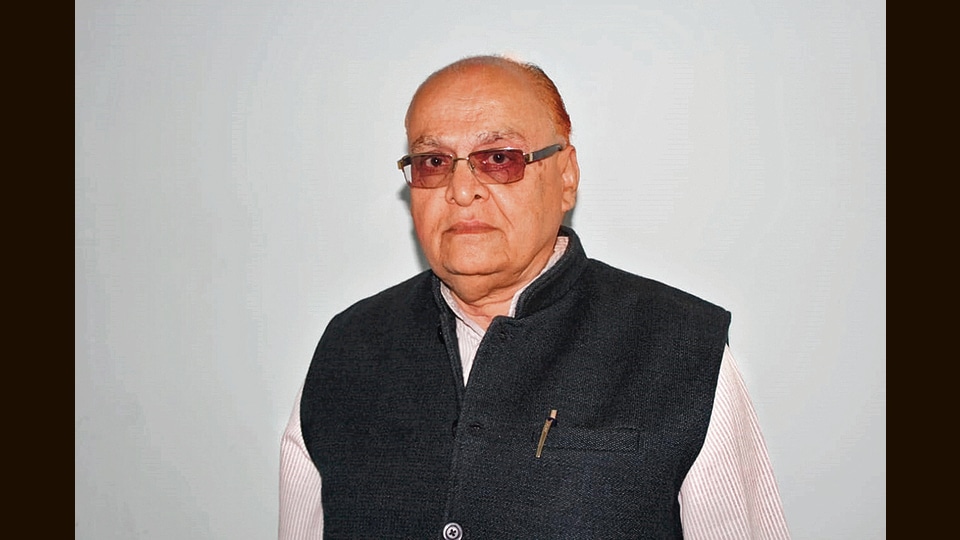
Interview: Abdus Samad, author, Kashkol – “A writer is often on the verge of the great unknown”
Known for addressing grave social issues in simple prose, the award-winning author talks about his latest work, the first Urdu novel on the pandemic

 Prefer HTon Google


Award-winning Urdu writer Abdus Samad is known for consistently focusing on the lives of people on the periphery — their struggles, their suffering. In his 11 novels and five collections of short stories, he addresses grave social issues in simple prose. Having started with abstract stories, he gravitated towards highlighting contemporary political and social realities — communal conflagrations, corruption, poverty, destitution and the corrosion of human values in his subsequent works. His first collection of stories, Bara Rangonwala Kamra, won the Uttar Pradesh Urdu Academy award in 1981. His 1990 novel, Do Gaz Zameen, received the Sahitya Akademi Award. Samad, 69, is also the recipient of the Bhartiya Basha Parishad, the Ghalib Award and the Life Achievement Award from the Urdu Academy, Bihar. He has also served on the board of the Jnanpith award.
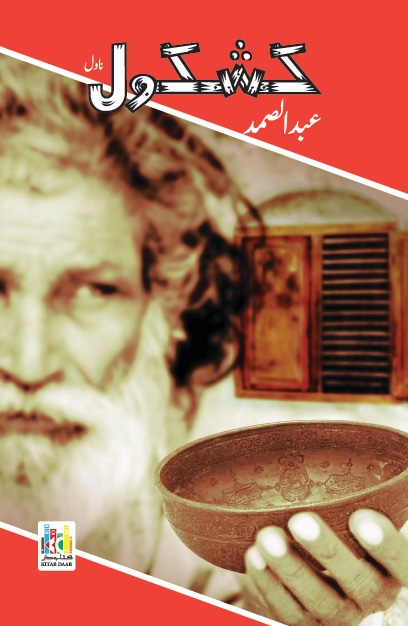
Kashkol, the first Urdu novel on the pandemic-induced lockdown, delves into the suffering of people on the margins, particularly mendicants and migrants. What was the novel’s genesis? I finished the novel during the first wave. I wanted to write something on mendicants. And the second wave provided me with the opportunity. I tried not to mention the name of the pandemic anywhere. I didn’t want to limit the novel’s canvas.
Kashkol contrasts the lives of Raju Chacha and Shabrati, who come from the lowest rungs, with the lives of Thekedar Sahab and Rashid Husain, who belong to the upper echelons of society. The novel explores the vagaries of their circumstances during the pandemic, detailing how even the rich are as helpless as the poor. Did you work on the delicate balance between their parallel lives? The pandemic affects everybody, but the rich and the poor received and treated it differently. I was conscious of the two worlds the characters of the novel inhabited and crafted it in a way that contrasted their parallel lives, showcasing how the two sections of society dealt with the pandemic.
How do you craft your characters? How vital for you are the dialogues between them?I pick up my characters from the lives that surround me. I try to explain my characters through their dialogues. Dialogues are very important for my writing; some of my short stories unfold wholly through dialogues. I always try to have its meaningfulness contained.
The novel dwells on the lockdown, the flight of migrants from the cities, rising unemployment, the apathy of the administration towards the poor, and the struggle to bury the dead. Did you set out to write on a broad range of themes or did they come to you during the writing process?I usually begin with a broad range of themes; they are at the core of the imaginative process behind the conception of each of my books. During the process of writing, they keep hovering around my mind, consciously or unconsciously.
The novel shows how the people on the margins eventually emerge at its centre, upsetting the social order and bringing about a radical shift in the old structures that have been maintained for generations. Do you see the novel as a thought experiment?It is a fact that the pandemic changed not only lives, but also demolished the whole structure of society — some of the changes are visible and some are not visible. The real picture will emerge only after some time. While I can’t state this categorically, the novel may be seen as a thought experiment.
You began your illustrious writing career, spanning over four decades, with abstract short stories, heavy with symbolism, but shifted to writing about socially relevant contemporary issues in the 1980s. What brought about this change of focus?That’s a very interesting question. Yes, I went through the so-called wave of modernism and wrote some of the stories which have no social basis and relevance to reality. That period alienated a large chunk of readers. Soon, I realised that literature has a very deep relationship with people’s lives and must be relevant to society. I have all respect for symbolism, but symbols must not be in the air and must have a solid footing. Literature, particularly fiction, cannot and must not be separated from society and common lives.
Do you see your sensibility as a writer being shaped by the tumultuous social and political realities, particularly the Partition, the creation of Bangladesh, and the resulting destitution and debasement of human values, as well as the corruption and communal riots of the 1980s and the 1990s? We see some of these themes forming the core of your landmark novels like Do Gaz Zameen and Khwabon Ka Savera?All big incidents, including the ones you mention, as well as the social and political tumult of the 21st century, shape the sensibility of a writer. Our home at Bihar Sharif (Nalanda) was once a hotbed of political activities. My maternal uncle was a minister in Dr Shri Krishna Sinha’s ministry, and my father was a very prominent political and social activist. So it is natural that all these factors had an influence on my mental make-up. Further, I am a student of political science and, in fact, retired as a university professor of political science. I saw the realities of politics at close quarters. All these had a deep influence on me and the arc of my writing.
Do Gaz Zameen is a story not only of the Partition, but also of the emergence of Bangladesh. Khwabon Ka Savera revolves around the lives of those born after Partition and faced with cruel realities in independent India. You published your first collection of stories, Bara Rangonwala Kamra (1980), in your late twenties. Please describe the literary milieu from which your stories sprang.It was my first collection of short stories and almost all the stories in it were written under the influence of so-called modernism (jadidiat). However, they are not completely out of gear and echo the social currents of the time, reflecting their distinct idiom and style.
What do you think of contemporary Urdu fiction?Literature, particularly fiction, has a great impact on our thinking about life. It is another thing that a minuscule, perhaps negligible, part of our society understands this fact. But a writer doesn’t write for his time only. His writings may hold great value for several successive generations, too. Premchand’s writings continue to have an influence even today. Therefore, the future of literature can’t be bleak. I am happy that good novels and short stories are being written in not just Urdu, but almost all regional languages of our country; the journey of language and literature continues smoothly and unabated.
How did the pandemic affect your writing? The pandemic, and the lockdown, have provided a great opportunity to those interested in reading and writing. The new normal has opened up new vistas for writers and given them numerous subjects to write about. A number of writers writing in Indian languages are working on this and some short stories have already come out. I also wrote a few short stories besides this novel. As of now, I am not quite sure whether I will draw on this for my future books; being a writer is often about being on the verge of the great unknown.
Nawaid Anjum is a journalist, translator and poet. He lives in New Delhi.


