
 E-Paper



Andrey Kurkov, Ukrainian author – ‘Several writers are working as soldiers’
As the war in Ukraine continues, Andrey Kurkov, author of Death and the Penguin and Grey Bees, among other novels, talks about writers at the frontline, the rise of militant literature, and his country’s new-found appreciation for independence

 Prefer HTon Google


What’s your perspective on everything happening around you?
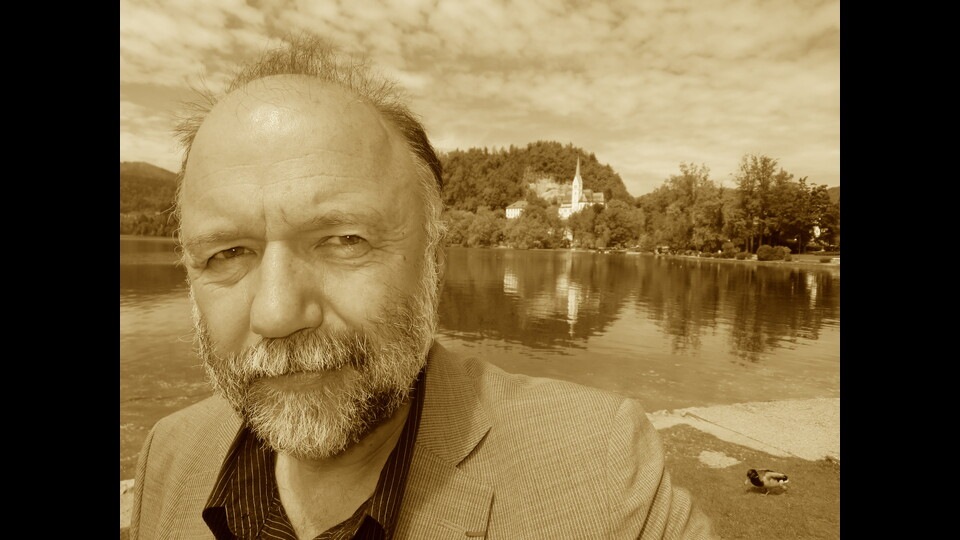
I don’t read the world press, but Ukraine is ready to fight till it’s dead or free. The defiance, the resistance is there. People are highly motivated. Every time Russia tried to attack, Ukraine became more and more consolidated against the common enemy. Now it’s like the climax, the whole nation is against Russia. A lot of people are appreciating the country’s independence, which they earlier took for granted. There are always traitors, who are happy that Putin attacked Ukraine but they’re a tiny minority.
When we last spoke, you were fund-raising in the UK. How did it go?
I’ve been to the UK thrice, Austria twice as well as Norway and France. Fund raising in UK was with the London Review Bookshop and was for mobile hospitals, medical purposes. It went well. I’ll probably also do a little for writers because many are displaced as refugees; some are abroad and some in occupied cities.
What is it like to be a writer in your country today?
First of all, you don’t write fiction anymore. Whoever is writing, writes non-fiction, reports, essays, texts about the war. Many writers are also involved in charity activities and some are at the front. We have several writers who are soldiers.
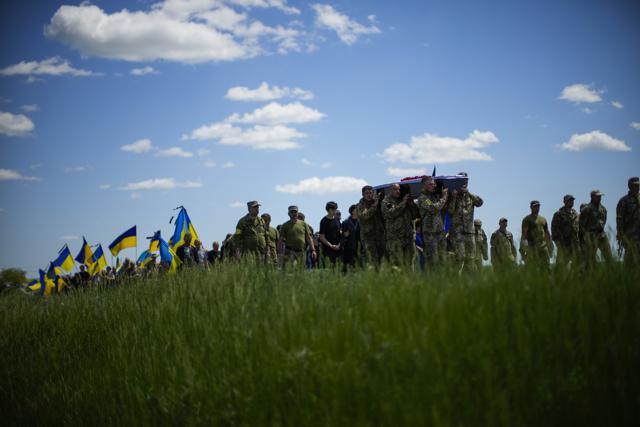
It’s hard to imagine writers as soldiers.
Ya ya ya! If you’re between 18 and 60, you can be mobilised and sent to the army. Novelist Artem Cheh, who’d served the army till 2015 and had written about it, got called up again. Others are volunteers. Borys Gumeniuk, a poet, is also fighting on the front. At least two Ukrainian poets have been killed in fighting.
But this not the first time. Hemingway, as far as I know, hated the war, but still went and wrote as a journalist. There were others too. It was actually Anatole France, who, at the beginning of WWI, had inspired young poets to join the army. Most of them were killed.
Did you also have to change what you’re working on?
I’m not planning to continue my new novel on Kiev in 1999. I’ve put it aside and am writing texts and articles about the war for international media; I’ll collect them in a book later.
Before the war broke out, Zelensky insisted that the Western media was creating panic about Russian occupation. But you had told me the threat was real and that you were psychologically prepared. How did things compare with your expectations?
I wasn’t expecting a total war, bombardment of Kiev, Kharkiv and big cities all around Ukraine. I had thought Russia would try to take over Donbas and maybe south of Ukraine, which they’re doing now after failing to occupy Kiev and Kharkiv. They’ll try again, and probably not just once... It’s tough to predict what will happen, but it will be a long war. The hardest time is ahead of us.
You had kept the heating system ready in your countryside home, anticipating a hybrid war. How did that pan out?
There’s not much hacking now. Before the war, there were lots of attacks on systems of the Ministry of Defence and state organisations.
At present, are you in Kiev or the village?
No, no. We’re far away. The countryside house is also near Kiev. We went there, but had to move further west. Actually, the village next to ours was destroyed by Russian planes; we were already in Western Ukraine then. Now, we’re close to the Hungarian border. That’s good because it’s easy for me to drive to the border, go abroad, to France, Austria, etc. from time to time.
What do you go for, apart from fund-raising? Is it easy to cross the border?
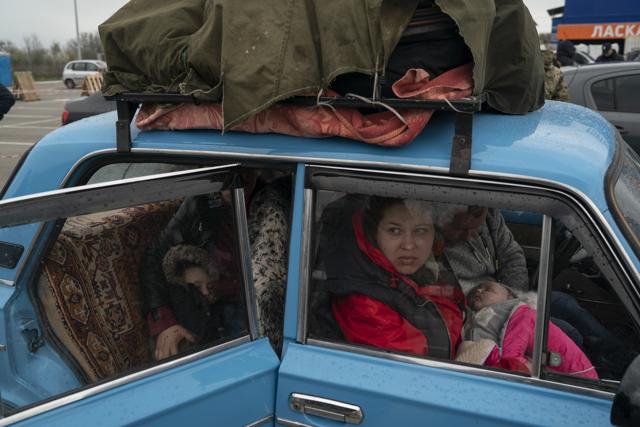
I did a lot of events about Ukraine, gave interviews, lectured at universities on the history of Russian-Ukrainian relations and reasons for the Russian aggression. I’m sort of doing information work.For children, women, the aged, handicapped or the ill, it’s easy to cross. Ukrainians are allowed without proper documents by Ukrainian as well as Polish, Slovakian, and other border control officers.But if you’re a man between 18 and 60, it’s not easy because you’re a legitimate candidate for conscription.
You seem calm. What were the initial days like, had you prepared your family in some way?
I didn’t prepare anybody. Me and my wife were in Kiev, and our children were on holiday with friends in Lviv, western Ukraine. We found them and picked them up. Our daughter, Gabriella, lives in London, so we took her to the border and put her on a bus to the airport in Slovakia. Everyone was shocked for the first four-five days. Everyone was panicking. That’s why there were traffic jams 50-60 km long on roads leading west. Then it settled. You understand that this is a long-term story and that you have to be busy to remain sane, normal. My publisher friends who didn’t leave Kiev are editing manuscripts that won’t be published in the near future; they’re working to keep busy because if you’re free, you’ll be thinking about the war and panicking. My wife and sons are helping refugees. The elder one’s taking chronically ill patients from Ukrainian hospitals across the border for treatment in foreign hospitals. Lots of refugees wanting to go abroad have come to western Ukraine, so my younger son and wife are keeping them busy, teaching them English as they’ll need to know a foreign language if they go.
We’ve seen several modern wars in Iran, Iraq, Afghanistan... How does war impact literature and what are you anticipating for Ukraine?
Literature reflects reality. So if the main reality is war, then you have literature about war. Everyone expects authors to write about war. If you don’t have war, authors are free to choose different topics and genres.
In Ukraine, literature will be alive, but publishing’s stopped and there’s no book market. Just two or three bookshops in the country are open. Therefore, there’s no motivation for young writers to write besides a very disturbed state of mind and lack of a clear perspective of the future. Also, several writers are volunteering, so soon there will be fewer new books from Ukraine and ones written might first be published abroad. There’ll be fewer books also because some writers have been killed; five authors have already been killed by the Russians.
Were they targeted killings?
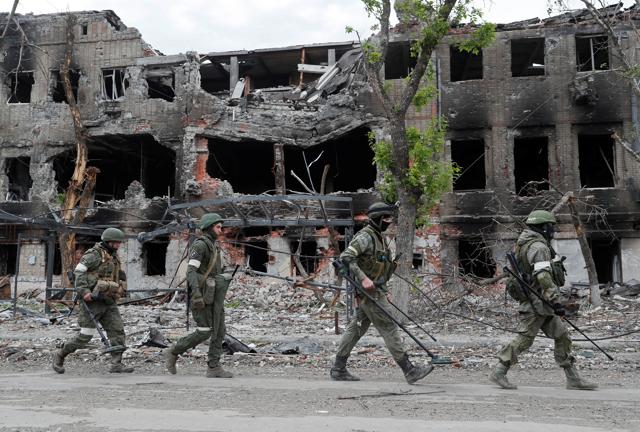
Two were targeted, the rest were killed in explosions during bombings. Max Levin, an author and photographer was deliberately shot because he was taking photos and writing notes in Mariupol, where Russians were fighting with Ukrainian soldiers. And Evgeniy Bal, an old, ex-navy man, who had written several books on seafarers and sea travel, was tortured for three days and killed because the Russians found a newspaper carrying photos of him with Ukrainian army volunteers and soldiers from the Donbas War.
You’re quite vocal about your views. Are you worried about being a target too?
I’m not worried, but it is a possibility. I’ve been on their blacklist since 2005. My books were banned in Russia twice. They have not been published there since 2008 and it has not been possible to take copies there since 2014.
Why were your books banned?
Every active writer is a target. Three years ago, the Russian secret service attempted to kidnap poet Serhiy Zhadan in Minsk. He was saved by Ukrainian diplomats. I’m not worried because it’s very tiring to be worried all the time. I don’t think the ban was because of my books but because of my articles on Russian politics. I was criticising Putin all the time because I knew his dreams and plans.
What do you think is your role, and of writers in general, during war?
Writers are public figures. In Ukraine, they were always more important as public figures than as authors. If someone is well known as a writer in Ukraine, it doesn’t mean people read his books, but that they want to know his opinion and commentary on what’s happening in politics, social issues and culture. And this will remain.
You’ve earlier spoken about crisis creating militant and political literature. What transitions has Ukrainian literature undergone and how will post-war literature influence future generations?
It has changed drastically. Until 2005, Ukrainian literature was completely apolitical. Writers avoided social issues, politics or anything serious as a reaction to Soviet Ukrainian literature that was always loyal to communist ideology. Anything to do with politics was considered dirty by young writers. But after the Orange Revolution, it became politically engaged, and since 2014 we have two different literatures. Both are militant. Because traditional writers started writing more about social issues, politics and history, and a new generation of war veterans – about 400,000 from the Donbas war – started reading and writing these books. They also set up their own publishing houses. We have at least 300 books from them.
What will happen next is that we’ll have more books on war and fewer on love. Books about the war written now will charge people with the desire to fight on. It’s like a patriotic message – if you want to keep your country safe and independent, you have to sacrifice yourself, your life, your time. This happens in every war. During WWII, all Soviet literature was written to motivate soldiers. Israel, which is at war all the time, also mostly has books about the past, not the present.
Apart from bookstores, what else is shut? Is there anything like a social life?
It depends on the region. In the beginning, in Kiev, everything was shut apart from some pharmacies and local food stores. Now, 40 percent of cafes as well as some bookshops are open. More shops are closed in cities closer to the front lines; some shop owners are moving goods to the west. In the village, where we have a house, all food shops were open through February, but weren’t well staffed. And yes, social life’s going on. I communicate by phone every day. Some areas don’t have mobile coverage, but that’s mostly in the east. I met my friends from Kiev in another town one hour from here; friends from different parts of Ukraine also visited us here.
What initiatives are people taking? What kind of solidarity do you see?
Villagers were told to send information to a special Viber number if they spotted the Russian army. From every region, they informed the Ministry of Defence – “There are seven tanks coming from this village, and five from that”. People are also helping each other very much. Especially in western Ukraine, where most refugees went, lots of people opened their doors and are letting refugees stay as long as they need. We also got the key to the apartment of a lady we’ve never met.
During crisis, especially war, countries often see an exodus of the best minds and people with the means to leave. How is Ukraine faring on that front?
Ukraine isn’t seeing any exodus. The most active and important people in business are still in the country. The mayor of Kiev asks them not to return because it’s too early and still dangerous but people are coming back. They don’t believe Putin will make it, that Russia will win this war. Mostly, women and children have gone abroad. Those who’ve lost their homes might stay abroad, but many want to return; European countries have given everyone one-year stay permission.
How’s the support been from the literature fraternity worldwide?
I was shown solidarity from every corner of the world and had offers to go and live with writers and their families. There’s great new interest in my books. Many are being republished and reprinted. Not just mine, any Ukrainian book is now being welcomed for translation and publication. I’m very happy that people have taken what’s happening here seriously.
What can be done for Ukraine; what would you like?
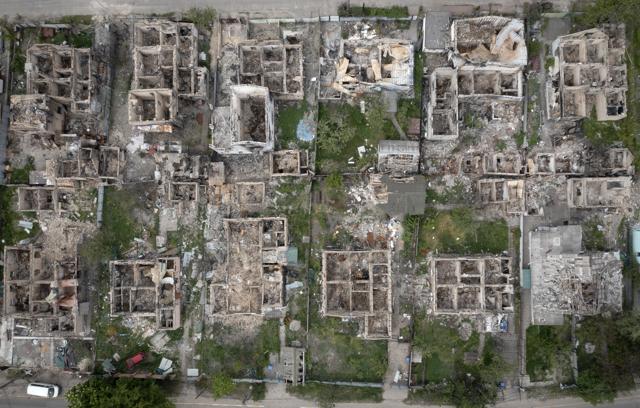
India won’t do anything because you’re too far away, and politically and commercially, you’re more connected to Russia. So nobody’s expecting anything from India. But you can at least take interest in Ukraine’s history and understand what this is about. From western countries, Ukraine is expecting more humanitarian aid, medicine and ammunition. After the war, building materials will be required en masse because so many towns and cities have been destroyed to zero.
Pooja Bhula is an independent journalist based in Mumbai. She is the co-author of Intelligent Fanatics of India. She is @poojabhula on Twitter


