
 E-Paper



Review: May We Feed the King by Rebecca Perry
Designed like an immersive art show, this Booker shortlisted novel, that features a novella about a monarch possibly from the Middle Ages, reads like a prose poem

 Prefer HTon Google


Early on, Rebecca Perry slips in a suggestion on how to read her debut novel, May We Feed the King.
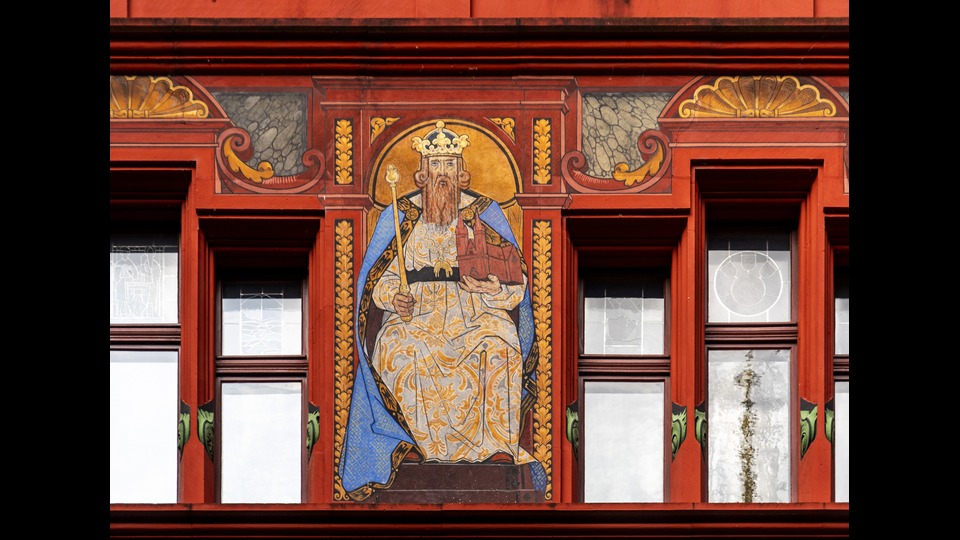
Her narrator is an unnamed curator who designs exhibitions of “semi-permanent scenes” in medieval buildings, building them with replicas of food and objects. It is meticulous, intentional work — she is determined to get it right. “When you come upon a room, cordoned off with red rope, beyond which you see an open book on a desk, a chunk of bread picked hollow, and a quill in an ink pot that is empty of ink, I am telling you something about the person who lives in that room. The ink may be purple, and even though no one can see it in the straightforward sense, one in a thousand people will sense it. Ultimately, I want my work to communicate with everyone, but it is those people I really hold in my mind,” she says.
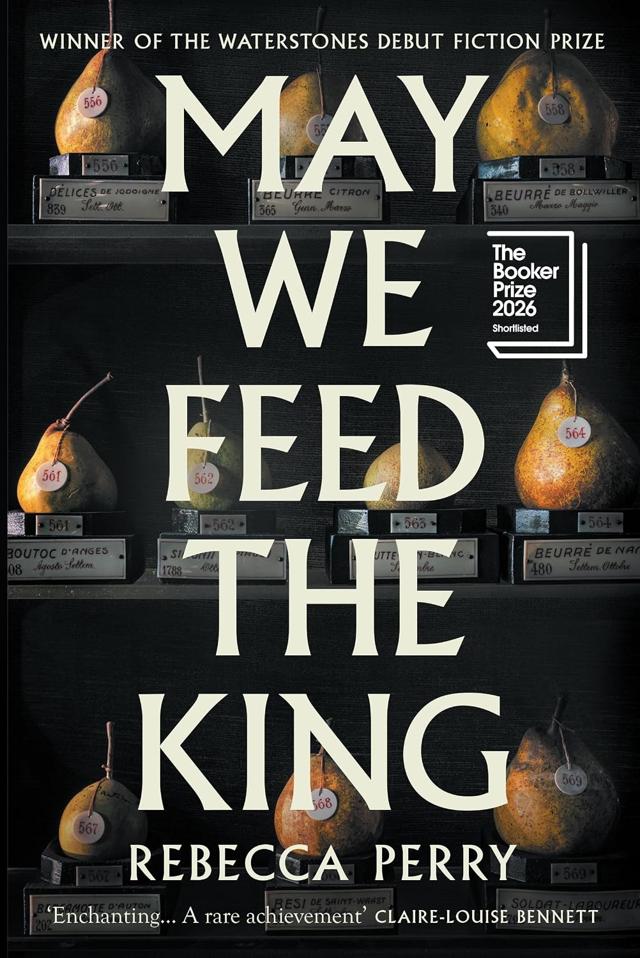
Perry is a British poet and this slim, delicate novel reads like a prose poem that comes with an artist statement.
The novel is designed in the way of an immersive art show. You read the statement, you disappear inside the work, and finally you attend the post show discussion. Here, the curator gets a new project and describes her process and her intentionality; within the story is the story of a medieval king; and finally, back to present day, the curator explains the work on display.
The novel opens with the curator being commissioned to build a public installation for a 750-year-old former palace. The archives are exhaustive — but in the detailed ledger of the many, many kings, she picks one whose reign is contained in one scant page — much of it revised in the margins and footnotes, altered or struck through. “It’s important to say that I cried, I wept, when I saw it,” she says. “What a reduction of a life.”
The curator designs her exhibitions, as a rule, in a way that “it must appear as if the person or people have just left the room. The viewer must feel as if the air is alive with their energy, that they only just missed them, that they will be back at any moment. If this isn’t the case, the scene is no more than an arrangement of objects. The scene is dead.”
She sets out to work to look for her scenes — not in the kitchens like she usually does — but the king’s chambers, entering them, “like thread to the eye of needle.
It was instant, the feeling: a whole world.”
And so begins the novella within the novel, about an unnamed king from an unspecified time presumably in the Middle Ages. We’re never sure whether the story we are told is from the curator’s notes or historical fiction sandwiched between her interpretations. We’re not sure of anything at all, and that is kind of the point.
We get a lyrical account of this unusually pacifist king through the eyes of others at court — some gossip here, a rumour there, a small exchange, observations, hearsay.
He doesn’t sleep much. He doesn’t eat much, dish after dish returns to the kitchens untouched — “the nobility joke that at least their Lord is approved of by the servants — they have never before in their lives eaten like Kings.”
The Queen is having an affair with the assistant to the royal physician. She says “in her country it is said that not feeding the King is worse than starving the people.” She asks him “whether it is upsetting to him to be called cuck by the court.”
He does not want to go to war, he does not like to order executions, he dislikes his chief advisor.
He had been the third in line and was coronated when both his brothers died. He had neither expected it, nor seemed inclined towards ruling. “He is a moth and the candle is in constant motion.” Perry gives us sensory details. His despair is “wide and deep as a lake” and sometimes “the King feels he must sleep just to be alone.”
Some 400 years earlier, he reads of another king he had misremembered and convinced himself to believe had managed to abdicate the throne. But he is reminded in the ledgers that “the Apple King” had been beheaded for treason for trying to escape ruling — “and his head left on display in the market square for a month, where it was pummelled with apples until chunks of flesh began to loosen from the skull.”
It feels like he’ll just be stuck forever but then his cousin’s glamourous wife arrives from abroad and begins influencing the royal couple. “She is a bodyless voice,” the king’s council thinks:
The body cannot be hers.
A woman could not. Her husband, the King’s cousin, surely wears her like a glove.
The body sits in a room in a castle across the sea, and atop that body is a head, and that head is empty for want of a crown.
The text is highly stylized — there’s more atmosphere than plot. And even though I had decided early on to pay attention to whatever clues may be hiding in the text and be the one in a thousand people who can tell the ink was purple, I was distracted by the form, the wordplay, the free verse. I found myself engaging kind-of superficially with the beauty of the writing.
In an interview, Perry has said that this section was informed by present-day politics — “I did the bulk of the writing at a time of particular global horror – the ongoing genocide in Gaza with Netanyahu at the helm, backed by a cast of chilling supporters in Trump and Putin, and not least our own [British] government. People living or dying in vast numbers at the press of a button, civilians just watching aghast – and was near constantly feeling utterly helpless in the face of it all… and as my King took form, I just refused to allow him to become the kind of ruler who makes the news, or the history books. I had known from the start that he would be reluctant, afraid, squeamish, and also of great humanity.”
The king becomes increasingly unpopular.
“The king is becoming an expert in wasting everybody’s time.
Inaction, inaction, inaction.
He cares little.”

We do not know what happens to him. The day the curator decides to depict in her installations is the day of the king’s disappearance. She tells an audience of 40 people who have come to see the exhibition: “His great gift to us – or at least it has been a gift to me – is the very lack of an ending, that could drive a historian mad. What a great – pardon my language – ‘fuck you’ to everyone who tries to manhandle ambiguity into order, to knock out the air.”
She only asks the viewers that they “let this person [the king] expand into the rooms, into the air around you. Listen for everything and, above all, pay attention.”
So ultimately, even as I was charmed by it, I found May We Feed the King a bit too prescriptive, too self-referential, too on the nose. Reviews have been wildly polarized. Critics have loved it. But the top review on Goodreads is thus:
“this is just about two people, hundreds of years apart, who are very bad at their jobs. three people if you include the author.”
Saudamini Jain is an independent journalist. She lives in New Delhi.


