
 E-Paper



The afterlife of Barbara Cartland
The 20th century author of sugary romances sold 750 million books and became a household name. Matthew Sweet’s new biography asks why she’s barely read today

 Prefer HTon Google


She sold 750 million books, but you would be hard-pressed to find one in a bookshop today. Barbara Cartland wrote 723 books over more than seven decades. They were translated into 38 languages, and at her most prolific she could produce more than 20 novels a year. Yet, for many people under 40, the books have disappeared. The pink clothes, enormous eyelashes, blond hair and Pekingese are more familiar than the novels.
Matthew Sweet’s new biography, The Great Dictator: A Life of Barbara Cartland, looks at the life behind the costume of a woman who became an easy joke. Sweet had access to Cartland’s archive at Camfield Place, where letters, manuscripts, appointment diaries and other material had remained largely untouched.
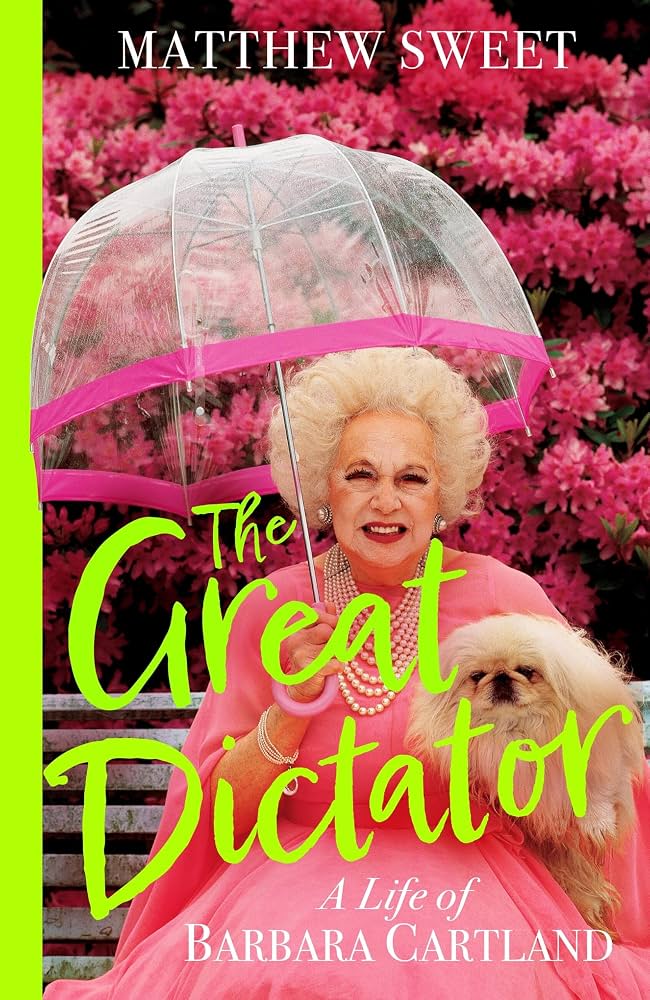
“She occupies a strange and paradoxical position,” said Sweet, in an interview with a Yorkshire newspaper ahead of the Ilkley Literature Festival (on until 18 October 2026 at the town in Bradford, England). “She was synonymous with romantic fiction for a substantial part of the 20th century. She still stands for the idea of romantic fiction, but she is little known to readers under 40.”
The woman behind the costume
Cartland was born in Birmingham in 1901. Her family fell into financial difficulty after her grandfather James Cartland died by suicide in 1903, and her father was killed in the closing months of World War I. In 1919, she moved to London with her mother and two brothers and began writing.
The loss stayed with her. Historian Martin Pugh argues that much of her later life can be understood as an attempt to recover the social position and security her family had lost. Her childhood was spent in “shabby genteel” circumstances.
Cartland’s first novel, Jigsaw, was published in 1925. In her twenties she was part of London’s glamorous young social set, but she was also working. Roslind Brunt, in a book on Cartland’s romantic career, notes that journalism and romantic fiction ran alongside each other in her professional life. She wrote gossip columns and articles, and built the relationship with the press that would become central to her public life.
That instinct stayed with her. “She knew what a journalist needed,” Sweet recalls. “She would give you a fantastic quote for your opening paragraph – printable, controversial material that delighted editors. She was a totally brilliant self-publicist who knew how to pick a fight for maximum publicity, like her famous television clash with Jackie Collins.”
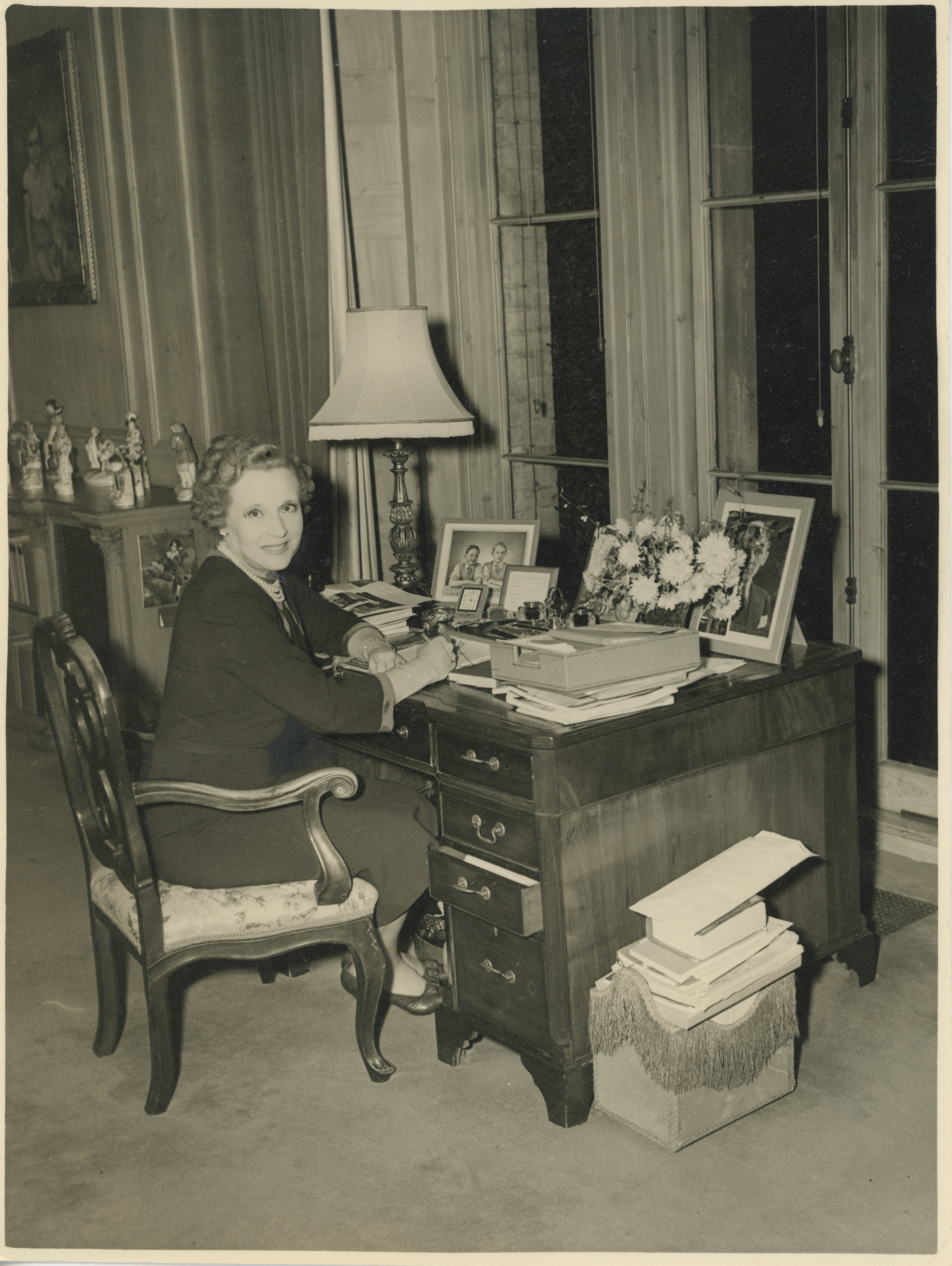
But Cartland’s career was more varied than the pink image suggests. She flew a glider, worked as a welfare officer during World War II, became a county councillor and campaigned on nurses’ working conditions, elderly care, and welfare for Romany children.
A novel a fortnight
Cartland wrote 675 romantic novels. Her heroines had names such as Alida, Atalanta, Anastasia and Corinna, and her plots took them into the world of Napoleon, Barbary pirates, the Algerian slave trade and French Satanists. There were guerrillas, Swing Rioters and adventures involving the Anglo-Argentinian frozen meat trade.
In the 1950s, she averaged three or four books a year. The paperback boom of the 1970s and 1980s sent her production into overdrive: in 1976, alone, she produced 23 books. She could dictate 6,000 to 8,000 words a day and sometimes finished an 80,000-word novel in a fortnight.
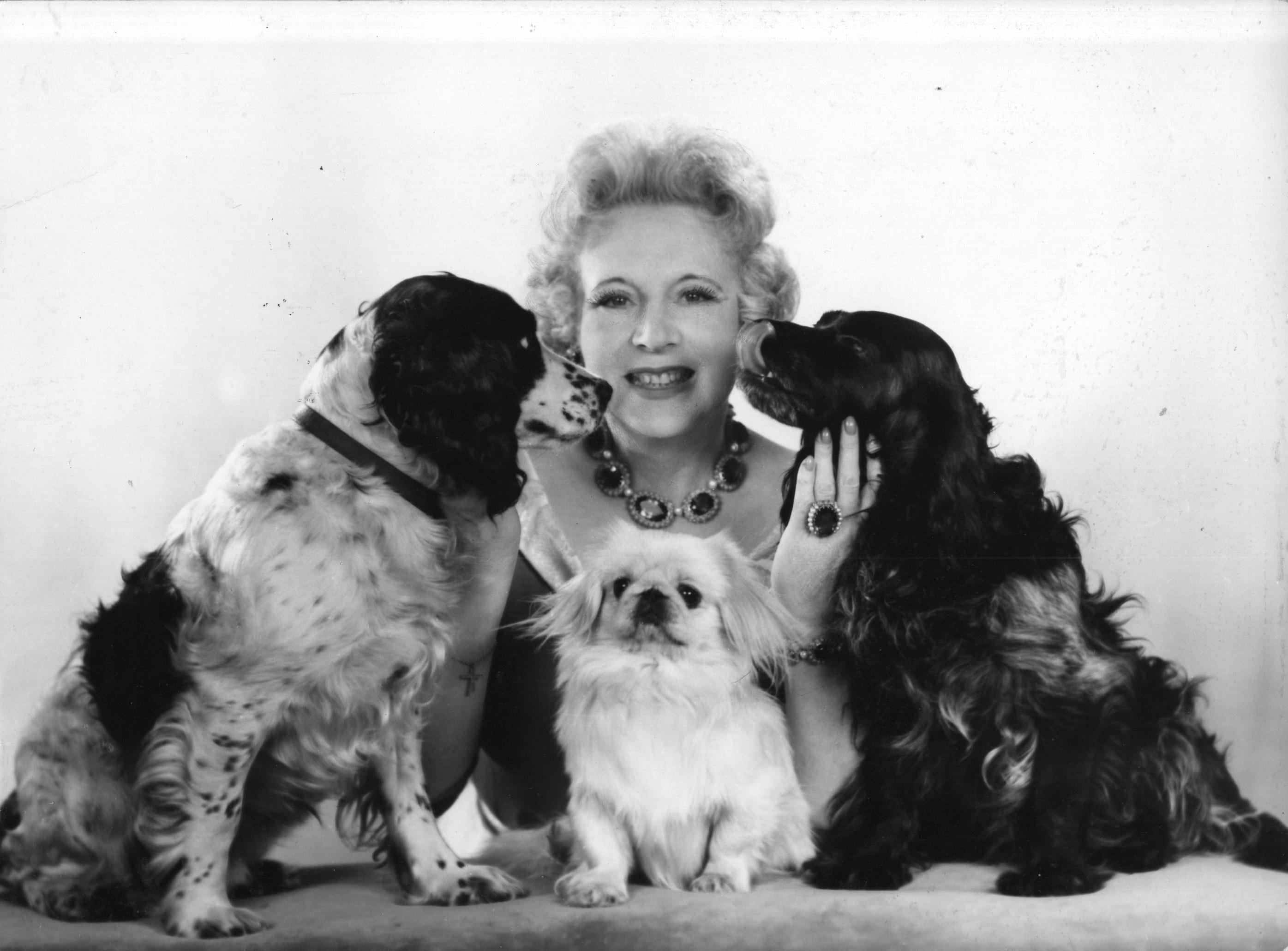
She dictated from a sofa, often with a Pekingese against her pink-clad body, and could even work from the bath. “I would love to employ a man, but how can I possibly give a man dictation from the bath?” she once said.
Cartland believed in marriage, and chastity and had strong views about the roles men and women should play. In 1969, she told the Grimsby Evening Telegraph: “Women shouldn’t have character. They should be like pretty chocolate boxes.”
The appeal of her books, however, went beyond the formula.
Jonathan Miller, managing director of M-Y Books, a UK-based independent publisher who has worked with Cartland’s archive, says what stands out is the sheer variety of her work alongside the consistency of the experience she gave readers. Her novels moved between Gothic, Regency and contemporary romance, adventure and, in some cases, psychological drama.
Whatever the setting, he says, Cartland took readers on journeys where it seemed almost impossible to imagine how her characters’ difficulties would resolve. Yet, somehow, they did.
For Miller, that mix of adventure, jeopardy, escapism and optimism helps explain why the books have lasted. He also thinks the famous pink image can obscure the relationship Cartland had with her readers. At the height of her fame, she answered around 20,000 letters a year, many from people seeking advice about their own lives and relationships.
“Behind the famous pink image was an author who understood exactly what her readers wanted from her: hope, romance, escape and the reassurance that, despite all the difficulties human beings create for themselves, love can still triumph,” Miller says.
Cartland in India
The author’s readership extended far beyond Britain, and India was part of it. In a 2007 interview, her son Ian McCorquodale said Cartland’s romances had “always enjoyed tremendous readership in India”. He recalled accompanying his mother on visits to the country, where she had friends and fans and was associated with figures like Indira Gandhi and, in the pre-Independence period, Lord and Lady Mountbatten.
There is a small reminder of that connection in the Barbara Cartland Museum’s collection: a 1975 copy of The Frightened Bride, inscribed to “Their Highnesses the Maharana and Maharani of Udaipur” in memory of Cartland’s visit.
Cartland was not alone on India’s romance shelf. For generations of Indian women, imported English-language romances, particularly Mills & Boon, was part of the reading landscape. Research into romance reading among young women in urban India has found that readers treated these books as more than escapism: an extension of their childhood English-language reading and, for some, a way to improve their English and reinforce an identity as modern and cosmopolitan.
Cartland’s place in that culture was slightly different. Her books were more old-fashioned, more chaste, and more emphatic about marriage than the later Mills & Boon generation.
More than two decades after her death in 2000, Cartland’s books are being brought back into circulation. Miller partnered with her son, Ian McCorquodale, on a large digital and print-on-demand campaign. M-Y Books has, for 20 years, been republishing her enormous back catalogue as ebooks and print editions, with audiobooks increasingly part of the effort.
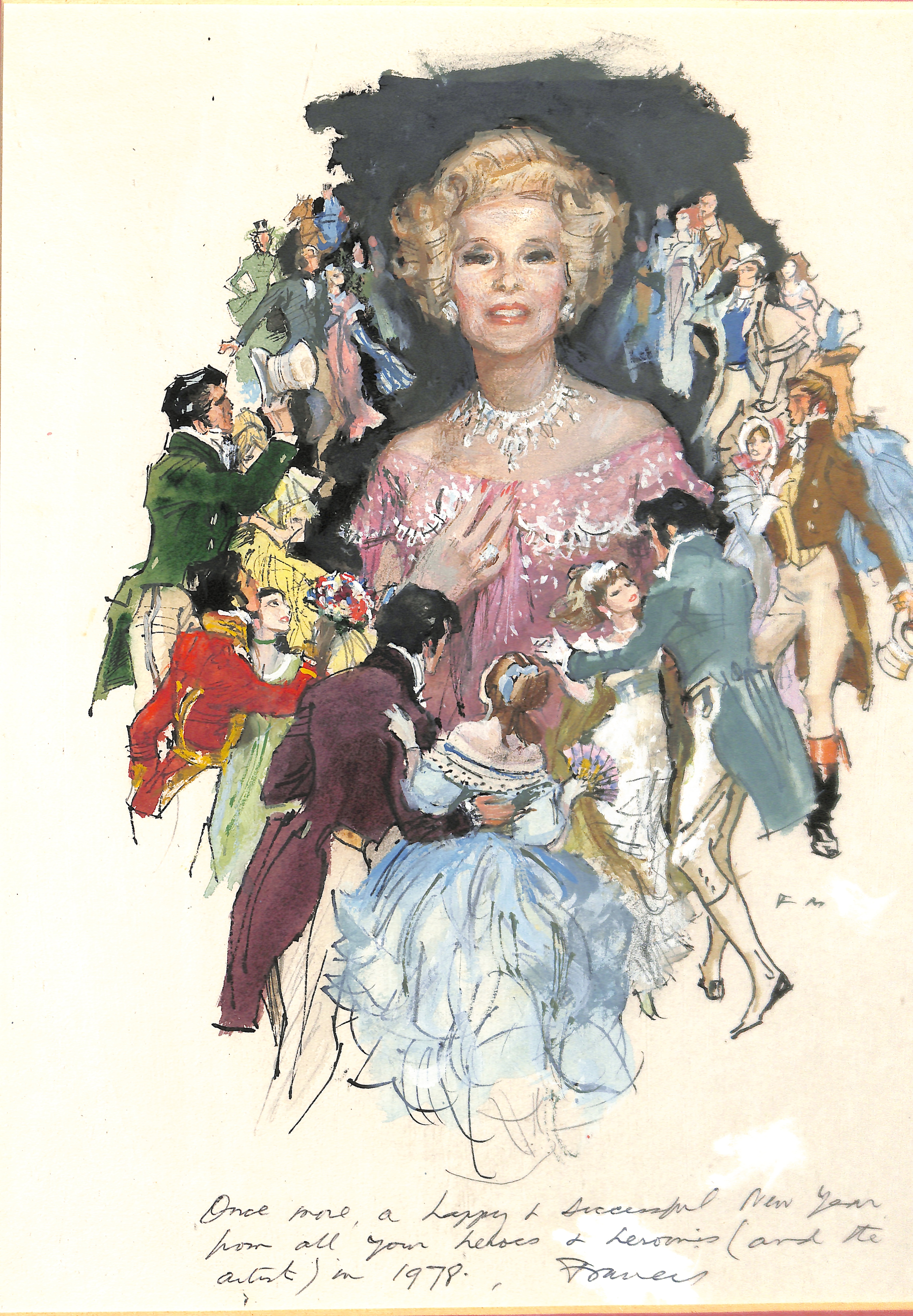
Digital publishing has given the books a new life. Readers in Scandinavia, Germany, Brazil, Mexico and elsewhere can now discover them online, where a book no longer has to disappear from shelves after a few months. Younger readers are finding the novels too, often drawn to romance that’s escapist, emotionally satisfying and non-explicit.
India is now a particular focus. M-Y Books is working on bringing Cartland’s novels to Hindi-language readers for the first time. Miller sees potential in the central themes of her books: romance, family, morality, adventure, and the belief that love can overcome apparently impossible circumstances – which he says travel remarkably well across cultures.
The celebrity outgrew the books
By the early 1970s, Cartland had sold 50 million books. She published her 500th book in 1990 and was made a Dame in 1991. She kept writing into her nineties and remained a familiar television presence in the UK. She died at home in 2000, aged 98.
The pink chiffon, thick mascara, Pekingese and carefully maintained persona made Cartland instantly recognisable. She became a figure to imitate and ridicule. But the books were read by millions.
Sweet himself has read more than 200 of Cartland’s 723 books, and found that some of the early work complicates the familiar picture. A Virgin in Mayfair, published in 1932, follows an innocent heroine into bohemian London, illegal dancing clubs and gay clubs. Dismissing Cartland’s books can also mean dismissing the people who read them.
Perhaps the answer is partly generational. The paperback that could once be passed between friends, borrowed from a library or picked up almost anywhere has been replaced by an enormous digital ecosystem. But the appetite hasn’t gone. Romance remains one of publishing’s most durable genres, including in India, where Mills & Boon has evolved from imported Western stories to romances written by Indian authors and shaped around Indian settings and experiences.
Cartland spent decades making herself impossible to ignore. But, over decades, her books have become harder to find. That looks set to change.
Teja Lele is an independent editor and writes on books, travel and lifestyle.


