
 E-Paper



Rates for tankers to India rise by 150 percent as West Asia crisis escalates
Bunker fuel prices have also risen 50% to $900 a tonne, while insurance costs have increased 20%, adding to the cost of imports.

 Prefer HTon Google


Daily charter hire rates for tankers to India have more than doubled to $250,000 in about two weeks, as escalating hostilities in the Red Sea and Strait of Hormuz push up the cost of shipping oil to the world’s third-largest oil importer, three people familiar with the developments said.
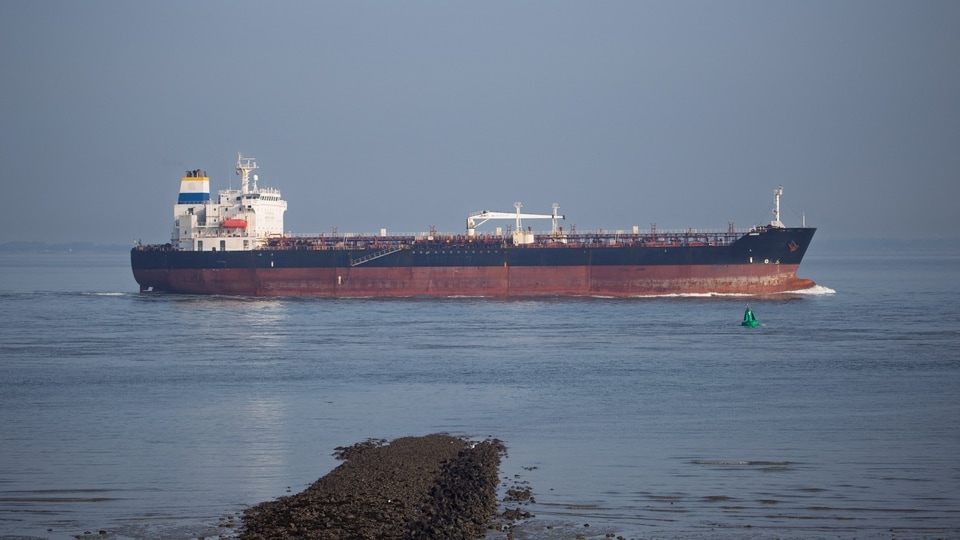
Rates have risen 150% from about $100,000 as Houthi forces seized control of Yemen’s Mocha port near the Bab el-Mandeb Strait, the people said. Bunker fuel prices have also risen 50% to $900 a tonne, while insurance costs have increased 20%, adding to the cost of imports.
Iran-backed Houthi forces seized Yemen’s Red Sea port city of Mocha last week and have since advanced toward the Bab el-Mandeb Strait, reaching the strategically located Perim (Mayun) Island and further threatening shipping through the key Red Sea chokepoint, according to Reuters and other reports. The development comes as traffic through the Strait of Hormuz remains severely disrupted, raising the risk of further pressure on shipping and energy supplies in the region.
“The situation has completely reversed over the past week,’’ said Anil Devli, CEO of the Indian National Shipowners’ Association (INSA). “Seafarers are now worried to take the Strait of Hormuz route. There was some movement earlier, but now there is none, as now both ships are being attacked and sunk, shippers killed, while earlier they were mostly disabled and not allowed to move,” he said.
Also Read | Iran-Oman talks with Gulf states on ‘new Hormuz routes’ postponed; no future date set
The latest escalation is a major concern for India as a likely Houthi takeover of Bab-al-Mandab could worsen disruptions and force tankers carrying Saudi Arabian oil to take the Suez Canal route, adding another two weeks to the voyage and potentially further pushing up global oil prices, according to shipping industry executives. Oil prices are already around four-month highs, with benchmark Brent crude near $105 a barrel.
West Asia accounts for about 30% of India’s current oil and gas imports.
The development is significant for India, as every $1 increase in crude oil prices raises the annual import bill by ₹18,000 crore, affecting inflation and growth. In July, India’s retail inflation rose to a 19-month high of 4.45%.
Devli of INSA added that tanker rates had eased to around $70,000-80,000 a day about two months ago.
The increase in tanker freight costs comes as India’s crude import bill for April-July this fiscal year has already reached $63.37 billion, up 56% from a year earlier. This compares with a total oil import bill of $123 billion in the previous fiscal year. The Indian crude basket was last recorded at $115.98 a barrel on 9 September.
“The latest uncertainty in West Asia threatens to halt the revival of supplies and the eventual rise in prices adds to the supply constraints, as there are instances of Russian crude also being sold at a premium,” said an executive with a refiner, one of the three people cited above, requesting anonymity.
“There is very limited movement of ships around the Strait of Hormuz and the little that moves, paying hefty war risk premium that has also gone up further high over the already elevated levels,” said a UAE-headquartered logistics major DP World executive, who did not want to be named. DP World operates a global logistics and ports network across 80 countries and has a 10% share of global container traffic.
Queries emailed to India’s ministries of ports, petroleum and and state-run refiners Indian Oil Corp., Bharat Petroleum Corp. Ltd (BPCL) and Hindustan Petroleum Corp. Ltd (HPCL) went unanswered.
The Centre launched the Bharat Maritime Insurance Pool (BMIP), a $1.5 billion facility, in May, with a sovereign guarantee of $1.4 billion to facilitate continuous maritime insurance coverage.
However, an executive with an Indian shipping company, speaking on condition of anonymity, said Indian ships are currently not plying through the affected routes and are therefore not using insurance support.


